How Nazrul transformed a Persian musical form into a distinctly Bengali expression of love, devotion and cultural coexistence
The journey of the ghazal into Bengal is, in many ways, the story of India itself: a form travelling across languages, faiths, courts and cultures, losing something of itself at every crossing and acquiring something new in return. Born in Arabic poetry, refined in Persian, transformed in the Hindustani world and eventually absorbed into several Indian languages, the ghazal was never a form that remained untouched by the cultures through which it passed.
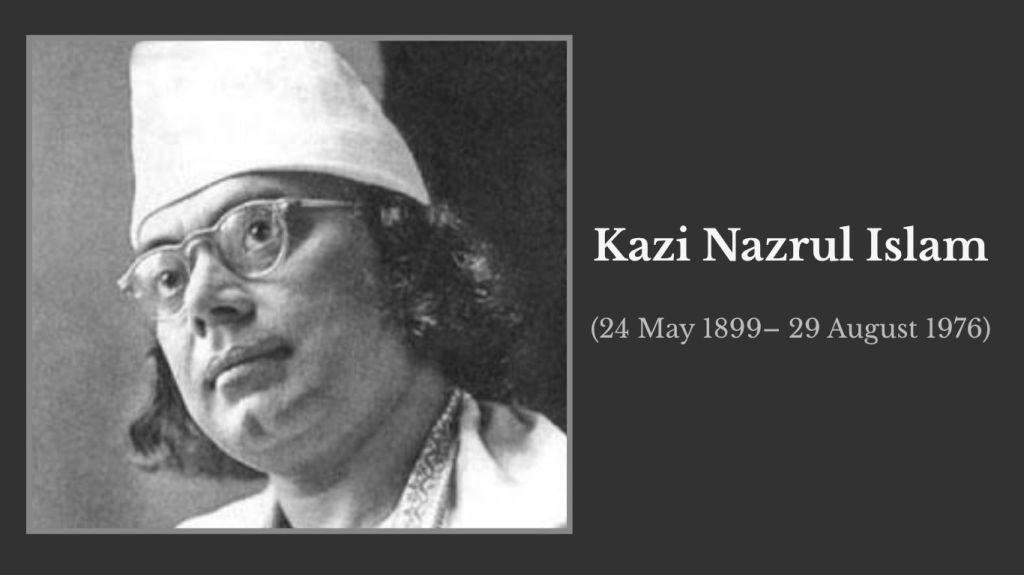
In Bengal, its most remarkable transformation came through Kazi Nazrul Islam.
Nazrul did not merely introduce the ghazal into Bengali. He made it feel as though it had always belonged there. That achievement becomes all the more remarkable when we remember that Bengali already possessed a rich and deeply individual musical-literary tradition. The nineteenth and early twentieth centuries had produced the great poet-composers who came to be remembered collectively as the Panchakabis: Dwijendralal Roy, Rajanikanta Sen, Rabindranath Tagore, Atulprasad Sen and, the youngest of them, Nazrul. They wrote their own lyrics and generally composed their own melodies, creating a modern Bengali song tradition that combined literary sophistication with music. Unlike the privileged urban backgrounds of most of his predecessors, however, Nazrul came from poverty and rural Bengal. His childhood and youth exposed him to worlds that the emerging Bengali middle class often experienced as separate: Islamic learning, Persian literature, Hindu mythology, Vaishnava poetry, folk theatre and the songs of rural Bengal. This plurality was not an intellectual position Nazrul adopted later in life. It was the atmosphere in which his imagination was formed.
The ghazal itself had already travelled an extraordinary distance before reaching him. Its origins lay in Arabic poetry, but it acquired much of its classical identity in Persian literature. Persian poets such as Hafiz, Rumi and Saadi gave the form its characteristic world of desire, intoxication, separation, beauty and mystical longing. When the ghazal entered the Indian subcontinent, it encountered local languages and traditions and changed again. Amir Khusrau and, later, Wali Daccani were among those who helped transform the Persian form into something increasingly Hindustani. In India, the ghazal acquired new vocabularies, new images and new musical possibilities.
At its simplest, the ghazal consists of a series of couplets, each capable of standing independently while being held together by a common metre, rhyme and refrain. Yet the formal structure is only half the story. The real unity of the ghazal is emotional. Its verses circle around longing, often without resolving it. The beloved may be a woman, a man, God, beauty itself, an absent homeland or an impossible ideal. In the Sufi imagination, earthly and divine love can become indistinguishable.
That ambiguity was perfectly suited to Nazrul.
Bengal had experimented with the form before him. Atulprasad Sen is generally credited with the first substantial Bengali experiments with the ghazal. But Nazrul took the experiment much further, turning it into a popular musical form. He did not approach the ghazal merely as a literary structure to be reproduced in another language. He understood that it had to be made to breathe in Bengali.
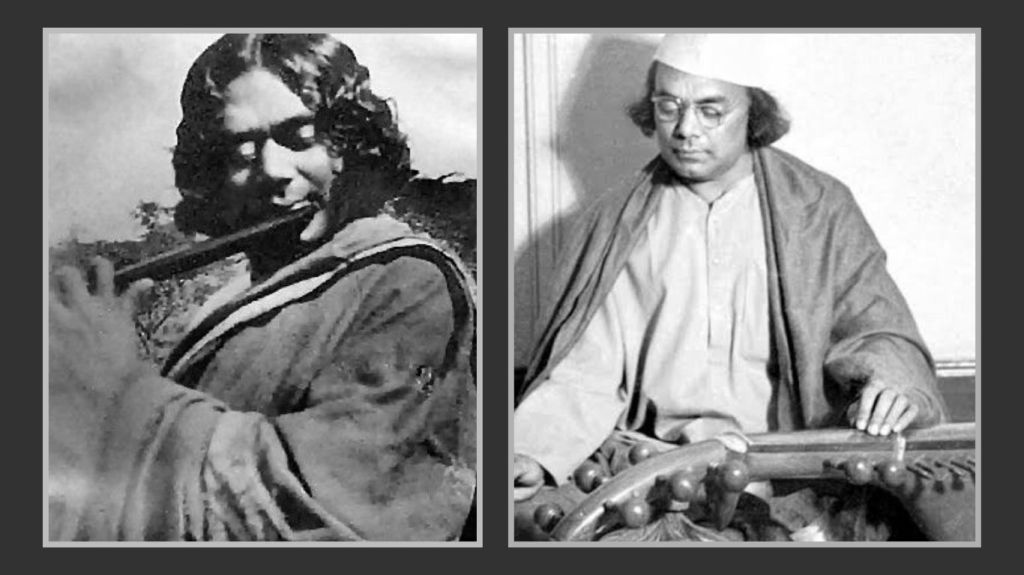
His preparation for this was unusually rich. He learnt Urdu from his uncle Bazle Kareem and encountered Persian more deeply during his years with the Bengal Regiment in Karachi, where he studied the language with a Punjabi maulavi. He read Omar Khayyam, Rumi and Hafiz, and the attraction was immediate. The Persian poets gave him a vocabulary of intoxication, rebellion, sensuality and mystical desire that seemed to correspond naturally with his own temperament. In the early 1920s, he translated and adapted Persian and Urdu material into Bengali. But it was towards the end of the decade, with greater maturity as both poet and composer, that he began creating original Bengali ghazals in earnest. These compositions were published with musical notation and eventually travelled through gramophone records and radio.
That technological development is important. The Bengali ghazal might have remained an interesting literary experiment had it been confined to printed pages. Gramophone and radio changed its destiny. Nazrul’s songs entered homes, tea shops, theatre halls and public gatherings. A form associated with the Persian and Urdu world could now be heard in Bengali by listeners who might never have encountered its literary ancestry. The ghazal became something to sing and listen to before it became something to analyse.
Nazrul’s great innovation was to make the Persian inheritance sound Bengali without stripping it of its Persian character. Listen to the vocabulary of his songs. Words such as ishq, dil, mahfil, gulshan, bulbuli and gulbahar enter the Bengali lyric naturally. They do not sit there like foreign ornaments. They become part of the emotional vocabulary of the song. The Persian garden begins to coexist with the Bengali landscape.
This is one of the most fascinating aspects of Nazrul’s ghazals. He could summon the rose garden of Persian poetry and, almost in the same breath, evoke Bengal’s rivers, spring winds, flowering trees and muddy pathways. The imported image does not erase the local one. They inhabit the same poem. Consider the rose and the nightingale, perhaps the most familiar pair in Persian and Sufi poetry. Nazrul gives them an intimacy that is unmistakably his:
Mohammad naam jopchhili bulbuli tui aage,
Tai kire tor konthe aaji emon modhur raage.
Ore golap niribili, bujhi Nobir kodom chhuye chhili,
Tai tar kodomer khoshbu aajo tor atore jaage.
*
O nightingale, surely you once whispered the name of Muhammad
Is that why such sweetness dwells within your song?
O rose, perhaps, in secret, you once touched the Prophet’s feet;
That is why, even today, the fragrance of his footsteps lingers in your attar.
*
The rose and nightingale are ancient Persian symbols. But Nazrul does something wonderfully intimate with them. The Prophet is not invoked through theological abstraction. His presence survives as fragrance, birdsong and touch. Devotion becomes sensory. The sacred enters the ordinary world through things one can smell and hear. This ability to make different traditions converse is at the heart of Nazrul’s art.
Nazrul was writing at a time when Bengal’s cultural life was being increasingly marked by communal anxieties. The Bengali Muslim community, despite its demographic importance, often found itself culturally marginalized within a literary establishment shaped substantially by the Hindu bhadralok. Nazrul’s Bengali ghazals offered Bengali Muslims a literary and musical vocabulary drawn from their own Islamic and Persian inheritance while simultaneously keeping them within the larger Bengali cultural world. That is why his Persianized diction matters. It was not merely decorative exoticism. It helped create a cultural space in which Bengali Muslim listeners could hear themselves without having to abandon Bengali identity.
At the same time, Nazrul was introducing the Hindu listener to an Islamic world that Bengali literature had often treated as something outside the mainstream of its cultural imagination. His ghazals therefore worked in both directions. They gave Bengali Muslims a sense of cultural recognition while inviting Bengali Hindus into an unfamiliar but deeply embedded part of Bengal’s history.
The scholar Dr Pushpita Mitra identifies three broad tendencies in Nazrul’s Bengali ghazals, and this distinction helps us understand the extraordinary range of his achievement. In some compositions, he brought Urdu words and phrases directly into Bengali, creating an idiom that consciously mediated between the two languages. In a second group, he used Persian imagery – gulbahar, gulbagicha, bulbuli, gardens, flowers, seasons – to evoke the landscape of Persian poetry while allowing it to overlap with Bengali nature. In a later phase, his ghazals became less dependent on obviously Persian or North Indian vocabulary and forms and increasingly absorbed his own mature musical and lyrical personality.
One of the most delightful examples of the first tendency is a song that moves between Bengali and Hindustani with a playful sensuality:
Alga koro go khopar bandhan
Dil wahin mera phans gayi
Binod benir zareen fitay
andha ishq mera kas gayi.
Tomar kesher gandho kokhon
Lukaiye ashilo lobhi amar mon,
Behosh hokar gir pari haath mein,
Baaju-band mein bas gayi.
*
Undo the knot of your hair
My heart is caught there still.
In the golden ribbon of your braid,
My blind love has tightened its hold.
When did the fragrance of your hair
Slip secretly into my heart?
Before I knew it, drunk and helpless,
I fell into your hands
And made my home in your armlet.
*
What makes the song so charming is not simply its sensuality. It is the linguistic play. Bengali and Hindustani rub against each other, creating something that sounds at once theatrical, folkish and unmistakably Nazrul. The Persian vocabulary is not being displayed; it is being lived.
The second tendency in his ghazals is equally revealing, as Dr Mitra points out. Consider his evocation of spring:
Phul phaguner elo morshum,
Boney boney laaglo dol,
Kusum shokhin dokhino haaway
Chitto geeto-uttorol.
The poem begins in the Bengali spring – the season of phagun, flowers, southern winds and the stirring of the heart – but Persian imagery soon enters the frame:
Gulbaharer uttori kaar jauraalo toru-lotaay,
Muhu-muhu daakey kuhu, tandra-alosh daar khol.
*
Spring has come, the season of flowers,
And every grove is suddenly awake.
The southern breeze moves through the blossoms,
And the heart begins to sing and dance.
The rose-garden spills its colours
Over the branches and vines;
The cuckoo calls from somewhere within,
And sleep and languor open their doors.
*
The Persian garden has entered Bengal, but Bengal has not been Persianized. The two landscapes overlap. That is perhaps the most important thing Nazrul achieved with the ghazal: he did not translate one culture into another. He allowed them to meet.
And the emotion was never confined to romantic love. Nazrul could move from sensuality to devotion, from devotion to rebellion, from rebellion to loneliness. His ghazals contain lovers, mystics, intoxicated wanderers, flowers, nightingales and gods. Their beloved is often deliberately elusive. Is it a woman? God? Memory? Death? Desire itself? The uncertainty is part of the pleasure. This is where Nazrul’s Islamic inheritance meets the Bengali Vaishnava tradition of biraha, the spiritualized ache of separation. In both traditions, absence can become more powerful than presence. The beloved’s physical absence intensifies his or her presence within the imagination. Nazrul understood this instinctively. His songs rarely hurry towards resolution. Longing is allowed to remain longing.
Consider this:
Bagichay, bulbuli tui phul shakhate disne aji dol,
Ajo tar phul-kolider ghum tuteni, tandraate bilol.
Ajo hay rikto shakhay uttori bay jhurche nishi-din,
Asheni dakhine hawa, ghazal-gawa moumachi bibhol.
Kobe se phul-kumari ghomta chiri, ashbe bahire re,
Shishirer sparsha-sukhe bhangbe re ghum, rangbe re kapol.
Phaguner mukul-jaga dukul-bhanga ashbe fulel ban,
Kurider ostho-pute lutbe hashi, phutbe gale dol.
Kobi tui gandhe bhule dubli jole, kul peline ar,
Phule tor buk bhorechis, ajke jole bhar re aankhir kol.
*
In the garden, O bulbul, do not set the flowers swaying on their branches today;
The buds still sleep, their slumber has not yet been broken from their drowsy dreams.
Alas, even now, the empty branches tremble day and night in the northern wind;
The southern breeze has not yet arrived, nor the honeybees, intoxicated with the ghazal of flowers.
When will she come, the flower-maiden, tearing apart her veil and stepping outside?
When will the touch of dew awaken her from sleep and paint her cheeks with colour?
When spring comes, when buds awaken and the banks overflow, a flood of flowers will arrive;
Laughter will spill from the little buds’ lips, and dimples will blossom upon their cheeks.
O poet, bewildered by fragrance, you have plunged into the waters and can find no shore;
You have filled your heart with flowers, but today, fill the hollows of your eyes with tears.
*
This ghazal unfolds as a delicate allegory of waiting, awakening and loss. At first, its world seems entirely pastoral: the garden, the bulbul, sleeping buds, empty branches, dew, the southern breeze and intoxicated bees. Yet beneath these images lies a deeply human longing. Spring has not arrived; the flowers remain asleep, the branches shiver in the cold northern wind, and even the bees that will eventually turn the garden into music are absent.
The ‘flower-maiden’ becomes the central image of this anticipated awakening. Her emergence from behind her veil, her cheeks coloured by dew, and the laughter and dimples appearing on the buds transform nature into a living feminine presence. Spring is imagined not merely as a season but as a moment of emotional and sensual renewal.
The final couplet dramatically changes the mood. The poet, intoxicated by fragrance, has plunged into the waters and lost the shore. The flowers that once represented joy now coexist with tears. This movement from expectation to intoxication and finally to sorrow gives the ghazal its poignancy. The poem’s greatest beauty lies in this tension: spring promises fullness, yet the poet discovers that beauty and grief are inseparable. The garden blooms outside while the heart fills with tears within.
In another ghazal, the poet says:
Bosiya bijone keno eka mone
Paniya bharone cholo lo gori
Cholo jole cholo kande banatal
Dake chholchhol jol-lahori.
Diba chale jay bolaka-pakhay
Bihoger buke bihogi lukay.
Kende chokha-chakhi magiche biday
Barowa-r sure jhure banshori.
Ogo be-dordi o ranga paye
Mala hoye ke go gelo joraye.
Tobo sathe kobi porilo daye,
Paye rakhi tare na gole pori.
*
Sitting alone in solitude,
Why do you linger there by yourself?
Come, fair one, come to fetch the water;
Come, let us go to the water.
The forest floor weeps;
the rippling waves call out to us.
The day slips away on the wings of the cranes;
within the bird’s breast the female bird hides.
The chokha-chakhi, the loving pair, weeps and bids farewell;
To the plaintive strains of Barowa, the flute languishes.
O heartless one, at your red feet,
who has gone and entwined herself like a garland?
The poet, bound to you, is caught in a dilemma:
shall I place her at your feet, or wear her around my neck?
*
This lyric unfolds as a gradual movement from invitation to longing, and finally to surrender. Its opening image, a young woman sitting alone and being invited to fetch water, places desire within the familiar pastoral world of Bengali song. Water becomes both a literal destination and an emotional metaphor: ‘come to the water’ suggests movement from solitude towards intimacy.
The second stanza deepens the mood through nature. Day departing on the wings of the balaka, birds seeking one another, and the chokha-chakhi bidding farewell create an atmosphere of separation. The mention of Barowa and the languishing flute introduces the classical-romantic vocabulary of Indian music, where melody itself becomes an expression of yearning.
The final stanza transforms pastoral romance into personal devotion. The mysterious figure who ‘entwines’ herself around the beloved’s red feet as a garland evokes both surrender and erotic attachment. The poet’s dilemma, whether to place the garland at her feet or wear it, is deliberately paradoxical. Love has erased the distinction between worship and possession. What begins as a simple invitation to the water thus becomes a meditation on desire, separation, devotion and the inability to decide whether love is an act of surrender or an act of embrace.
His later work makes this even more poignant. The death of his young son, the illness of his wife Pramila and the devastating illness that eventually silenced Nazrul himself cast a shadow over the later part of his creative life. The rebellious energy never entirely disappeared, but the songs increasingly turned towards loss, memory, mortality and mystical yearning.
One such lyric begins:
Bhoriya poran shunitechi gaan,
aashibey aaji bondhu mor.
Shaupono makhiya shonar paakhay,
aakhaashe udhao chitto-chokor.
*
My heart is full; I listen for a song
Perhaps today my beloved will come.
Dreams are folded into golden wings,
And some restless bird of the heart flies away into the sky.
*
The poem then moves towards the riverbank, the muddy path, the approaching beloved and the drifting scent of the wind. Who is coming? Nazrul never tells us. That is precisely its power. The beloved may be a lover remembered, a divine presence, an apparition from the past, even death itself. The song does not close the door on any possibility. It leaves us waiting on that riverbank.
This late Nazrul is very different from the young ‘Bidrohi Kobi’, the Rebel Poet who thundered against empire, oppression and communal divisions. Yet the two poets are not really different. The same refusal to accept boundaries lies beneath both. The poet who would not accept the separation of Hindu and Muslim traditions would not accept the separation of love from devotion, the sensual from the spiritual, or beauty from sorrow.
This is also why his use of Hindu and Islamic imagery could be so radical without being merely provocative. Nazrul could write of Krishna, Shiva, Kali and Durga with the same intensity with which he invoked Islamic devotional imagery. His Hindu devotional songs, particularly his Shyamasangeet, became an important part of Bengal’s musical heritage. His ghazals, meanwhile, brought Persian and Islamic imagery into Bengali popular music. His artistic universe was not a collection of separate compartments; it was a single, restless landscape.
There were critics who found this troubling. Some conservative Muslims objected to his Hindu imagery; some Hindu critics were uncomfortable with his Persianized diction. Nazrul belonged fully to neither camp because he refused the premise on which both positions rested: that cultures preserve themselves by remaining apart. For him, Bengal had never been culturally pure. Its languages, music, metaphors and religious traditions had been meeting one another for centuries. The Bengali ghazal is perhaps the most beautiful evidence of that history.
What Nazrul finally created was not a Bengali imitation of an Urdu form. Nor was it Persian poetry dressed in Bengali clothes. It was something new: a musical-literary language in which Persian imagery, Arabic devotional vocabulary, Bengali lyricism, folk symbolism, Vaishnava emotionalism and Hindustani musical traditions could exist together without apologizing for one another.
And this is where his importance extends beyond the history of the ghazal. Nazrul’s Bengali ghazals were part of a larger cultural intervention. In the Bengal of the 1920s and 1930s, when communal identities were hardening and the colonial political order was encouraging competing claims of belonging, he offered another possibility. A culture could be Muslim and Bengali. It could draw from Persia without ceasing to be Bengali. It could invoke Krishna and Muhammad without treating the two as mutually exclusive. It could be modern without severing itself from folk memory.
The political message was sometimes explicit in Nazrul’s journalism and poetry. In the ghazals it was often quieter. It resided in the very sound of the songs – in their vocabulary, their imagery, their musical forms and their refusal to remain inside a single cultural enclosure. The effect could be political without the song ever becoming a political slogan. Perhaps this is why Nazrul’s ghazals continue to feel so alive. Nearly a century later, his Bengali ghazals remain part of the musical lives of Bengal and Bangladesh. They continue to be sung, recorded and reinterpreted. Their survival is testimony not simply to the durability of Nazrul’s melodies but to the emotional generosity of the world he imagined.
A rose can belong to Persia and Bengal at the same time. A nightingale can sing the name of Muhammad in a Bengali song. A river boat can carry an Islamic prayer. A spring garden can be simultaneously gulbahar and Bengal. A lover can be human, divine or simply remembered. Nazrul understood that these were not contradictions. They were the truth of Bengal. And perhaps that is his greatest gift to the Bengali ghazal: he did not merely give Bengal a new musical form. He showed how a culture can absorb another culture without losing itself, and how, in the process, both cultures can become something larger than they were before. The ghazal arrived in Bengal as an inheritance from elsewhere. Nazrul brought it home


Leave a Reply