From the volatile young man of Ankush to the terrifying Anna Seth of Parinda, from the whimsical rainmaker of Thoda Sa Roomani Ho Jaaye to the silent, wounded father of Khamoshi, and the wise street philosopher of Hu Tu Tu, Nana Patekar was an actor of extraordinary range. Stardom brought him an audience, but it also narrowed the possibilities of an artist who was never quite like anyone else.
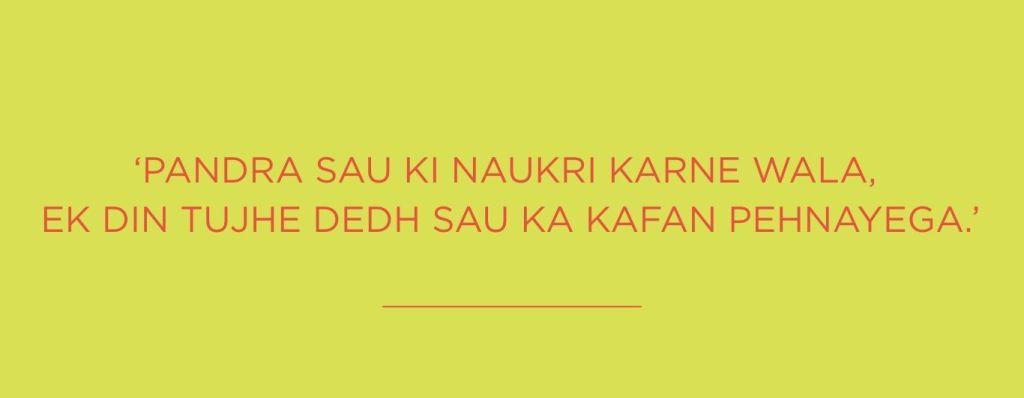
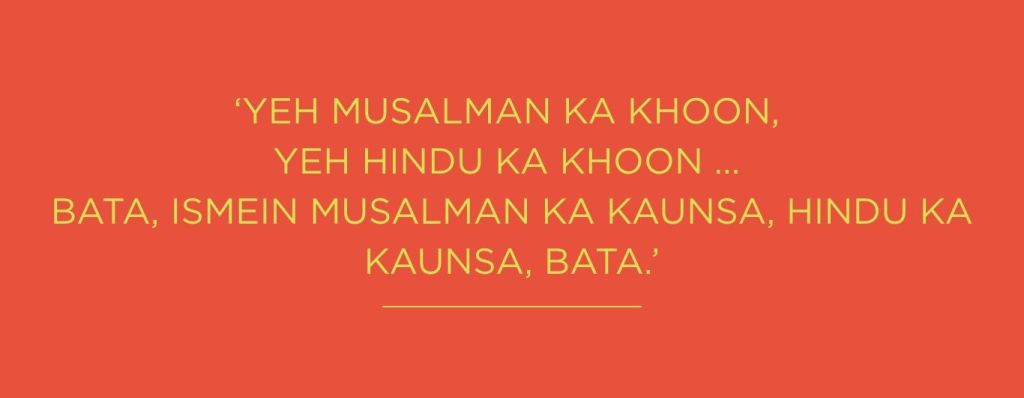

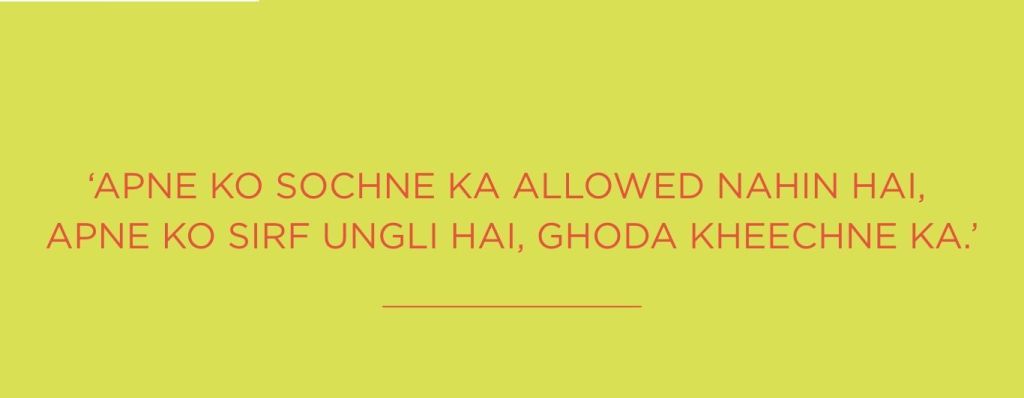
These lines belong to different films, different characters and different moments of cinematic rage. Today, they circulate as memes, detached from their original settings and pressed into service as reactions to everything from political absurdity to everyday irritation. Their afterlife on social media is testimony to their staying power. But long before the internet discovered the pleasures of recycling a Nana Patekar outburst, there was an actor who could make a line unforgettable simply by the way he inhabited it. The words were only part of the performance. The rest lay in the voice that seemed to scrape its way out of the throat, the sudden narrowing of the eyes, the crooked smile, the pause that could be more threatening than a shout, and the sense that the man on screen had reached the end of his patience with a world that had given him very little reason to be patient.
The memes have preserved the noise. What they risk obscuring is the actor.
For Nana Patekar’s most interesting work cannot be contained by the image of the furious man delivering a sermon to a corrupt nation. There was a time when his screen persona seemed to be developing in several directions simultaneously. He could be vicious, vulnerable, funny, lyrical, awkward, tender or frighteningly still. He could occupy a frame without the conventional advantages of a leading man, and he could make a character’s physical presence – a rumpled shirt, a pair of slippers, a restless movement of the hands – seem more expressive than the elaborate gestures of a star. He did not merely speak differently. He seemed to have arrived at Hindi cinema from somewhere outside its established grammar of stardom.
The extraordinary thing is that an actor who would eventually become synonymous with grand declamations of injustice began by making the frustrations of ordinary men feel startlingly intimate.
The Anger of the Dispossessed
In N. Chandra’s Ankush (1986), Patekar played Ravindra Kelkar, known as Ravi, one of four unemployed young men whose lives have been shaped by frustration, humiliation and the absence of any meaningful place for them in society. The film was a contemporary reworking of the concerns that Gulzar had explored in Mere Apne (1971), but its urban anger had a particularly immediate quality. Here were young men who had run out of patience with a system that had little use for them, and who were in danger of becoming what they despised.
Ravi was hardly a conventional leading man. He did not possess the reassuring polish of the Hindi film hero, nor did he need to. In his casual shirts and slippers, with a body that seemed permanently coiled for confrontation, Patekar made unemployment feel like an assault on dignity. His anger was not an abstract political position; it was the accumulated frustration of a man who wanted to believe in the possibility of a decent life but was repeatedly denied the means to achieve it.
What was remarkable was the vulnerability beneath the aggression. Patekar could make a sneer look like an act of self-defence and a burst of anger suggest the hurt that had preceded it. He brought a rough, almost unvarnished immediacy to the screen, making Ravi recognizable without making him comfortable. The performance announced an actor who could command attention without the familiar trappings of stardom.
Ankush gave him recognition. It was Vidhu Vinod Chopra’s Parinda (1989), however, that established the terrifying possibilities of his talent and created one of the great villains in Hindi cinema.
The Monster Called Anna Seth
Anna Seth is the sort of character an actor can spend a lifetime trying to equal. A gangster who commands absolute obedience, Anna is capable of appalling cruelty, yet he is also a man held hostage by his own psychological damage. Patekar’s achievement in Parinda was to make these apparently contradictory qualities inseparable. His violence did not seem like an attribute added to the character for dramatic effect. It appeared to have become his natural state, the language through which he exercised power and kept the world at a distance.
There is a particular kind of terror in the way Anna can move from casual conversation to the prospect of murder without any perceptible change in temperament. He does not need to announce his authority. It is present in the ease with which he disposes of other people’s lives, in the suggestion that killing is merely another piece of business. The chilling logic of his world finds its most brutal expression in the thought that professional interests must always prevail over personal loyalties.
Yet the performance becomes truly extraordinary when the film exposes the helplessness beneath this authority. Anna’s fear of fire, rooted in the trauma of losing his wife, turns the figure who inspires terror in others into a man incapable of mastering himself. Patekar’s body seems to revolt against him. His movements become erratic, his face contorts, his laughter acquires a desperate edge. The spectacle is disturbing because the actor never allows us to forget either the human being in torment or the monster he has become. The two exist in the same frame, often within the same gesture.
The climax of Parinda, with its violence and flames, carries an especially unsettling intensity. Patekar’s own experience of a serious burn injury during the making of the film has become part of the story surrounding the performance, but the achievement cannot be reduced to the physical ordeal. What makes Anna unforgettable is the completeness with which Patekar inhabits his damaged psyche. He does not ask us to forgive the character. He makes us understand that even the most terrifying human beings may be prisoners of something they cannot control.
The performance also demonstrated Patekar’s extraordinary command of tone. His famous, almost unhinged laughter was never merely a mannerism in Parinda. It belonged to the character’s unstable inner world, a sound that could make the ambience suddenly unbearable. It would later become one of the actor’s most recognizable signatures, but here it emerged from a fully realized human being rather than a collection of effects.
Anna Seth belongs alongside the finest villains Hindi cinema has produced because he is not simply evil personified. He is a man whose power has failed to protect him from his own mind. Few performances make that distinction so frighteningly clear.
The Man Who Could Make it Rain
If Parinda revealed the darkness Patekar could access, Amol Palekar’s Thoda Sa Roomani Ho Jaaye (1990) demonstrated how completely he could inhabit another imaginative universe.
As Dhrushtadyumna Padmanabh Prajapati Neelkant Dhoomketu Baarishkar – quite possibly one of the most gloriously improbable character names in Hindi cinema – Patekar played a mysterious rainmaker who arrives in a drought-stricken town and offers its inhabitants something more elusive than rain: the possibility of hope. Is he a magician, a charlatan or a man who understands the peculiar mechanics of human belief? The film leaves room for wonder, and Patekar responds with a performance that is as playful as it is philosophical.
Thoda Sa is an irresistible blend of poetic romance, gentle humour and an underlying exploration of human vulnerability. Its verse-laden dialogue lends the narrative a fable-like quality. Beneath the rainmaker’s grand promises lies a more personal struggle: a yearning for self-worth, purpose and the power to make a difference. Nana Patekar brings a distinctive charm to a character whose flamboyance conceals deeper insecurities. Away from what would become a familiar intensity, Nana embraces a whimsical, almost childlike romanticism, infusing the character with warmth and vulnerability. His performance captures the delicate interplay between delusion and hope, making the rainmaker both amusing and unexpectedly poignant.
There is no trace here of the swaggering authority that would later define his popular image. He moves through the film with an eccentric grace, allowing whimsy and melancholy to coexist. His physicality, so often deployed to communicate menace, becomes a source of delight. He can be funny without mugging, mysterious without becoming portentous, and persuasive without demanding that the audience surrender its scepticism.
The performance is a reminder that Patekar’s intensity did not always require anger as its outlet. He could be intense in his stillness, his curiosity, his capacity to make the improbable seem possible. The film also reveals something essential about his relationship with the camera: he was willing to appear foolish, strange or ungainly if the character required it. Vanity, in the conventional sense, seemed to have little purchase on him.
That willingness to abandon the protective armour of the tough man would surface again in Aziz Mirza’s Raju Ban Gaya Gentleman (1992). As a street performer and philosopher, Patekar brought a gentle, unforced humanity to a film otherwise centred on the ambitions of its young protagonist. He could slip into the texture of the city without demanding that the narrative stop to admire him.
And then there is that moment of turning back, the now-familiar ‘Palat!’ long before Shah Rukh Khan would make the command a defining gesture of romantic Hindi cinema. In Patekar’s hands, it was not the stuff of a grand romantic declaration. It belonged to the spontaneous, theatrical life of a street performer, someone who understood that a little showmanship could transform an ordinary encounter. It is a delightful reminder that cinematic gestures have lives before they become cultural shorthand. Patekar could make a moment memorable without needing to own the film. (Watch this at the 10-minute mark)
The Quiet Politics of Disha
Of all the films that deserve to be retrieved when discussing Patekar’s range, Sai Paranjpye’s Disha (1990) is particularly important. It belongs to a tradition of socially engaged cinema that observes the lives of ordinary people without turning them into convenient symbols. The film examines the migration of rural labourers to the city, the economic forces that push them away from their homes and the precarious existence they encounter in urban India.
In this world, Patekar’s talent for embodying the frustrations of the dispossessed found a different expression. His screen presence was not required to dominate every scene; it had to belong to a larger social landscape. The performance drew its strength from the ordinary rhythms of a life shaped by circumstance, from the uneasy relationship between individual aspiration and the larger structures that limit it.
What makes Disha significant in the context of his career is precisely what the later popular image of Patekar threatens to erase. Here was an actor who could communicate social anger without turning every observation into a declaration. He understood that injustice is often experienced not as a series of dramatic confrontations but as the slow narrowing of choices, the gradual recognition that hard work may not be enough to secure a future.
There was a political intelligence in this early body of work. In Ankush, Disha and other films from this period, Patekar’s characters were rarely comfortable with the world they inhabited. But their discontent did not always translate into a speech. Sometimes it emerged through a look, an awkward silence or the simple fact of a man who had nowhere to go. The distinction matters. It separates an actor who represents anger from one who can show us how anger is made.
Before the Shouting Became a Brand
Patekar’s range was evident in other films of the period. In Andha Yudh (1987), Salaam Bombay! (1988), Diksha (1991) and Angaar (1992), he explored different shades of moral compromise, power and vulnerability. Even in a mainstream film like Angaar, he brought an uncommon restraint to Majid Khan, the menacing son of gangster Jahangir Khan. Beneath Majid’s menace lies a deep yearning for his father’s acceptance, made all the more poignant by Jahangir’s evident affection for his younger son, Farid. Yet Majid’s capacity for tenderness is complicated by the terror he unleashes on the helpless common man who come in the way of his land-grabbing operations, which contrasts his own relationship with his mentally challenged child. In one telling sequence, he watches the child at play, his face contorting despite his best efforts to contain himself before he breaks into derisive laughter at the child’s antics. Or for that matter the climactic sequence where he gives his wife and son poison when he realizes that the end of his reign of terror is at hand. Majid was a role that invited excess, but this was before Tirangaa and Krantiveer, when the actor – and perhaps the film-makers – had yet to embrace the full-throated theatricality that would later become his signature.
In Prahaar (1991), he took on the additional responsibilities of director and co-writer, playing Major Pratap Chauhan, a soldier whose disciplined sense of duty collides with the corruption and indifference of civilian life. Prahaar was a deeply personal undertaking, and its earnestness remains central to its identity. Patekar was interested in the distance between the values a person claims to uphold and the compromises a society expects that person to make. His soldier is not simply a righteous man fighting evil. He is someone who discovers that the discipline that gives his life meaning may be powerless against a world that has normalized moral surrender.
The film revealed an artist interested in more than the performance of outrage. Patekar wanted to make films about the consequences of social failure, and his directorial work suggested an appetite for ideas that did not always sit comfortably within mainstream entertainment.
A Star Is Born
Then came Tiranga (1993) and Krantiveer (1994), the films that transformed his distinctive screen presence into mass popularity. The change was understandable. Here was an actor whose formidable voice and volatile physicality were perfectly suited to the public denunciation of corruption, political opportunism and communal hatred. His characters spoke with the fury of men who had watched the powerful escape accountability for too long.
In Tiranga, the threat of an ordinary salaried person paying for a villain’s funeral shroud turned economic vulnerability into a weapon. In Krantiveer, the challenge to those who distinguish between Hindu and Muslim blood gave an angry, disillusioned man the language of secular humanism. These were not inconsequential sentiments. Patekar could give them an urgency that made audiences listen, and his performances supplied a visceral charge to ideas that might otherwise have remained abstract.
He was not the first actor to discover the power of the declamatory monologue. Hindi cinema had a long tradition of stars who could turn a speech into an event. What distinguished Patekar was the impression that the words were escaping from someone who could no longer contain himself. His pauses, sudden shifts in pitch, emphatic gestures and unpredictable rhythms gave the speeches a roughness that set them apart from polished oratory.
The danger lay in the success of the formula. The angry man who had once emerged from the social circumstances of a particular film began to become the film’s principal attraction. His outrage could be summoned on demand. His voice became a guarantee of impact; his mannerisms, a shorthand for conviction. The more audiences celebrated the familiar Nana Patekar experience, the harder it became for film-makers to imagine him in unfamiliar territory.
It would be unfair to blame Tiranga or Krantiveer for this narrowing. Both films gave him an audience that his more unusual work might never have found. But the popularity of these performances helped establish expectations from which neither the actor nor the industry entirely escaped. The irony was that Patekar had already shown how much more he could do.
And even when his screen persona came to be defined by volcanic outbursts and impassioned speeches, there were films in which his restraint proved more eloquent than his rage. Consider Tadka: Love Is Cooking (2022), an indifferent film in almost every other respect, which Nana Patekar anchors with characteristic charm and emotional depth. In the climactic monologue, as his character demands respect for his personal space, Patekar holds the scene for three minutes without once succumbing to the temptation to overplay it.
An even more telling example comes from Yeshwant, better remembered today for its explosive ‘machhar-hijra’ monologue. An idealistic journalist, who has written scathing pieces about Inspector Yeshwant’s brutality, arrives at the police station to report a stolen camera bag. Yeshwant’s solution is characteristically unorthodox. He orders biryani and Thums-Up for a petty criminal, Abdul, invites him to eat, and politely asks him to return the bag. When Abdul pleads ignorance, Yeshwant delivers a sharp slap. Abdul promptly returns with the bag. Turning to the stunned journalist, Yeshwant explains his methods: ‘Did you see that? I fed him biryani. Gave him a Thums-Up. Asked him nicely. He didn’t say anything. The moment I gave it to him below his ear, he replied right away. That’s why I have to do what I do.’ The sequence could easily have tipped into high-decibel macho theatrics. Instead, Patekar plays it with disarming restraint, delivering the lines almost conversationally, as though explaining the most self-evident fact in the world. The understatement makes the moment – and the unsettling logic behind it – all the more devastating.
Watch this from the 5-minute mark:
The Eloquence of Silence
Sanjay Leela Bhansali’s Khamoshi: The Musical (1996) offered perhaps the clearest demonstration of the gulf between Patekar’s range and his popular image. As Joseph Braganza, a deaf and non-speaking father, he had to communicate through his face, his hands and the most delicate adjustments of his body. The actor so closely associated with the power of speech was required to surrender its most obvious instrument.
The result was deeply moving. Joseph’s love for his daughter, his fear of losing his place in her life and his struggle to accept the independence she must eventually claim are conveyed without the rhetorical flourishes audiences had come to expect. Patekar’s face becomes a landscape of emotions that are difficult to articulate even when words are available. There is a particularly affecting tension in the performance. Joseph’s dependence on his family is inseparable from his desire to protect it, and his love sometimes becomes a form of control. Patekar does not simplify this into a portrait of a noble, suffering father. He allows the character’s tenderness to coexist with his limitations, making his pain recognizably human.
It is tempting to wonder whether the film’s commercial disappointment had something to do with the expectations created by Krantiveer. An audience accustomed to watching Patekar set the screen ablaze might not have known what to do with a performance in which silence was the principal instrument. But Khamoshi was never intended to be a showcase for the familiar star persona. It asked him to make himself vulnerable in ways his more celebrated roles rarely permitted.
The restraint continued in Yugpurush (1998), where the actor again demonstrated that intensity need not announce itself through volume. Gulzar’s Hu Tu Tu (1999) offered another variation on this more inward-facing actor. As a street performer and poet with a sharp awareness of social injustice, Patekar inhabited a world of political disillusionment that was recognizably his own without becoming another Pratap Tilak or Pratap Chauhan. The performance had an undercurrent of protest, but it also possessed an inwardness that the familiar angry-man roles could seldom accommodate. Here, the political was embedded in the character’s sensibility rather than delivered as a succession of thunderbolts. These films remind us that Patekar’s ability to dominate a scene did not depend on dominating the soundtrack.
That distinction is the key to understanding Patekar’s best work. He was at his most compelling when anger emerged from a fully imagined individual, rather than when an individual appeared to exist chiefly as a vehicle for anger.
The Many Lives of Nana Patekar
There were, of course, later performances that restored some of the complexity that his star image threatened to obscure. In Ab Tak Chhappan (2004), he played encounter specialist Sadhu Agashe, a policeman whose professional efficiency comes with a heavy psychological and moral cost. The performance is controlled, watchful and unsentimental. Its force lies in what Patekar withholds, in the sense of a man whose habits of violence have begun to colonize his private life. It was a reminder that the actor could make stillness as compelling as a monologue. Sadhu Agashe did not need to explain himself at every turn. His silences carried the weight of accumulated experience, while the matter-of-fact quality of his performance made the character’s compromises more disturbing.
In Taxi No. 9211 (2006), Patekar found another way to move away from the monumental. His irritable taxi driver was a thoroughly ordinary man whose resentment, pride and economic anxieties acquire comic and dramatic force through his encounters with a privileged passenger. The film allowed him to draw on his gift for exasperation without turning every outburst into a declaration about the nation.
And then there was Welcome (2007). As Uday Shetty, the gangster whose carefully cultivated authority is forever being undermined by his own circumstances, Patekar discovered a comic register that remains among his most enduring achievements. His timing is impeccable, his indignation exquisitely calibrated. He can make a glance carry the weight of an argument and a moment of wounded dignity more amusing than an elaborate punchline. The famous ‘Control, Uday, control’ became another piece of popular shorthand, while his explosive laughter acquired a second life through memes and social media. Contrast this with his embarrassing comic take on a Bengali character and its over-the-top mannerism and accent in Kohram (1999) where he is required to unabashedly play to the gallery.
Uday Shetty is funny for reasons that have little to do with the internet. Patekar understands the comedy of a man who takes himself too seriously, who is desperate to preserve his authority even when the universe appears determined to make him ridiculous. The actor who once made a gangster’s laughter terrifying now uses a similar instrument to produce delight. The difference lies in the precision with which he understands the character’s absurdity. It is a performance that demonstrates his ability to turn a familiar mannerism into something new.
What remains, then, is not simply a collection of famous lines, villainous laughs or furious speeches. It is the memory of an actor who, in his finest years, seemed capable of almost anything. The young man in Ankush, the tormented gangster of Parinda, the whimsical rainmaker of Thoda Sa Roomani Ho Jaaye, the street philosopher of Hu Tu Tu, the silent father of Khamoshi and the comic don of Welcome belong to different imaginative worlds. Their common denominator is not anger, but the extraordinary precision with which Patekar could make each character’s inner life visible.
He never needed the conventional glamour of a Hindi film star. His face was too craggy, his movements too unpredictable, his personality too resistant to polish. He brought to the screen the impression of a man who had lived a life beyond the frame and would continue to live it after the scene was over. The tragedy of an actor becoming famous for a particular kind of performance is that the audience may begin to mistake a single facet of his talent for its entirety. Patekar’s anger was real as an artistic instrument, but it was never the whole instrument. The voice that could deliver a blistering indictment could also fall silent; the body that could become terrifyingly uncontrolled could move with comic grace; the man who could make a villain unforgettable could lend an ordinary street performer an unexpected lyricism.
The memes will endure. Their lines are too vivid, their rhythms too deeply embedded in popular culture to disappear. But they represent only the most portable fragments of a much larger achievement. Before the dialogue became a meme, there was the character. Before the character became a signature, there was an actor willing to take risks, to be strange, to be vulnerable and to disappear into someone unlike himself.
That is the Nana Patekar worth remembering: not merely the man who could make a line explode, but the actor who could make an entire life emerge from the way he spoke it.


Leave a Reply