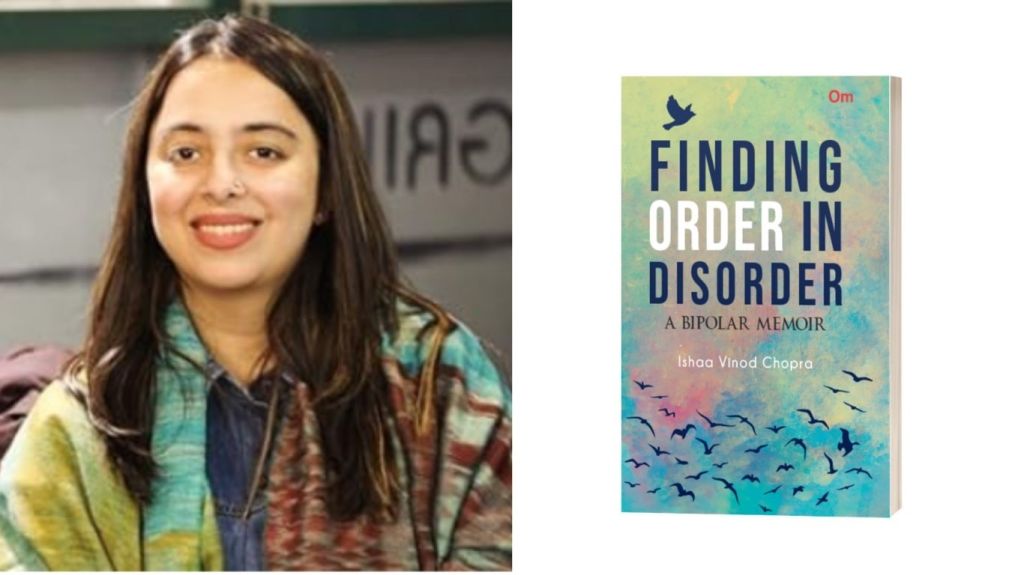
‘The memoir did not give me a voice. That voice always existed’: Ishaa Chopra on mental health, identity and finding her own narrative.
Ishaa Chopra’s Finding Order in Disorder is a deeply personal memoir about living with bipolar disorder, but its concerns extend well beyond diagnosis. Childhood, intergenerational trauma, migration, identity, intimate-partner violence, relationships and recovery intersect in a narrative shaped by memory, poetry and self-reflection. Chopra also examines the stigma surrounding mental health and the ways in which institutional treatment can strip patients of agency. In this conversation, she speaks about the experience of writing about painful episodes of her life, the relationship between her memoir and her mother’s film Unfinished, the ethics of writing only what she remembers, and how putting her story into words has changed her understanding of herself.
Shantanu Ray Chaudhuri: The title, Finding Order in Disorder, is almost a philosophy of the memoir. When you began writing, were you consciously trying to make sense of the different phases of your life – childhood, bipolar episodes, marriage, violence, recovery – or did that sense of order emerge only through the process of writing?
Ishaa Chopra: The title became an important part of my writing process. In 2016, I had written a few pages of the memoir and shared them with my father. The title emerged soon after he read those pages. His suggestion became an integral part of my attempt to find order in disorder. I think he saw that I was trying to make sense of the events unfolding in my life … my divorce, surviving intimate-partner violence and confronting societal stigma.
The process of writing the memoir allowed me to reflect on my life, my journey and everything in between. The questions and doubts I had gradually became clearer. The more I read and reread what I had written, the more confident I became about facing my demons. Those ‘demons’ eventually became friends. Fear, stigma and taboo subjects are funny that way: the more you embrace them, the less frightening they become.
I owe a great deal to the memoir, to my father and to Om Books International for giving me the opportunity to share my thoughts on such a taboo subject. To answer your question, the sense of order continued to emerge while I was writing and stayed with me long after the memoir was published. My interactions with readers, conferences and panel discussions prompted me to explore these themes more deeply. In fact, many of the concerns I am working on today in my master’s thesis are connected to them.
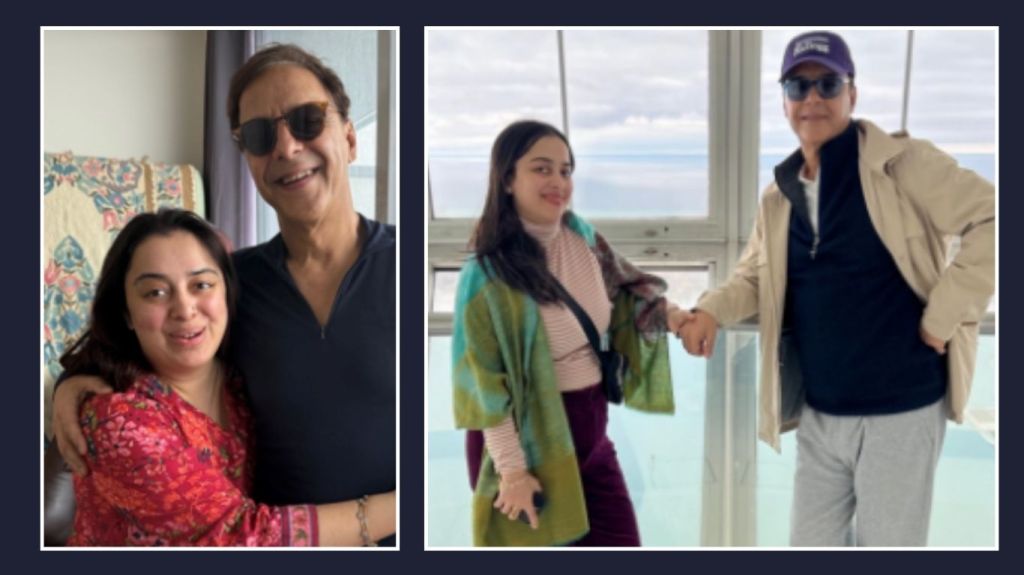
Shantanu Ray Chaudhuri: You describe the book as both an account of your experiences and an attempt to develop a personal philosophy. How difficult was it to revisit some of the most painful experiences of your life and transform them into a coherent narrative without either romanticizing the suffering or allowing it to define you?
Ishaa Chopra: Initially, there was a great deal of pain that I had to confront. But as I went deeper into the writing, that pain began to dissolve, and I became more comfortable with the experiences that had shaped me as a human being.
Self-love is of utmost importance, as I have written in my memoir, and the process of writing brought me much closer to myself. It helped me develop a personal philosophy about my diagnosis. I have said in the memoir, ‘If my illness was a person, I would want to hug it and love it. I would want to flaunt it. It is a beautiful part of me, not necessarily an ugly one, as one might presume.’
I also relied on the help of a copy editor to structure and process my thoughts. I had to take pauses and return to the manuscript because it dealt with deeply personal experiences. Baring my soul in this way required a great deal of courage and, in my view, was a considerable risk. Ultimately, it paid off.
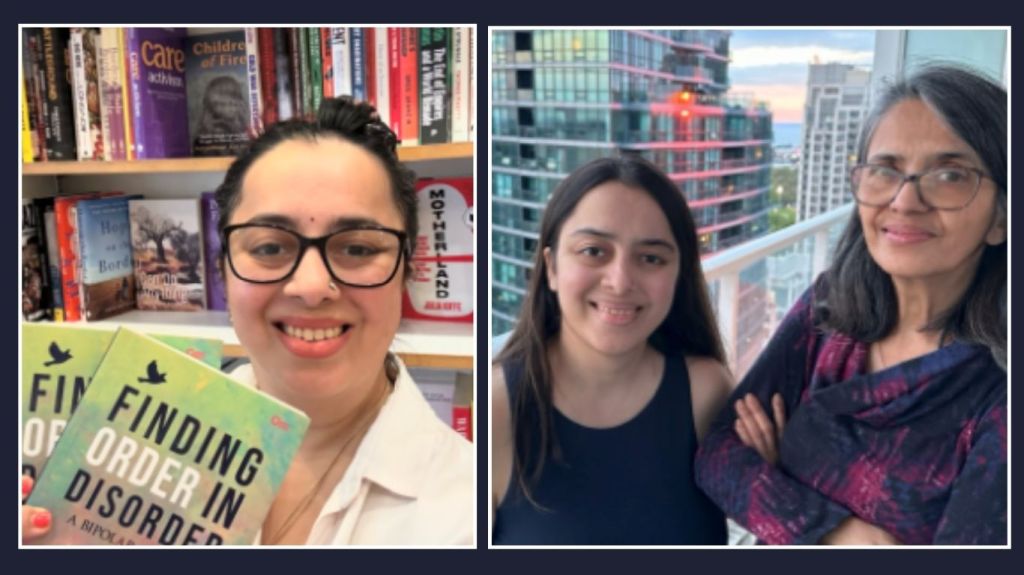
Shantanu Ray Chaudhuri: Your mother’s film Unfinished became an important catalyst for completing the memoir. You write candidly about the complicated experience of being both its subject and, at times, feeling that your vulnerability was being filmed. How did the book become your way of reclaiming your own narrative and having your own voice in that story?
Ishaa Chopra: The memoir existed well before the film took shape. In fact, Unfinished cites and draws upon material from my memoir. My mother’s thesis even uses quotations from my unpublished manuscript, so, in my view, it was the manuscript that helped shape the film.
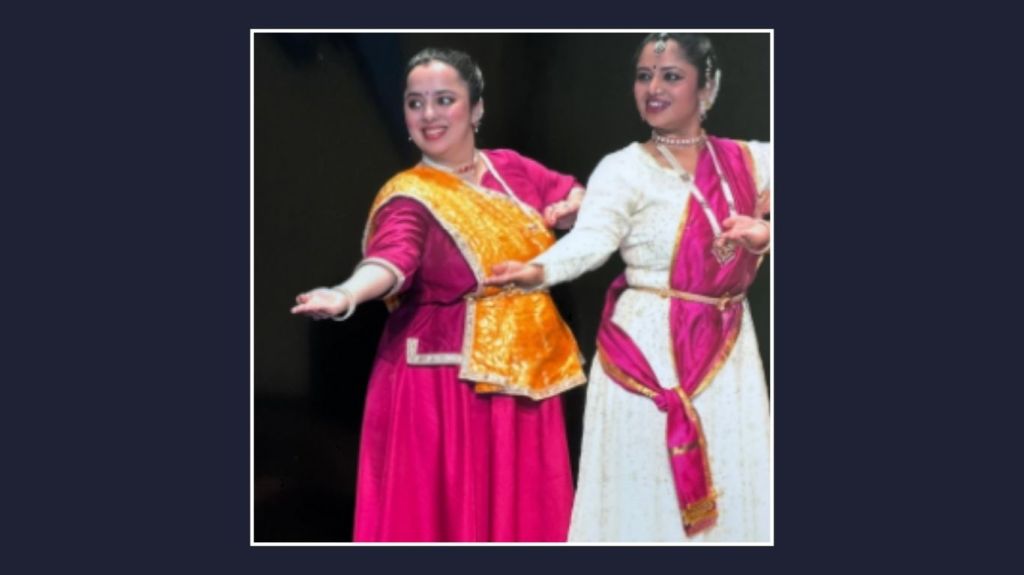
For example, this passage from my memoir was used in the film: ‘Dance is like meditation where the dancer is free of all worldly thoughts and transcends into another world. The world of a dancer doesn’t have abnormalities or normalities in it … It is this world that I want to live in, devoid of any judgements or labels. The chaos of our thoughts can be silenced in order to soak in the beauty of world’s creation, achieving stillness.’
I would like to believe that the film and the book existed in a kind of symbiotic relationship. My mother’s journey as a caregiver and my own experience as a young South Asian woman living with a disability, divorce and the trauma of having my back almost broken in two are two perspectives on the same lived reality. Neither the film nor the book merely defines me; rather, these experiences have moulded and transformed me into who I am today. Had I not lived through the fire, I would not have emerged as strong and bold.
Shantanu Ray Chaudhuri: The memoir moves beyond bipolar disorder to explore childhood, intergenerational trauma, relationships, migration, identity and domestic violence. Did you discover connections between these apparently separate experiences only in retrospect, while writing the book?
Ishaa Chopra: I began connecting these themes while I was writing the book. It gradually became clear to me that intergenerational trauma, relationships, migration, identity and domestic violence cannot, and should not, be viewed in isolation. They frequently overlap; one can often manifest through another.
It was therefore important for me to bring together these collective memories and experiences and transform my lived experience into knowledge and analysis. I was fortunate to have a creative streak that allowed me to use both poetry and prose. These became integral to the way I understood myself and to the form the memoir eventually took.
Shantanu Ray Chaudhuri: There is an unusual relationship between memory and what you choose not to remember in the book. At one point you deliberately say that you do not want to describe aspects of your first episode that you cannot personally recall, because that would no longer be a first-person account. How important was it for you to establish that boundary between lived memory, other people’s accounts and interpretation?
Ishaa Chopra: I did not want this memoir to become a bastardization – if that is even the right word – of my own experience. I did not want it to become a public display of psychotic experiences that I myself could not recall. I take great pride in having agency over the telling of my own story. If my mind and brain cannot recall something, I honour that and choose to let it go, even if it might make for a compelling or ‘juicy’ piece of information.
The ethics of remaining true to one’s experiences are profoundly important to me, both as a writer and as a mental-health advocate. I wanted the memoir to remain faithful to what I had actually lived and remembered, rather than filling the gaps with someone else’s interpretation.
Shantanu Ray Chaudhuri: You have been remarkably open about having bipolar disorder, at a time when many people still hide such diagnoses because of stigma. What has that openness cost you, and what has it given you? Do you think speaking publicly about one’s mental-health condition can itself become an act of reclaiming agency?
Ishaa Chopra: My openness has, ultimately, given me a great deal. I often say that the people who leave when they learn about your struggles are perhaps not meant to be in your life, while those who stay and show compassion, empathy and loyalty are the people you come to value during times of crisis. Sharing what you might consider a weakness can become a way of finding your circle of trust and building a community you can rely on through difficult times.
The process of disclosing my experiences to the world was an important step for me. I lost many friends, but eventually I realized that it was not really a loss. It was a gain because I was able to recognize who genuinely loved me and who did not. This has been true of friendships, family relationships and romantic relationships.
The relationship I share today with my husband, Biswarup Das, could not have materialized if I had not been willing to bare my soul … to myself, to the world and to him. I use a metaphor in the memoir about my relationship with my father: suppressing feelings can feel like walking on eggshells, always afraid that they might break. Once you speak openly about your lived experiences, that fear of breaking the eggshells disappears.
Shantanu Ray Chaudhuri: One of the strongest ideas in the book is that a diagnosis should not take away a person’s autonomy. You write about hospitalization, medication, counselling and the importance of patients being heard, and argue for a more holistic approach to treatment. What do you wish families, doctors and institutions understood better about the experience of the person who is actually living with a mental-health condition?
Ishaa Chopra: I wish doctors would treat mental-health patients with the same basic humanity they would extend to any other patients, any living being. I do not wish for even animals to be treated poorly. Patients are often subjected to coercion, restraints and restrictions, and may be placed in isolation rooms. I believe these practices need to stop. Such treatment erodes the little humanity left in us, not only for those subjected to institutional violence but also for those who perpetrate it. I have witnessed racialized, marginalized and vulnerable patients being subjected to such treatment, and I was no exception. My hope is that the medical establishment will move away from these forms of treatment and transform hospitals into spaces of belonging, well-being, hope and healing, rather than places that perpetuate memories of trauma.
Shantanu Ray Chaudhuri: Dance, painting, music, yoga, film-making and finally writing all become ways of processing what you have experienced. You describe the memoir itself as a cathartic process and say that one has to ‘sort through’ one’s emotional garbage before one can let go. Has writing Finding Order in Disorder actually changed the way you live with your mental health, or has it changed, more fundamentally, the way you understand yourself?
Ishaa Chopra: The memoir has, in a sense, detached me from my mental health. Today, I identify as a ‘Mad’ artist and researcher. I do not conform to the norms of society, and I do not view myself simply through the lens of disability or incapacity. Quite the contrary.
The memoir did not give me a voice. That voice always existed. What it gave me was a stage from which that voice could be heard. Now that my words are out in the open, I feel a greater responsibility to stand by them. They carry more weight because there are people out there actually reading my work.
I am extremely grateful that the memoir has received three international awards so far, although it received only two nominations in India. I feel this reflects how far India still has to go in confronting narratives that remain stigmatized. But I believe the day will come when these subjects are no longer considered exceptional and can simply be part of the norm.


Leave a Reply