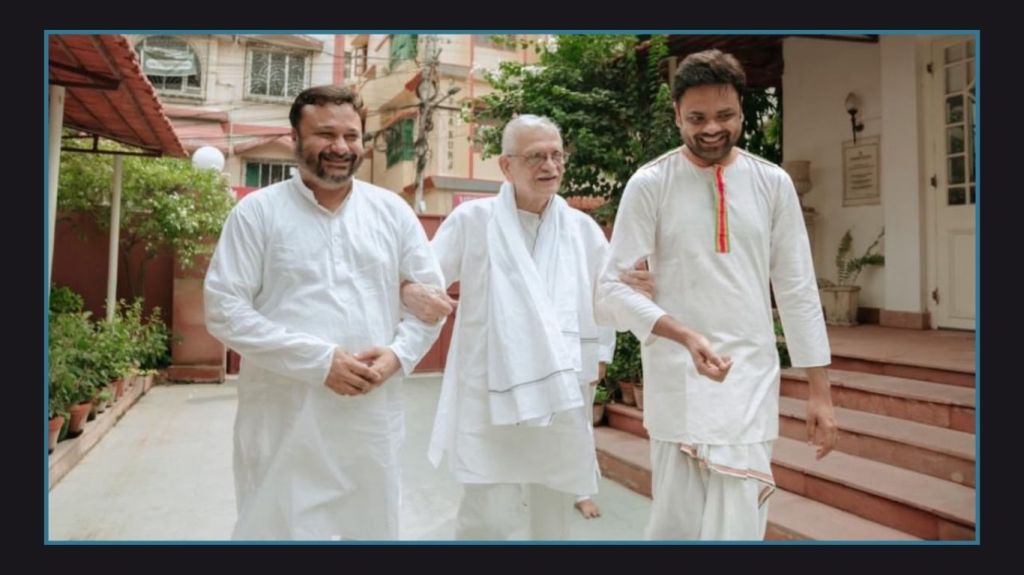
Ever wondered why independent India never found a patriotic anthem to call its own? Gulzar’s ‘Ek Akela Hindustani’, set to music by Soumyojit–Sourendro and voiced by an extraordinary ensemble of singers, offers a stirring, inclusive and deeply constitutional vision of the nation – perhaps the post-Independence anthem India has long awaited.
There is something striking about the history of India’s patriotic songs. Almost every composition that has entered the nation’s collective consciousness was born before Independence. Bankimchandra Chattopadhyay’s ‘Vande Mataram’, Rabindranath Tagore’s ‘Jana Gana Mana’, Khudiram Bose’s ‘Aek Baar Biday De Maa’, D.L. Ray’s ‘Dhana Dhanye Pushpe Bhara’, Muhammad Iqbal’s ‘Saare Jahan Se Achha’, Kavi Pradeep’s wartime ‘Duur Hato Ae Duniya Walon’ – each imagined India as an aspiration rather than an accomplished reality. Their emotional energy came from resistance, awakening and the dream of freedom.
After 1947, patriotic songwriting underwent a profound transformation. The nation had arrived, but the utopia had not. The idealism of freedom quickly encountered poverty, corruption, communal violence and inequality. Consequently, some of the greatest songs about India became songs of disappointment. Sahir Ludhianvi’s ‘Jinhe Naaz Hai Hind Par Woh Kahan Hain’ is a devastating indictment of social hypocrisy. His ‘Chin-o-Arab Hamara’ dismantles hollow triumphalism with biting irony. They remain patriotic precisely because they refuse complacency. Even Pradeep’s ‘Ae Mere Watan Ke Logo’ emerged from a specific historical moment: the trauma of India’s defeat in the 1962 Sino-Indian War. While it paid tribute to the soldiers who had laid down their lives, it also evoked the spirit of sacrifice that had defined the freedom struggle, harking back to an era when patriotic selflessness was seen as the nation’s defining ideal.
If there is one question worth asking as India approaches eight decades of Independence, it is this: why has the nation not embraced a truly enduring patriotic anthem in all these years? We have continued to sing the songs that inspired the freedom struggle, but remarkably few compositions have entered the collective imagination of an India that has been free for nearly eighty years.
That’s a void that ‘Ek Akela Hindustani’ seeks to fill. Even on the page, without hearing Sourendro-Soumyojit’s composition, this remarkable lyric reads with the cadence and simplicity of a song meant to be sung collectively rather than merely admired. Gulzar avoids the rhetoric of triumphal nationalism and instead builds his patriotism through everyday metaphors: hands, farmers, soldiers, language, music, soil, and peace. The result is a vision of India that is neither nostalgic nor disillusioned, but quietly optimistic.
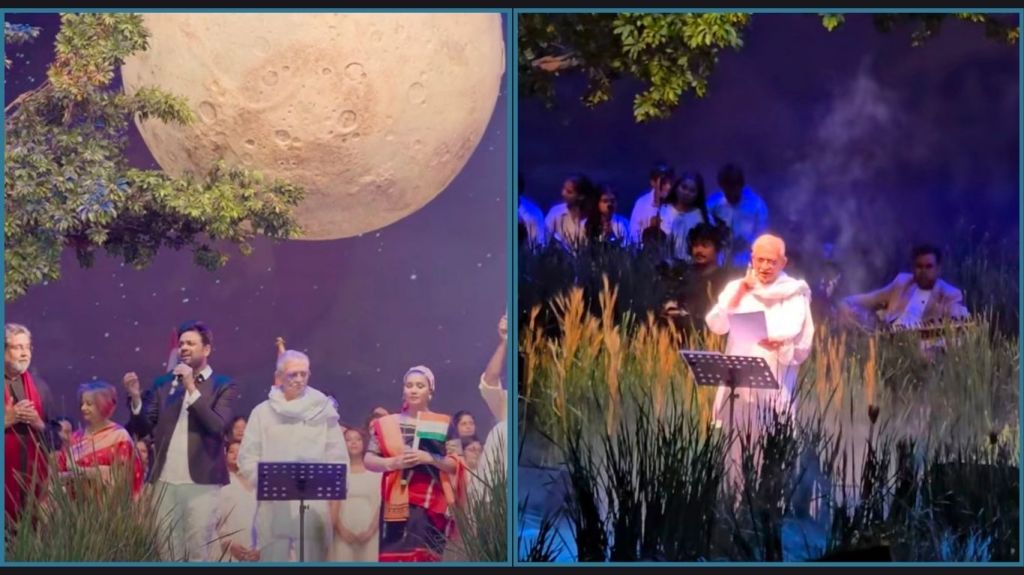
Its brilliance begins with the opening line: Ek akela Hindustani, do milen to Hindustan. It is difficult to imagine a more economical definition of nationhood. India is not geography. It is not government. It is not even history. India comes into existence when individuals choose community over isolation. The refrain transforms patriotism from possession into relationship.
That deceptively effortless refrain also became the starting point of the composition, though not in the way one might imagine. Soumyojit recalls that the duo never actually encountered the lyric on the page first; they heard Gulzar recite it in his own unmistakable style. ‘Listening to him read his poetry is an experience in itself,’ he says. ‘His pauses, the way he almost secretly inserts verbal commas, make the poem unfold like a story.’ They found themselves repeatedly asking Gulzar to recite the opening lines again, momentarily forgetting that they had come to compose a tune. ‘We were simply rasikas, enjoying the poetry.’ Only after returning to Kolkata did the real challenge begin. Gulzar’s own recitation naturally fell into a lilting 6/8 rhythm, but both poet and composers agreed that an anthem demanded something different. ‘It had to be simple, direct and hummable,’ Soumyojit explains.
Converting that innate cadence into a more accessible four-beat pulse proved unexpectedly difficult, until a remark by Gulzar about Pandit Ravi Shankar’s youthful composition of ‘Saare Jahan Se Achha’ unlocked the solution. ‘We told ourselves: let’s make this song sound unmistakably Indian. Contemporary, certainly, but rooted in our own musical imagination.’ Once that principle was established, the melody, he says, ‘simply flowed’.
Equally significant is Gulzar’s first image of nation-building. Instead of invoking kings, martyrs or monuments, he writes: Do haath ki taali hain hum, ek kisaan aur ek jawaan. In an echo of Lal Bahadur Shastri’s famous slogan that brought the farmer and the soldier together. Gulzar reunites them as the two hands required to produce applause. One secures the nation’s borders; the other sustains its life. Neither is complete without the other. Patriotism becomes collaboration rather than hierarchy.
The lyric continues to reject homogenization. ‘A hundred cultures’ and ‘countless languages’ are not presented as obstacles to unity but as its very texture. The line, Dil ki lekin ek zabaan (‘the heart, however, has only one language’), does not erase linguistic diversity. Instead, it suggests that empathy transcends vocabulary. This is perhaps the most elegant answer to India’s perennial debate about language: let every language flourish, because compassion itself needs no translation.
That instinct for inclusiveness also shaped the musical language. Rather than leaning towards either classical gravitas or cinematic spectacle, Sourendro says they consciously searched for a melodic vocabulary that felt familiar across generations and regions. ‘We took shelter in an Indian melodic idiom that we have heard all our lives because it carries the signature of our musical identity. At the same time, our audience today spans every age and language, so the melody had to remain neutral enough for everyone to embrace it.’ The result is a composition that never advertises its Indianness through overt gestures, but allows it to emerge organically through its melodic contours, restrained orchestration and uncluttered rhythmic design, an approach that mirrors Gulzar’s own refusal to equate patriotism with excess.
Gulzar has long excelled at making the intimate political. In Guddi’s ‘Humko Mann Ki Shakti Dena’, now sung as a prayer in countless schools, morality begins with self-discipline rather than ideology. In Mere Apne, ‘Haal Chaal Theek Thaak Hai’ captures a fractured republic through deceptively casual conversation. Films such as Hu Tu Tu and Maachis, along with his essays, poems and satires, repeatedly explore the relationship between the citizen and the state. ‘Ek Akela Hindustani’ feels like the culmination of that lifelong engagement. It distils decades of reflection into language simple enough for a child to sing and profound enough to reward repeated reading.
For the composers, that literary clarity became their greatest ally. Sourendro points to the lyric’s opening numerical metaphor – one individual becoming two, and two becoming a nation – as the emotional and musical key to the entire composition. ‘It was almost mathematics meeting literature,’ he says. ‘The writing was already so strong that the melody became easy to find.’ Gulzar had also spoken to them at length about how his understanding of India had evolved since the early years after Independence, through decades marked by labour movements and changing social realities. That conversation convinced them that this anthem had to sound different from the patriotic songs India had inherited from the twentieth century. Rather than amplifying the poetry, the music would quietly carry its ideas forward.
One of the lyric’s most moving passages is deeply personal: Bar bar janma hoon yahan, yahi thi mitti, yahi badan, echoing but going beyond D.L. Ray’s immortal line in ‘Dhana Dhanye Pushpe Bhara’: ‘Amaar ei deshete jonmo jeno ei deshete mori’. It is not a boast of ancestry but an affirmation of belonging. The metaphor of repeated birth expresses emotional continuity rather than biological lineage. Anyone who claims this soil can make the same declaration. The nation is defined by affection, not exclusion.
The song’s most unexpected turn comes in its Sanchari, beginning with Jab bhi desh ki baat chale. Significantly, this section did not exist when Gulzar first read the poem aloud to the composers. It arrived later, as an additional page, because Gulzar felt that a song speaking about the nation should also speak directly to its children. That impulse reflects a lifelong thread running through his writing – from ‘Lakdi Ki Kaathi’ and ‘Masterji Ki Aa Gayi Chitthi’ to his poems, stories and television work for young readers – where simplicity is never simplistic but a way of expressing profound ideas through a child’s vocabulary. The lyrics of the Sanchari deliberately sheds the metaphorical density of the earlier verses in favour of words that children could claim as their own, culminating in the wonderfully aspirational ‘Khelo koodo, zor se uchhlo, chaand Mars par chadhna hai’.
Soumyajit says the music responds by becoming correspondingly lighter before making one subtle but telling departure: for that final image of reaching the Moon and Mars, the tonal centre itself shifts upward by two semitones, musically suggesting that the child’s imagination has suddenly expanded beyond the familiar horizon. The section feels less like a digression than a reminder that every anthem ultimately belongs to the generation that will inherit the nation.
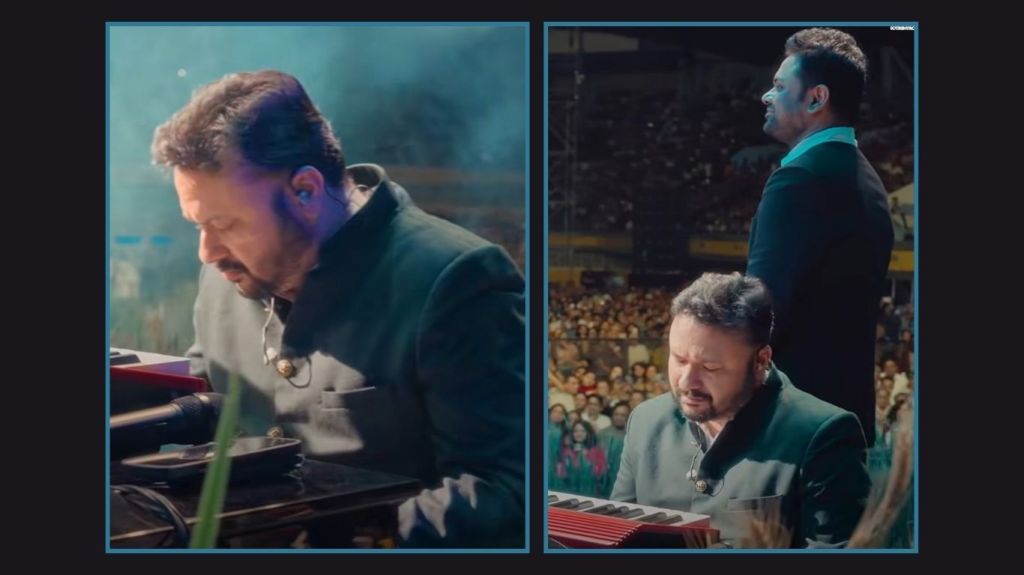
Soumyajit adds, ‘I knew that Gulzar sahib has a special fondness for the Sanchari format. As we know, the traditional structure of a Dhrupad composition comprises four sections: Sthayi, Antara, Sanchari, and Abhoga. This is different from the Carnatic format of Pallavi, Anupallavi, and Charanam. While the Sanchari was already an established part of the Dhrupad tradition, Rabindranath Tagore adapted and popularized this four-part structure in many of his compositions. As a result, the Sanchari became a familiar feature in Bengali songs. Composers such as Salil Chowdhury and Hemant Kumar carried this approach beyond Bengal, and one can hear Sancharis in many of their memorable Hindi compositions. Gulzar sahib, having worked closely with these greats, is naturally very familiar with this tradition. It was his idea to include a Sanchari specifically for children. He felt that if the song expressed concern for the nation, it should also speak to its children. From that thought, we began improvising. We decided that the children themselves should sing this section. True to Gulzar sahib’s thought process, you can immediately sense the contrast between the rest of the song, with all its lyrical sophistication, and the Sanchari. Here, the words are intentionally simple, almost as if they have been strung together by children themselves. They are direct, innocent, and easy to relate to.’
The juxtaposition of home and nation is equally revealing: Dehleez ke andar hum akele, dehleez ke bahar poora watan. Within the threshold lies private identity; beyond it begins citizenship. Gulzar recognizes the legitimacy of individual lives while insisting that public life requires fellowship. It is a profoundly democratic vision.
The final stanza shifts attention from identity to purpose. The plough’s furrows become lines of destiny, irrigated by rivers that nurture the country’s future. Agriculture is transformed into civilizational labour. Yet the song ends not with victory or sacrifice but with a prayer: Jang na ho, koi tang na ho. Shanti, shanti de farmaan. Peace, not conquest or war, is the nation’s highest aspiration. Even here Gulzar resists bombast. The anthem concludes with hope rather than command.
This restraint is precisely what makes the song feel modern. Twenty-first century India no longer needs songs urging freedom from colonial rule. Nor does it need endless celebrations of abstract greatness. It needs songs that remind citizens why living together remains a moral project. ‘Ek Akela Hindustani’ offers that reminder. It celebrates plurality without sentimentality, patriotism without aggression, and unity without demanding uniformity.
Perhaps that is why the lyric feels less like propaganda than like civic poetry. It is rooted in the Constitution’s ideals of fraternity, secular coexistence and peace, yet it never quotes them. Instead, it embodies them through everyday images that any Indian can recognize: the clap of two hands, the seven notes of music, the plough, the rivers, the threshold of a home.
The restraint extends to the orchestration as well. Soumyajit says they deliberately resisted elaborate arrangements, believing that a true anthem should survive even when stripped to a single unaccompanied voice. The shehnai, recalling Ustad Bismillah Khan’s historic performance on Independence Day in 1947, becomes the song’s ceremonial voice, while the pakhawaj lends gravitas and the sitar anchors its melodic identity. Together, the three instruments create a soundscape that is recognizably Indian without lapsing into nostalgia, a fitting counterpart to Gulzar’s vision of a nation that honours its traditions while speaking unmistakably in the language of the present.
Whether ‘Ek Akela Hindustani’ will eventually join the ranks of ‘Vande Mataram’, ‘Jana Gana Mana’ or ‘Saare Jahan Se Achha’ is not for critics or composers to decide. Anthems are not declared; they are adopted, carried in memory and passed from one generation to the next. Yet Gulzar, Soumyojit and Sourendro have achieved something rare: they have given independent India a patriotic song that neither glorifies the nation nor grieves for it, but imagines it as an unfinished democratic promise sustained by ordinary citizens. Nearly eighty years after Independence, perhaps that is the anthem India was waiting for, not one that asks us to worship the country, but one that quietly reminds us how to build it, together.
Translation
One alone, an Indian; Two together, a nation
Like two hands meeting in applause,
the farmer and the soldier complete each other.
Our heartbeats keep the rhythm;
our voices, the seven notes of music.
A hundred cultures grace our shores,
while three seas embrace our home.
Three colours rise upon our flag;
one Ashoka Chakra keeps us moving.
One alone, an Indian; Two together, a nation
I have been born here in every lifetime.
This earth is my flesh, this dust my blood.
My home ends at the threshold;
beyond it begins my country.
We speak in countless tongues,
our hearts speak one language.
(Sanchari)
Whenever you dream of India’s future,
begin with its children.
Give every child the gift of learning.
Let them play, laugh, run, and dream.
Let their dreams reach the Moon
and travel onward to Mars.
‘Let the elders look after Earth
We will claim the limitless sky’
(Sanchari ends)
One alone, an Indian; Two together, a nation
The plough sows hope in the soil;
the rivers nourish its destiny.
May there be neither war nor want.
Let peace be our only pledge.
One alone, an Indian; Two together, a nation


Leave a Reply