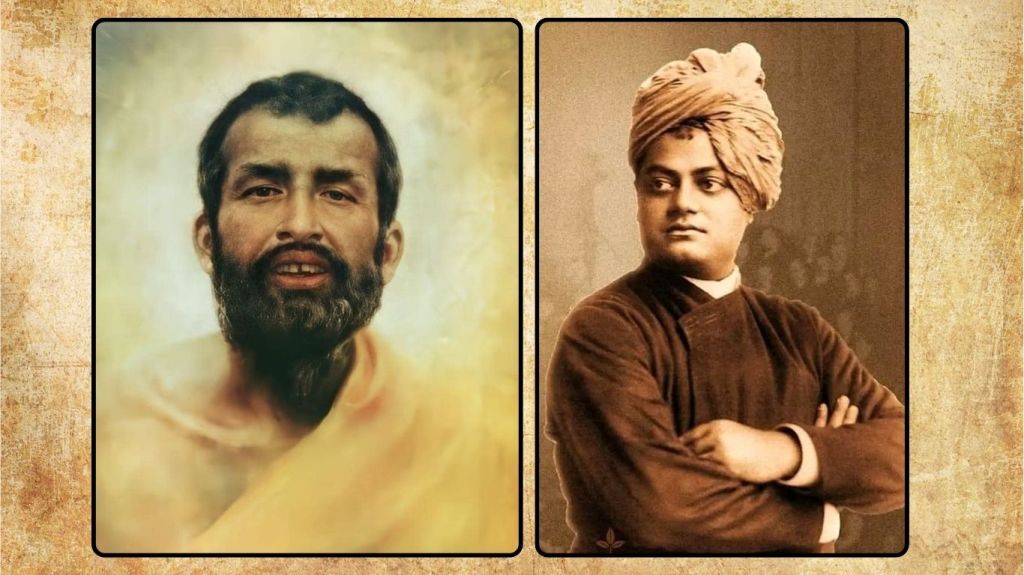
Among the many devotional songs that have shaped India’s spiritual heritage, ‘Mon Cholo Nij Niketane’ (মন চলো নিজ নিকেতনে), composed by Ayodhyanath Pakrashi, holds a place of enduring significance. In November 1881, the eighteen-year-old Narendranath Dutta sang this song during his first meeting with Sri Ramakrishna Paramahamsa at the Calcutta residence of Surendranath Mitra. Deeply moved by the rendition, Ramakrishna invited the young Narendra to visit him at Dakshineswar. That invitation marked the beginning of an extraordinary spiritual relationship, one that would eventually transform Narendranath into Swami Vivekananda, among the most influential spiritual figures of modern India.
***
The song begins with one of the most arresting metaphors in Bengali devotional literature: the world is not home but exile. Human beings move through life believing themselves to be permanent residents, while the poet gently reminds us that we are merely travellers wearing borrowed clothes in a borrowed land. ‘সংসার বিদেশে’, sansar bideshe, the world is a foreign country, is an image that resonates across traditions. One hears echoes of the Upanishads, of the Bauls, of Sufi mysticism, and even of Dante’s sense of earthly life as pilgrimage. The ‘home’ to which the mind is summoned is not a geographical place but the deepest centre of one’s being, the divine source from which consciousness arises. The melody reinforces the idea in a subtle way. On the word niketane (‘home’), it lifts gently upward before coming to rest, as though the music itself were reaching towards a place just beyond ordinary experience. The effect is never theatrical; it is inward, almost hesitant, which makes the longing all the more affecting.
The song unfolds like spiritual cartography. Every stanza describes another stage of the traveller’s journey. The senses become distractions masquerading as companions. Greed and attachment are transformed into highway robbers waiting to strip the pilgrim of inner wealth. Self-control and discipline stand guard like faithful sentinels. Holy company becomes an inn where the weary soul can recover before continuing the ascent. One of the lyric’s quiet achievements is the ease with which it moves between philosophy and ordinary life. Terms such as sama (tranquillity of mind) and dama (self-restraint), familiar from Vedantic thought, appear alongside roads, inns, fellow travellers and highway robbers. The result is that spiritual discipline never feels remote or scholastic; it becomes part of the traveller’s everyday landscape. Finally, the traveller is urged to invoke the Divine King, whose authority is so absolute that even Yama, the lord of death, cannot transgress it.
This imagery owes much to the moral allegories of medieval bhakti poetry, yet it remains remarkably fresh because it speaks not in abstractions but in experiences everyone recognizes. We know what it is to become distracted, to lose our way, to feel exhausted, to seek trustworthy companions, and to fear what lies ahead. The song simply reinterprets these familiar experiences as stages on the soul’s return. Ironically, many Bengali listeners today know only the opening refrain. Yet it is in the later stanzas that the lyric reveals its full philosophical design, unfolding almost as a pilgrim’s handbook in which every image carries a moral or spiritual significance.
Its place in Indian spiritual history, however, rests not merely on its poetry but on one unforgettable evening in Calcutta.
In November 1881, Surendranath Mitra invited Sri Ramakrishna Paramahamsa to his residence. Among those present was a young Scottish Church College student named Narendranath Dutta. Narendra was already known for his exceptional singing voice. Trained in classical music and blessed with extraordinary sensitivity, he sang devotional songs with a depth uncommon in one so young.
Contemporary accounts tell us little about the room itself. We can only imagine the hush as Narendra began to sing. Perhaps a few oil lamps lit the room. Conversation ceased. Then came the opening words: Mon cholo nij niketane…
His voice carries neither theatrical flourish nor sentimental excess. Instead there is clarity, conviction, and an earnest yearning that seems to arise from somewhere beyond the intellect. The words speak of returning home, yet the singer himself has not found that home. He is restless, rational, sceptical, searching. He asks philosophers and religious teachers a question no one has satisfactorily answered: ‘Have you seen God?’
Across the room sits Ramakrishna.
As Narendra sings, Ramakrishna’s attention seems to shift from the song itself to the young man singing it. Later, he would say that Narendra’s music came from the depths of his being. Before the final refrain has faded, tears gather in the mystic’s eyes. He sees in the young singer a spiritual destiny invisible to everyone else.
History records what followed. Ramakrishna drew Narendra aside, spoke to him with astonishing intimacy, and implored him to visit Dakshineswar. Narendra was puzzled by the saint’s overwhelming affection, even suspecting for a time that he might be mad. Yet curiosity prevailed. The visit took place soon afterwards. In the Ramakrishna literature, the meeting occupies only a few pages. Its consequences, however, were immense. From it emerged one of the most influential guru-disciple relationships in modern religious history. Without that encounter, the world might never have known Swami Vivekananda as history remembers him.
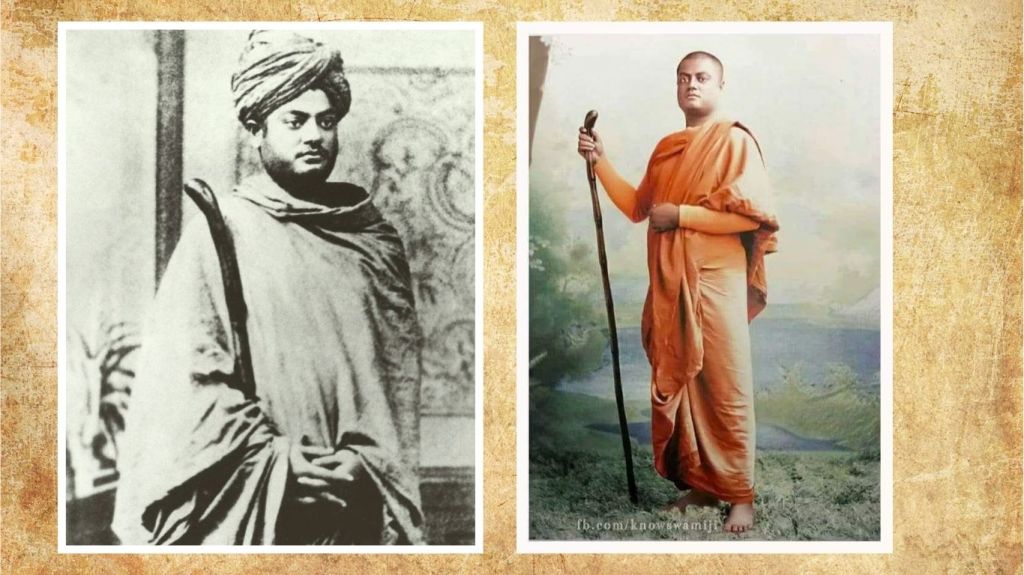
There is a poignant irony here. Narendra sang of ‘coming home’ before he himself had discovered where home truly was. The song became prophetic. His journey from the sceptical Narendranath Dutta to Swami Vivekananda gradually gave those words a new meaning.
Perhaps this is why the hymn continues to move listeners even today. It is not triumphal. It does not assume enlightenment. It speaks instead from the standpoint of one still walking, still vulnerable to distraction, still capable of losing the road. Its hope lies not in personal achievement but in remembering that home exists and that the way back has never been closed.
Among contemporary renderings, Swami Sarvagananda’s version is especially admired for its restraint. The composition in Raga Des is what probably gives the melody its contemplative ethos. As well-known music connoisseur and writer Deepa Buty says, ‘It is the khamaj thaat that works the magic. Plus, it is a raga of the night’s second prahar, which is why the melody shifts to the quieter side.’ The plaintive notes of the sarangi that accompanies the song throughout adds to the yearning quotient. There is little attempt to heighten emotion or dramatize the lyric. The tempo remains unhurried. Equally important is what happens after the refrain. Sarvagananda allows a brief stillness before the next phrase, and in that silence the words seem to linger in the listener’s mind. The pauses become part of the interpretation, inviting reflection rather than emotional display. By the time the refrain returns, it feels less like an instruction than a quiet act of recollection. The pauses are as expressive as the notes themselves.
What distinguishes his interpretation is its interiority. The repeated call, মন চলো নিজ নিকেতনে, feels less like advice than remembrance. Each return of the refrain gathers emotional weight, as though the listener is being gently recalled from the countless distractions of ordinary life. The effect is profoundly Ramakrishna-Vivekananda in spirit: devotion free of sentimentality, simplicity enriched by philosophical depth.
Almost 145 years after Narendra first sang it, the hymn remains astonishingly relevant. Our distractions may have changed from village markets to glowing screens; our bandits may now include ambition, anxiety, and endless digital noise. Yet the song’s central insight remains unchanged. We mistake the transient for the eternal, the borrowed for the real, the road for the destination.
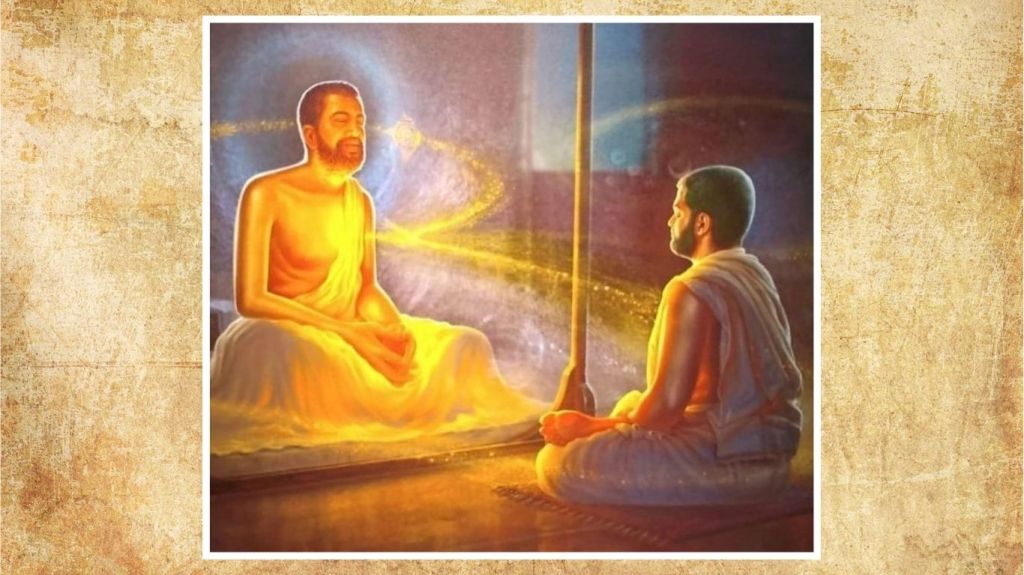
‘Mon cholo nij niketane’ endures because it speaks to that universal homesickness. It reminds us that beneath every worldly journey lies another, quieter journey towards the deepest truth of ourselves. Perhaps that is what Ramakrishna heard in the young Narendra’s voice on that evening in 1881. Not merely a beautiful song, but the first stirring of a soul already being called home.
*
The Song
মন চলো নিজ নিকেতনে
সংসার বিদেশে বিদেশীর বেশে
ভ্রম কেন অকারণে
মন চলো নিজ নিকেতনে।
বিষয়-পঞ্চক আর ভূতগণ
সব তোর পর কেহ নয় আপন
পরপ্রেমে কেন হয়ে অচেতন ভুলিছ আপনজনে
মন চলো নিজ নিকেতনে।
সত্যপথে মন কর আরোহণ,
প্রেমের আলো জ্বালি চল অনুক্ষণ
সঙ্গেতে সম্বল রাখো পূণ্যধন
গোপনে অতি যতনে
লোভ-মোহাদি পথে দস্যুগণ,
পথিকের করে সর্বস্ব সমশন
পরম যতনে রাখোরে প্রহরী
শম, দম দুইজনে
মন চলো নিজ নিকেতনে।
সাধুসঙ্গ নামে আছে পান্থধাম,
শ্রান্ত হলে তথায় করিবে বিশ্রাম
পথভ্রান্ত হলে শুধাইবে পথ সে পান্থনিবাসী গণে।
যদি দেখ পথে ভয়েরই আকার
প্রাণপণে দিও দোহাই রাজার
সে পথে রাজার প্রবল প্রতাপ,
শমণ ডরে যার শাসনে।
মন চলো নিজ নিকেতনে।
সংসার বিদেশে বিদেশীর বেশে
ভ্রম কেন অকারণে।
*
My Translation
Come home.
Why wander through this land of exile,
A traveller passing through,
Mistaking the road for home?
Come home.
The glitter of the senses,
The fleeting wonders of the world,
None of these belong to you.
Why lose yourself
In love of what cannot last,
And forget the One who has always been your own?
Come home.
Climb the path of truth.
Keep love’s lamp
Burning with every step.
Carry goodness
As your only treasure,
Guarding it in quietness and care.
The road is haunted
By greed, desire, and delusion—
Silent thieves
Who leave the traveller with nothing.
Set faithful watchmen at your gate:
Inner stillness
And the discipline of the soul.
Come home.
When the journey wearies you,
Seek the company of the wise;
There you will find rest.
And if you lose your way,
Those who have walked before you
Will lead you back to the path.
Should fear rise before you,
Call upon the King
With all your heart.
His kingdom reaches even here;
Before His sovereign will,
Death itself
Falls silent.
Come home.
Why linger in this land of exile,
A stranger passing through?
Your true home
Has been waiting for you
All along.
A Note on the Translation
First, I’ve deliberately not translated ‘মন’ as mind but left it implicit. In Bengali, মন is far richer than the English ‘mind’. It is the seat of feeling, longing, memory, will, and inwardness. Every time the refrain says ‘Come home,’ the reader instinctively knows that it is the innermost self that is being summoned.
Second, I’ve rendered ‘সংসার বিদেশে’ as ‘this land of exile’. I think this captures the emotional truth of the line better than ‘foreign land’. The Bengali is not geographical; it is existential. The soul is away from its source. ‘Exile’ carries precisely that sense.
Third, I’ve taken one liberty that I believe strengthens the ending. The final line in Bengali repeats the opening, but English often gains power through a slight development rather than exact repetition. Thus:
Your true home
Has been waiting for you
All along.
This isn’t a literal translation, but I think it expresses what the entire poem has been pointing towards: the Divine is not somewhere else to be discovered but the eternal home that has never ceased to call us.
*
A More Literal Translation for Meaning
O mind, return to your own true home.
Why wander aimlessly in this foreign land,
disguised as a stranger?
O mind, return to your own true home.
The five objects of the senses and the material world,
none of them truly belong to you.
Why lose yourself in love for what is not your own,
forgetting your eternal companion, your true Self?
O mind, return to your own true home.
Ascend the path of Truth, O mind.
Let the lamp of love burn within you at every moment.
Carry with you the wealth of virtue,
guard it quietly and with great care.
On the road lurk the bandits of greed and delusion;
they strip the traveller of everything.
Keep vigilant watchmen by your side:
self-restraint and mastery over the senses.
O mind, return to your own true home.
Along the way there is a travellers’ refuge
called the company of the holy.
When you are weary, rest there;
if you lose your way, those who dwell there will guide you back to the path.
And if the road fills you with fear,
cry out with all your heart to the King.
His power reigns supreme upon that path;
even Death itself trembles before His command.
O mind, return to your own true home.
Why roam without purpose in this foreign world,
wearing the garb of a stranger?


Leave a Reply