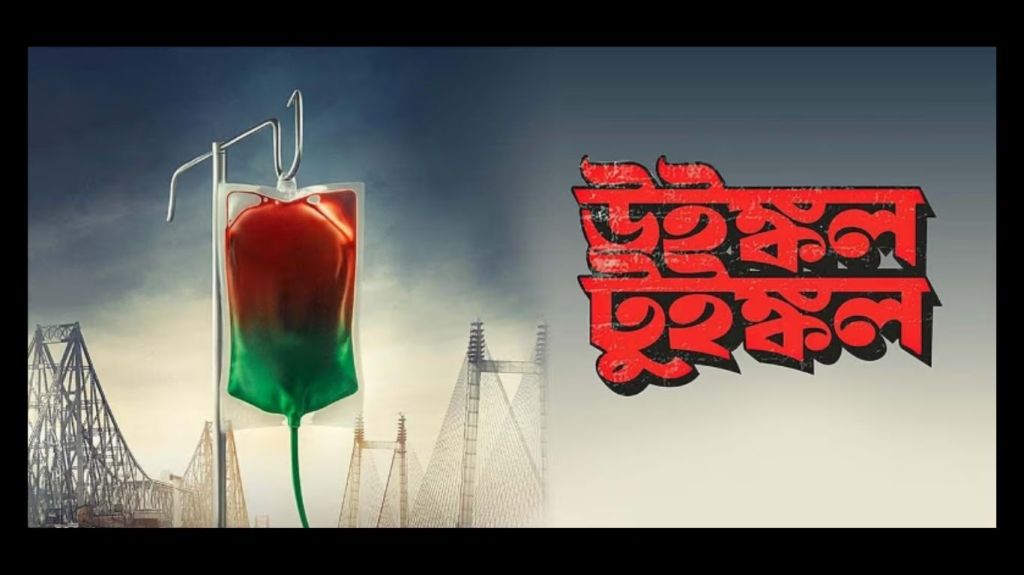
Srijit Mukherji’s Winkle Twinkle is a quietly affecting, occasionally over-discursive meditation on political idealism, historical change and the loneliness of returning to a world that has moved on
There could hardly be a more apt song with which to end Winkle Twinkle than Kabir Suman’s ‘Janlar Kache’. The song arrives almost like an afterthought, but turns out to be the film’s most eloquent final gesture. ‘Janlar kache batas dhakka dichhe’, the wind is knocking against the windowpane; and then comes that restless impulse to change, to overturn, to move on. In a few unhurried minutes, the song gathers what Winkle Twinkle has been circling around: time does not wait for us, history does not preserve the shape in which we remember it, and change often happens imperceptibly until one day we discover that the world we knew has disappeared. And like the film itself, the song resists the temptation to explain or resolve anything. Instead, it takes us gently beyond the story, leaving us with its mood, its questions and its sense of loss rather than an answer. Risky, certainly. But the incompleteness is the point. There can be no neat resolution to a life interrupted by twenty-five years of history. There can be no closure for what is essentially a fable.
Political cinema has a particularly rich lineage in Bengali culture because politics in Bengal has rarely been merely a matter of governments and elections. It has entered the language of the street, the classroom, the adda, the theatre, the home and, perhaps most significantly, the imagination. From Mrinal Sen’s Calcutta 71, Padatik and Mahaprithibi to Satyajit Ray’s Pratidwandi, Jana Aranya, Hirak Rajar Deshe and Ghare Baire, Bengali cinema has repeatedly used the city as a theatre of ideological and social transformation. Ritwik Ghatak’s political cinema was more elemental and haunted: Partition, displacement and the severing of history became psychic wounds rather than simply subjects for political argument. Goutam Ghose and Buddhadeb Dasgupta, too, have repeatedly located the individual within larger structures of political and social upheaval. And the conversation has continued into the present, in different registers, in films such as Aparna Sen’s flawed Ghawre Bairey Aaj and Ranjan Ghosh’s brilliant Adamya. What links these films is not a uniform political position – indeed, their differences are important – but an understanding that politics becomes most potent in cinema when it enters the intimate lives of people.
Srijit Mukherji’s Winkle Twinkle, adapted from Bratya Basu’s acclaimed play, belongs to that tradition while finding its own unusual way into the subject. It begins with what sounds almost like a science-fiction premise but is really an allegory of historical consciousness. Sabyasachi Sen, a committed Left-wing activist in 1976, disappears after escaping police custody. When he returns, he believes that barely any time has passed. The world, however, has moved twenty-five years ahead. The Kolkata into which he emerges is not the Kolkata he remembers; his wife is no longer the young woman he left behind, his children are adults, and the political convictions that once seemed inseparable from his existence have acquired an entirely different meaning.
The cleverness of the premise lies in what Srijit chooses not to do with it. The Rip Van Winkle device could easily have become a broad comic conceit: a man from another era encountering mobile phones, changed fashions and a baffling new social order. Winkle Twinkle occasionally allows itself humour. Consider, for example, Sabyasachi Sen’s first encounter with a man sipping tea at a roadside store which has references to the 3 Ms that define the changed landscape: mobile phones, metro and Maruti. Or his sarcastic rejoinder to his daughter’s reference to IGNOU vis-à-vis Indira Gandhi. But the film is never really interested in either making Sabyasachi the butt of the joke or making the premise itself frivolous. The joke, if there is one, is directed at history itself. Or perhaps at our assumption that the beliefs we hold today will remain legible tomorrow.
The film-maker realizes that there is something inherently haunting about a person waking up to discover that time has continued without him. The idea is as old as storytelling itself: the sleeper returns to the world expecting continuity and finds instead that everything familiar has acquired a strange, almost alien quality. This familiar conceit becomes the starting point for a meditation on memory, politics, love and the peculiar violence of historical change.
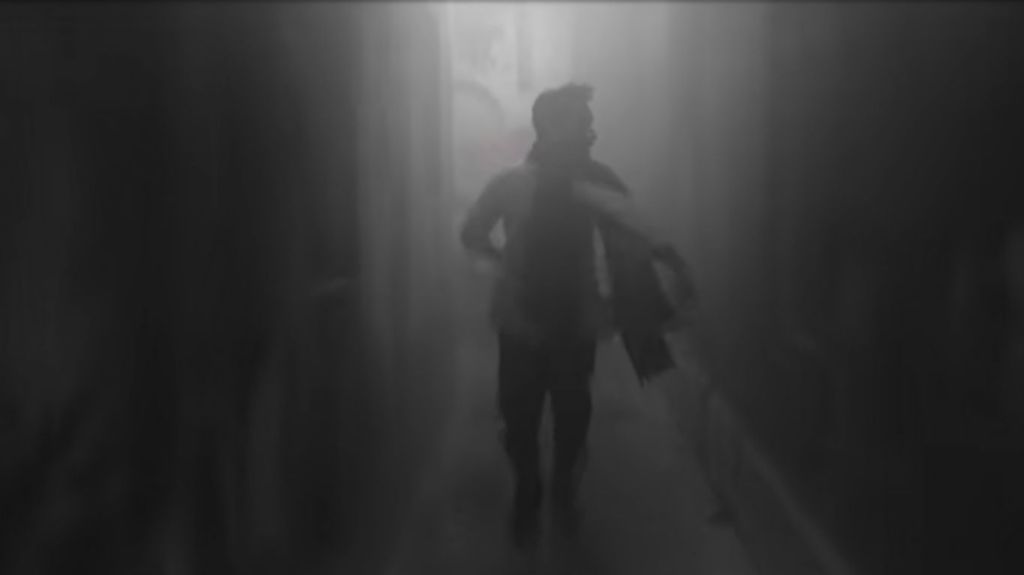
Sabyasachi has not travelled through time in any meaningful sense. He has simply lost it. Everyone around him has experienced the twenty-five years in the ordinary way – in increments, disappointments, compromises, adjustments and accommodations. He alone experiences them as a single rupture. For him there is a before and an after, with nothing in between. That is what makes his bewilderment so affecting.
Ritwick Chakraborty understands this beautifully. His performance is conspicuously free of the gestures one might expect from a character carrying such an enormous emotional burden. He does not play Sabyasachi as a fossilized revolutionary or a saint whose purity the present has betrayed. There is something almost childlike in his attempts to comprehend what has happened, but underneath that bewilderment is the terrible recognition that comprehension may not be possible. Chakraborty frequently allows the character simply to look. A pause, a hesitation, an expression that does not quite settle into anger or grief – these become more eloquent than a speech about lost ideals could have been. The performance has an inwardness that prevents the film from turning its protagonist into an ideological exhibit.
The most devastating aspect of his return, however, is domestic rather than political. Rajlakshmi, the woman he remembers as his young companion and fellow traveller, has lived the twenty-five years he has missed. The film’s decision to have Sohini Sarkar and Anashua Majumdar embody Rajlakshmi at different points in her life gives the passage of time a face and a body. Sabyasachi can still see the young Rajlakshmi; the woman standing before him has memories, experiences and wounds accumulated over a quarter of a century.
It is here that Winkle Twinkle escapes the trap of becoming a political tract. Time is not represented merely through changes in regimes. It is represented through ageing. Through children growing up. Through people learning to live with absences. The political history of Bengal is therefore refracted through the most ordinary and painful form of history: a family growing older.
And then there is Indra, Sabyasachi’s son, played by Parambrata Chattopadhyay. If Rajlakshmi represents the personal cost of time, Indra represents its ideological consequence. He belongs to a political world Sabyasachi cannot recognize. Their conflict is not simply between a father and son, nor even between Left and the Congress / Trinamool Congress. It is between two notions of what politics is supposed to be. Sabyasachi comes from a world in which political conviction could demand sacrifice; Indra inhabits one in which politics has become more pragmatic, fluid and transactional. And Parambrata, who is finding the going tough as a TMC worker, underlines it brilliantly when he says that if it suits his interests, he would shift allegiance to the BJP before you could spell ‘ideology’.
The film is at its best when it refuses to decide too easily between them. It would have been tempting to make Sabyasachi the incorruptible idealist and Indra the compromised representative of a degenerate present. Instead, the film allows discomfort to remain. The son is not simply a villain, nor is the father automatically right because his politics was once more idealistic. History has a way of making both positions complicated.
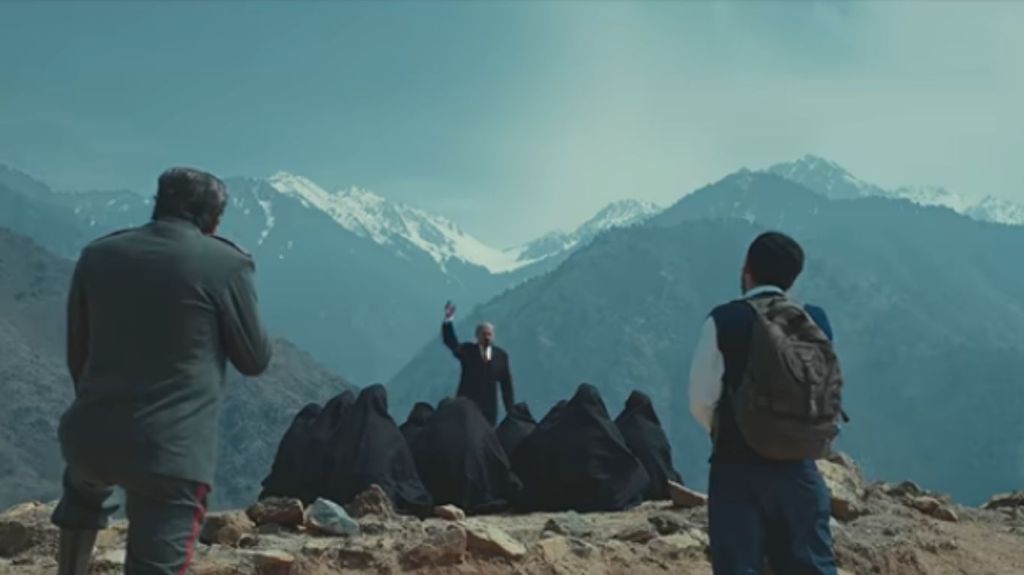
This is also where Winkle Twinkle is refreshingly explicit about politics. It does not hide behind generic references to ‘political parties’ or invent an imaginary electoral landscape. TMC, BJP, Congress, CPI(M) and CPI are named. The political vocabulary is recognizably that of Bengal, and the film is willing to acknowledge the messy succession of ideologies, parties and power structures that have shaped the state. Its canvas encompasses the Emergency, the Naxalite aftermath, the long Left Front era and the emergence of a new political dispensation. And in a surreal sequence – among a couple of other interesting alienating devices, including rats and human beings at the outset and lobsters in the middle of a TV debate – it also has Stalin and Lenin making appearances even as Sabyasachi sucks at a lollipop.
Yet its real subject is not which party won or lost. It is what happens to ideology when it encounters the seductions and necessities of power. The character played by Debesh Chattopadhyay becomes particularly significant here: the old Leftist commitment has been overtaken by the imperative of retaining power. The contradiction is not presented as an aberration belonging to one individual. It is part of the film’s larger meditation on the distance that can grow between political language and political practice.
That makes Sabyasachi’s predicament more complicated than simple nostalgia for a lost Left. He is not merely mourning the disappearance of a political formation. He is confronting the possibility that the moral universe in which his life made sense may itself have become obsolete. And this is where I particularly admired the film’s refusal to become maudlin.
There is plenty here that could have been exploited for easy emotion. A man returns after twenty-five years to find his wife aged, his children grown, his comrades transformed and his political faith displaced. A lesser film might have leaned heavily on swelling music, tearful reunions and speeches about lost time. Mukherji largely resists that temptation. The premise itself is sufficiently extraordinary; it does not need emotional coercion. Consider the TV studio debates involving Sabyasachi and his family. Even as I braced myself for some heavy-dose sermonizing, I came back relieved at the economy with which the two sequences are handled, with Sabyasachi even failing to articulate a response to the typically banal questions, let alone go on a righteous (or should that be ‘left’-eous?) rant.
The restraint is especially valuable because the film is dealing with nostalgia. Nostalgia is dangerous territory. It can very easily turn the past into a morally superior golden age and the present into a landscape of corruption. Winkle Twinkle is more interesting because it recognizes that memory is itself partisan. Sabyasachi remembers a world that others have had twenty-five years to reinterpret. His memories are true, but they are not necessarily the whole truth.
There is, consequently, something almost cruel about the mechanics of time in the film. Sabyasachi has been spared the gradual process by which most of us change our minds. He has not had to watch his ideals erode by degrees, compromise by compromise. He wakes up and finds the erosion already complete. Everyone else has had the luxury, or burden, of adapting. He has not.
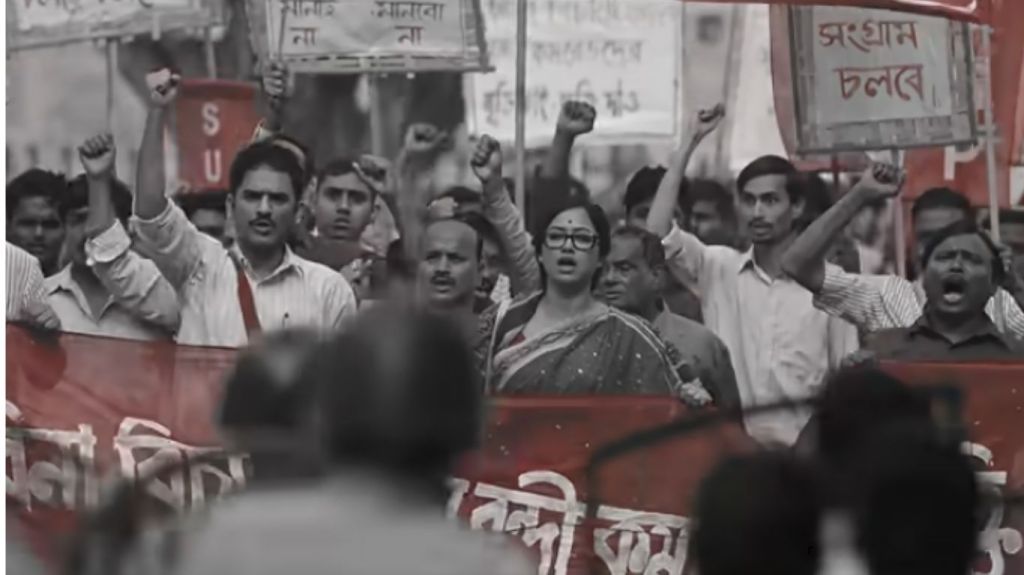
The adaptation from Bratya Basu’s play brings another conflict. I haven’t seen the play but I could not get over the feeling that the film never quite breaks free of its theatrical origins. In fact, in its flashback sequences of the politically-charged 1970s lies the film’s one failure, its inability to convey the drama and tension of those huge rallies. I never quite got a sense of that turmoil, with the film-maker choosing to shoot most of these in close-ups. However, one can argue that Winkle Twinkle is fundamentally a play of ideas, and the film respects that inheritance.
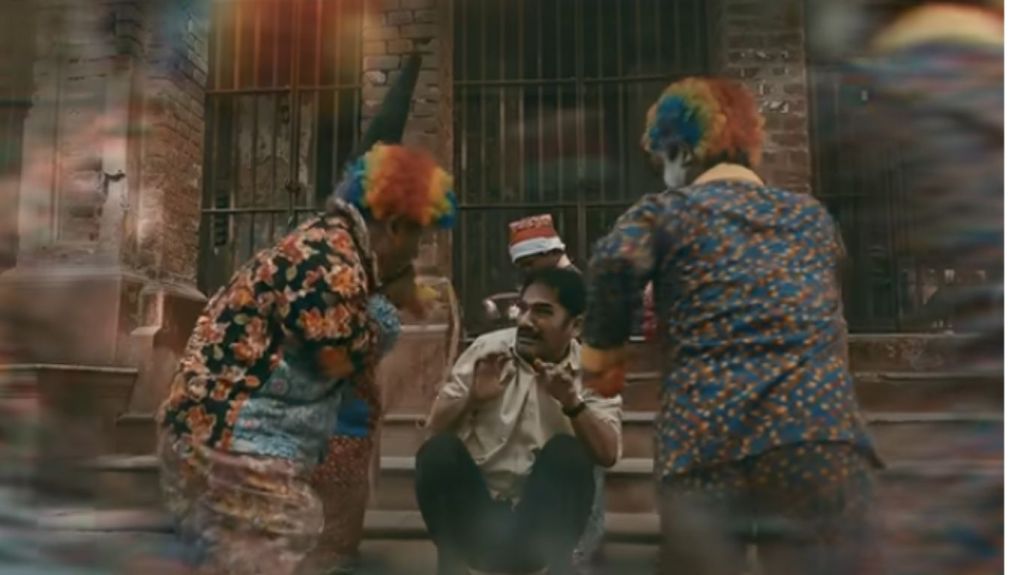
It does not entirely disguise its theatrical origins. There are stretches in which characters argue at length, articulate positions and debate political questions with a directness that can feel more natural in a theatre than on screen. At times the film talks when it might have been more powerful to observe. The screenplay is at its best when it allows the political argument to emerge organically from relationships. It is less effective when characters appear to be speaking primarily to articulate the film’s intellectual concerns.
But I would hesitate to regard this simply as a flaw. The verbal quality is also part of the film’s identity. Mukherji is not trying to transform Winkle Twinkle into an entirely different kind of cinema. The camera expands the play’s world, but the argument remains central. And there is an intellectual pleasure in watching characters actually disagree about politics rather than reducing political conflict to villains and victims.
There is a similar problem with the recreation of different periods of Kolkata. The film has the difficult task of making two historical moments coexist visually. The contrast between the Bengal Sabyasachi remembers and the Bengal into which he returns is central to the story. Yet the physical texture of the city does not always communicate this temporal rupture with sufficient force.
The film’s treatment of time could perhaps have been made more visually radical. Cinema has so many ways of making historical change tangible: architecture, streets, graffiti, objects, technology, clothing, sound, the changing face of a city. Winkle Twinkle sometimes leaves the transformation more in the realm of dialogue and concept than sensory experience. Some passages could also have been tighter. The film occasionally stays with an idea longer than necessary. But these reservations do not diminish what is distinctive about the enterprise. At its heart, this is a film about the impossibility of returning. Not returning to a place. Returning to a time.
Not surprisingly for a Srijit film, the music is one of the places where the film discovers a more instinctive cinematic language. Songs and score become bridges between periods, allowing memory to exist without being verbalized. Tamalika Golder’s songs and Prabuddha Banerjee’s background score help create an atmosphere in which the past does not simply appear as flashback; it seems to linger in the present.
Which brings us back to ‘Janlar Kache’. The choice is almost deceptively simple. The wind knocks at the window. The wind wants to change things. It calls upon us to change. And then comes the recognition that everything changes before we have quite understood that it has changed. The song does not tell Sabyasachi’s story again. It enlarges it.
That ending is a gamble because audiences have been trained to expect closure. What happened? What did Sabyasachi finally understand? What became of his marriage, his politics, his relationship with his son? What conclusion are we supposed to draw? Winkle Twinkle declines to answer all of these questions in the conventional manner.
I think that is precisely why the ending works. An open ending is particularly appropriate for a film about historical time because history itself does not provide endings. One political era becomes another; one ideology mutates into another; relationships continue after the film has stopped watching them. Even the past does not remain finished. It keeps being reinterpreted by those who survive it.
‘Janlar Kache’ understands this intuitively. The wind is already knocking. Change is already underway. Sabyasachi’s return has not restored the past; it has merely exposed the distance between the past he remembers and the present everyone else inhabits. There is something deeply moving about that distance, but Winkle Twinkle wisely does not ask us to weep over it. Instead, it asks us to think about what it means to wake up. Not from sleep, really. From history.
And perhaps the most unsettling thing about Sabyasachi’s story is that none of us is entirely different from him. We all carry versions of the past inside us. We all imagine that the people, places and convictions that shaped us remain somehow available for return. Then, one day, we discover that time has been moving while we were looking elsewhere. The city has changed. The people have changed. We have changed, or perhaps failed to change, and only the encounter with the present reveals the difference. That is what makes Winkle Twinkle more than a political allegory or a Bengali adaptation of the Rip Van Winkle story. It is a film about the loneliness of continuity: the peculiar loneliness of discovering that the world has continued to live while, somewhere inside us, a part of the past remains stubbornly awake.
Uneven, occasionally over-discursive, and not always as visually expressive of its ideas as one might wish, Winkle Twinkle nevertheless has the courage to trust its central metaphor. It does not turn political disillusionment into melodrama or nostalgia into hagiography; it allows competing truths to coexist. Its deeper subject is our relationship with time, and what happens when the illusion of continuity between the world we remember and the world we inhabit finally disappears.
Srijit Mukherji does not always find the most cinematic means to express this. At times the film talks when it should observe, explains when it should suggest, and debates when silence might have been more devastating. But when it finds the right register – particularly in the spaces between Sabyasachi, Rajlakshmi and Indra – it achieves something genuinely affecting.
The haunting irony is that Sabyasachi’s lost twenty-five years have not merely changed the world around him; they have made him incapable of understanding the people he loves. We imagine that memories preserve the past. But memories can also imprison us in it. Winkle Twinkle is occasionally over-intellectual and not always successful in translating the theatrical force of its source into cinema. Yet its central metaphor is powerful, its political questions remain provocative, and Ritwick Chakraborty gives the film a performance of remarkable depth. He plays a man who has slept through history and awakened to discover that history has not been waiting for him. There is something deeply sad about that. And something profoundly human.
And then, just when we expect the film to tell us what all this means, Kabir Suman’s song begins. The wind knocks against the window. Everything is changing. And the film ends before we can be told what comes next.


Leave a Reply