The FIFA World Cup is more than a football tournament. Every four years it produces stories that transcend sport – moments of brilliance, heartbreak, controversy and drama that become part of global memory. Across nearly a century of competition, a handful of episodes have come to symbolize the very spirit of the World Cup. Some showcased extraordinary skill, others astonishing upsets, and a few revealed football’s capacity for high drama. Presented chronologically, here are some of the greatest moments in World Cup history.
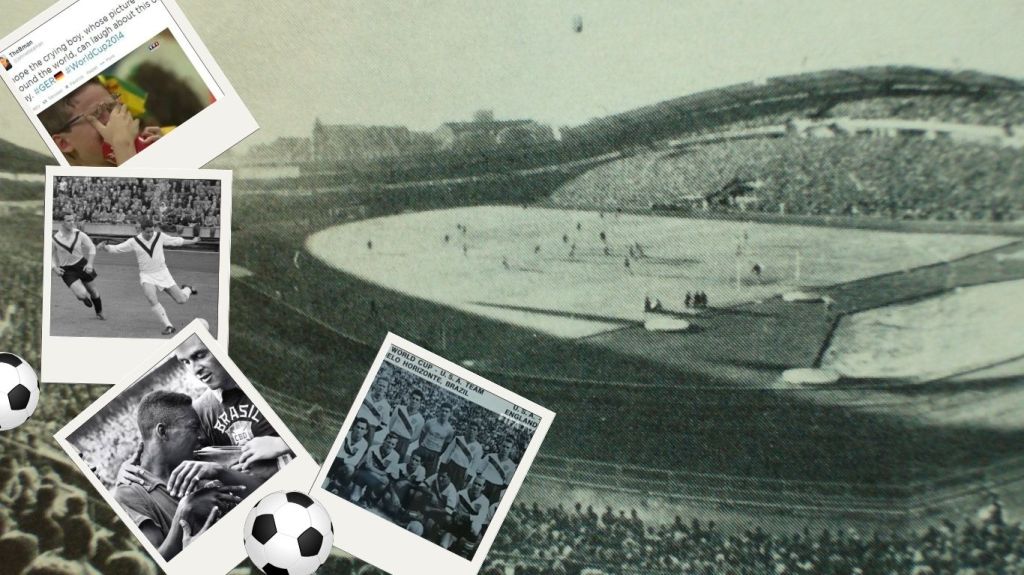
From the shock of the Maracanazo to Messi’s crowning moment in Qatar, the World Cup has consistently delivered stories beyond imagination. It has celebrated underdogs, created legends, shattered dreams and produced moments that continue to resonate decades later.
What makes these episodes unforgettable is not merely their sporting significance. They endure because they capture something universal about competition: courage in adversity, genius under pressure, and the thin line between triumph and heartbreak.
Every World Cup adds new chapters to football’s grand narrative. Yet these moments remain among the milestones by which the tournament’s rich history is measured.
1950: The ‘Miracle on Grass’ – USA Shock England
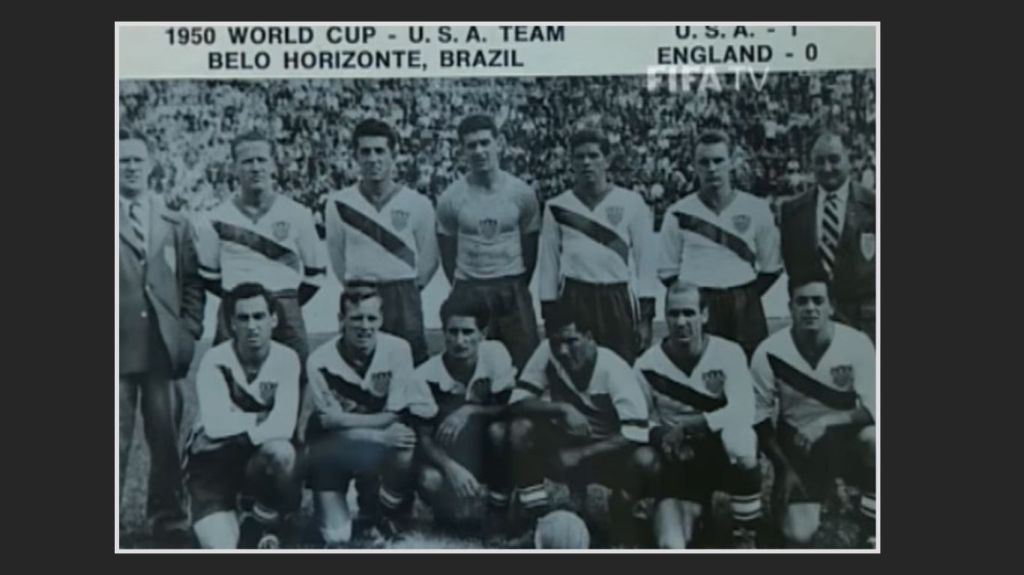
When England arrived at the 1950 World Cup in Brazil, they were regarded as one of the strongest football nations on earth. The United States, by contrast, were a collection of largely part-time players whose day jobs ranged from teaching to manual labour. Few gave the Americans any chance when the teams met in Belo Horizonte. Even the US coach admitted victory seemed impossible.
Yet football has always delighted in defying logic. Against overwhelming odds, Joe Gaetjens headed in the only goal of the match. England dominated possession and created numerous opportunities, but somehow failed to score. The 1-0 result remains one of the greatest upsets in sporting history and demonstrated a lesson that the World Cup would repeatedly reinforce: reputations mean little once the whistle blows.
1950: The Maracanazo
If the American victory over England was shocking, what happened later in the tournament was seismic. Few matches have been revisited and analysed more often than the Maracanazo. Brazil entered the decisive match against Uruguay before a vast crowd at Rio de Janeiro’s newly built Maracana Stadium. Official attendance exceeded 173,000, while many estimates place the crowd above 200,000, still the largest-ever recorded for a football match. The atmosphere was one of celebration long before kick-off. Brazil seemed destined to become world champions on home soil.
Uruguay, however, had other ideas. After falling behind, the Uruguayans fought back to win 2-1. The stunned silence that followed became legendary. Brazilians later coined the term Maracanazo, the ‘Maracana blow’, to describe the trauma. It remains one of football’s most famous heartbreaks and perhaps the greatest upset ever seen in a World Cup final.
1954: The Miracle of Bern
Four years later, another giant was toppled. Hungary’s ‘Golden Team’, led by the magnificent Ferenc Puskas, entered the 1954 World Cup final unbeaten in years. Earlier in the tournament they had crushed West Germany 8-3, reinforcing their status as overwhelming favourites.
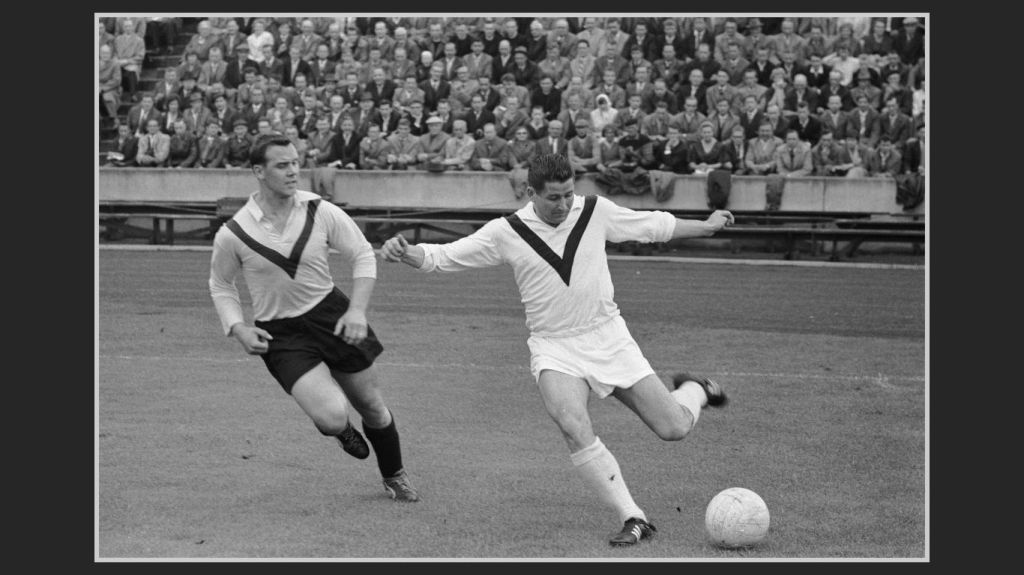
When Hungary raced into a two-goal lead in the final, the expected script appeared to be unfolding. West Germany, however, refused to surrender. They equalized before halftime and, with only minutes remaining, Helmut Rahn struck the decisive goal in a dramatic 3-2 victory.
Known ever since as the ‘Miracle of Bern’, the triumph became a defining moment in post-war German history. It remains one of the most celebrated underdog victories the sport has ever witnessed.
1958: Pelé Announces Himself to the World
Every era has its superstar. In 1958, the world met Pelé. The Brazilian forward was only seventeen years old when he arrived at the World Cup in Sweden. Most teenagers worry about examinations, careers and the uncertainties of adulthood. Pelé was busy transforming football history.
After scoring a hat-trick in the semi-final against France, he delivered an unforgettable performance in the final against Sweden. His two goals included a moment of dazzling improvisation: flicking the ball over a defender before volleying into the net.
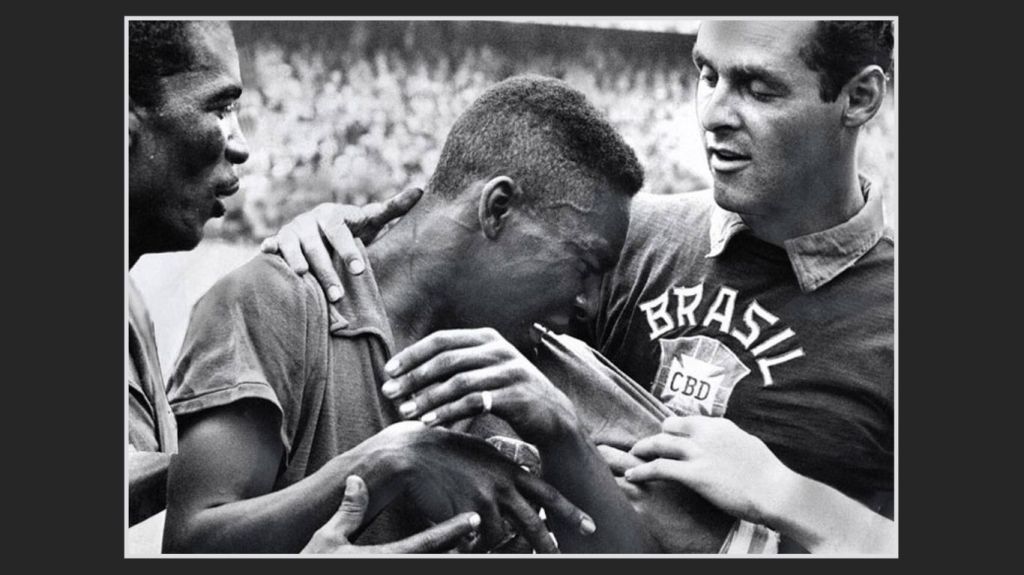
Brazil won 5-2, securing their first World Cup title. Pelé’s tears at the final whistle became an enduring image of the tournament. The performance launched a global icon and marked the beginning of Brazil’s rise as football’s most celebrated nation. Even today, footage of Pelé’s performance in Stockholm retains its power to move and awe.
1966: Geoff Hurst and the Most Famous Goal-Line Debate
England’s only World Cup triumph arrived amid controversy. The 1966 final against West Germany at Wembley Stadium was tied 2-2 in extra time when Geoff Hurst unleashed a powerful shot that struck the underside of the crossbar and bounced down. The crucial question was simple: had the ball crossed the line?
After consulting his linesman, referee Gottfried Dienst awarded the goal. Replays have been scrutinized for decades, and debate continues to this day.
Hurst later completed his hat-trick as England won 4-2. More importantly, he became, and remains, the only player ever to score three goals in a World Cup final. Whether one believes the disputed goal should have stood or not, the moment remains one of football’s most enduring controversies.
1970: Brazil’s Greatest Team Produces Football’s Perfect Goal
Many football historians regard Brazil’s 1970 side as the finest international team ever assembled. Featuring Pelé, Jairzinho, Rivellino, Tostão and Carlos Alberto, the team blended artistry and efficiency in a way rarely seen before or since. Their masterpiece came in the final against Italy.
Leading 3-1 late in the game, Brazil produced a move that seemed to embody the sport’s highest ideals. A sweeping sequence of passes carried the ball across the field before Pelé calmly rolled it into the path of captain Carlos Alberto. Without breaking stride, Alberto thundered a first-time shot into the corner.
The goal was not merely a finish; it was a collective work of art. More than half a century later, it remains one of the most celebrated goals in football history and serves as the defining image of what many still call ‘the beautiful game’.
1986: Maradona’s Contradictory Masterpiece
The sublime and the scandalous over a span of four minutes. No World Cup match has produced two more contrasting moments than Argentina’s quarter-final against England in 1986.
The first came through deception. Early in the second half, Diego Maradona leapt alongside goalkeeper Peter Shilton and punched the ball into the net. The officials missed the infringement and awarded the goal. Maradona later described it as having been scored ‘a little with the head of Maradona and a little with the hand of God’. The phrase entered football folklore instantly.
Yet what happened four minutes later was even more extraordinary. Collecting the ball inside his own half, Maradona turned and accelerated through the English defence. In a run lasting barely ten seconds, he evaded multiple opponents, rounded Shilton and scored one of the greatest goals ever witnessed. The run covered roughly 60 metres and combined balance, pace, close control and audacity in a manner rarely matched. It became known as the ‘Goal of the Century’.
Together, the two goals encapsulated Maradona’s genius and complexity: controversy on one hand, breath-taking brilliance on the other. Argentina won the match 2-1 and went on to lift the World Cup.
The match was played against the backdrop of lingering tensions from the 1982 Falklands War. For many Argentines, it represented more than a football contest. Maradona later described the victory as a symbolic act of revenge for the nation’s wartime defeat and the young soldiers who had perished in the conflict.
What made this match especially memorable for me was that it was the first World Cup match I watched live on television in India. Like millions around the world, I witnessed both the controversy of the ‘Hand of God’ and the brilliance of the ‘Goal of the Century’ unfold in real time. In the days that followed, Maradona’s exploits became the subject of endless addas on the football field where my college friends and I played. Long before social media amplified every sporting moment, debates about his genius, his audacity and the legitimacy of that first goal dominated our conversations. Few matches have remained as vivid in my memory.
1994: Roberto Baggio’s Redemption Run and the Penalty That Defined a Memory
Few World Cup stories better capture the cruelty and beauty of football than Roberto Baggio’s journey at the 1994 tournament in the United States. Italy struggled through the group stage and narrowly survived the knockout rounds, but Baggio transformed their campaign almost single-handedly.
With Italy on the brink of elimination against Nigeria in the Round of 16, he scored a late equalizer and then the winning penalty in extra time. He followed that with decisive goals against Spain in the quarter-finals and Bulgaria in the semi-finals, carrying the Azzurri to the final through a series of match-winning performances.
By the time Italy faced Brazil in Pasadena, Baggio had become the tournament’s defining individual figure. Injured and exhausted, he nevertheless took the field in a final that ended 0-0 after extra time, leading to the first penalty shootout in World Cup final history.
The shootout produced one of football’s most enduring images. With Italy trailing, Baggio stepped forward knowing he had to score to keep his team alive. His penalty sailed over the crossbar, handing Brazil their fourth World Cup title. The sight of Baggio standing motionless beneath the California sky became an iconic symbol of sporting heartbreak.
Yet the image tells only part of the story. While many remember the final kick, his legacy at USA ’94 endures because of everything that came before it: resilience, brilliance and a refusal to accept defeat until the very end.
2006: Zidane’s Final Act
Few careers have ended in more dramatic fashion than that of Zinedine Zidane. The French captain entered the 2006 World Cup final seeking one final triumph before retirement. After scoring an audacious Panenka penalty against Italy, he seemed poised for a fairy-tale conclusion. Instead, football witnessed one of its most astonishing incidents.
During extra time, an exchange of words with Italian defender Marco Materazzi provoked Zidane into turning and driving his head into his opponent’s chest. Materazzi collapsed, the referee was alerted, and Zidane was shown a red card. France eventually lost on penalties.
The image of one of football’s greatest players walking past the World Cup trophy after being sent off remains among the most unforgettable scenes the tournament has ever produced.
2014: Germany’s 7-1 Destruction of Brazil
I still remember the night. Half an hour into the match, the scoreline was an astonishing 5-0 in favour of Germany. Since it was close to 2 a.m., for a moment I wondered if I was asleep and having a bad dream. I rubbed my eyes, went to the washroom and splashed water on my face. Returning to the television, I saw the score still read 5-0. It was no dream. It was Brazil’s worst nightmare coming true.
Certain results transcend football and become national events. Brazil entered the 2014 World Cup dreaming of redemption on home soil after the trauma of 1950. Instead, they experienced perhaps the most shocking defeat in the history of football. In the semi-final, Germany tore through the Brazilian defence with astonishing efficiency. The score was 5-0 after just 29 minutes. The home crowd watched in disbelief as Germany ultimately won 7-1.
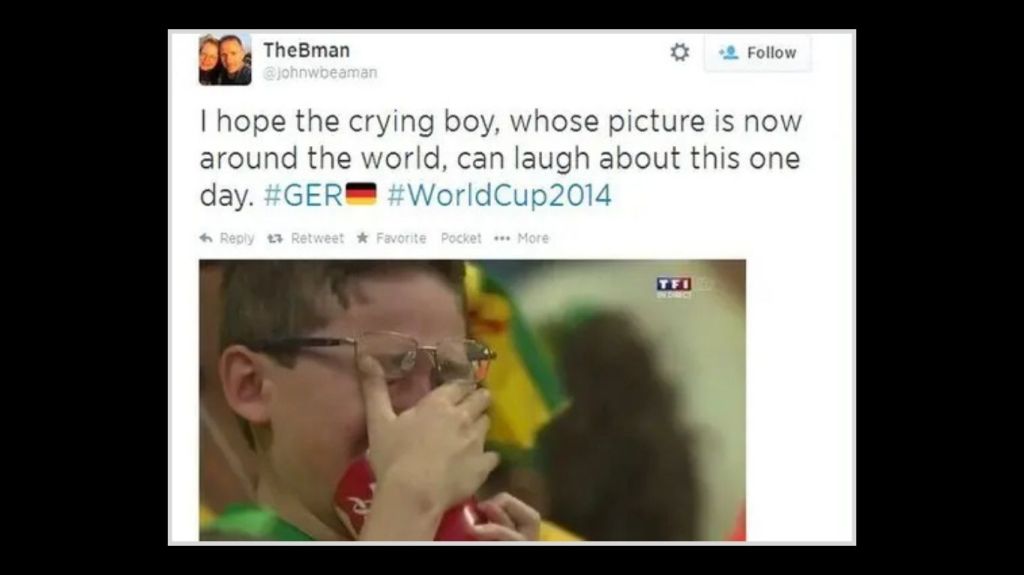
The scale of the collapse was almost impossible to comprehend. Brazil, five-time world champions and football’s most storied nation, had been humiliated before its own supporters. The sight of a bespectacled young Brazilian supporter weeping in despair endures as one of the most haunting and poignant images in the history of football. The match instantly entered sporting folklore and remains one of the most astonishing scorelines ever recorded at the highest level.
2022: Messi Completes the Journey
For years, Lionel Messi’s critics pointed to one omission in his glittering career: the World Cup. The 2022 final in Qatar provided a stage worthy of football’s greatest stars.
Argentina led France 2-0 before Kylian Mbappé inspired a remarkable comeback. Messi restored Argentina’s advantage in extra time; Mbappé equalized again to complete a hat-trick. The match finished 3-3 after 120 extraordinary minutes. In the ensuing penalty shootout, Argentina emerged victorious. As Messi finally lifted the World Cup trophy, one of football’s longest-running debates seemed to reach its natural conclusion. The one major honour that had eluded him throughout his glittering career was at last in his grasp.
In many ways, the moment recalled what India’s triumph in the 2011 Cricket World Cup meant for Sachin Tendulkar. After years of individual excellence and near misses, Tendulkar finally secured the one prize missing from his remarkable résumé. For Messi, too, the World Cup was the final piece that completed an already extraordinary legacy.
I watched the final on television with my son, then a fourteen-year-old football fanatic who, over the years, had introduced me to many of the game’s finer nuances. It remains one of the most memorable football-watching experiences we have shared. Although neither of us had a particular allegiance to either Argentina or France, the drama unfolding before us generated a level of tension usually reserved for matches involving one’s own national team.
While Messi’s triumph was deeply satisfying, it was impossible not to feel sympathy for Kylian Mbappé. Having scored a hat-trick in a World Cup final and almost single-handedly dragged France back from the brink of defeat, he finished on the losing side despite producing one of the greatest individual performances the tournament has ever seen.
Many regard the contest as the greatest World Cup final ever played, a breath-taking spectacle that appeared to provide the perfect closing chapter to Messi’s international career. Yet football has a habit of defying expectations. With Messi returning for the 2026 World Cup, it remains to be seen whether the story has one final chapter left to tell.


Leave a Reply