In Quiet Excellence , published by Om Books International, Rajneesh Jain reflects on leadership, resilience, spirituality, and human connection through stories drawn from everyday life. In this conversation, he speaks about storytelling, emotional intelligence, mentorship, and why ‘quiet’ values matter more than ever in a noisy world.
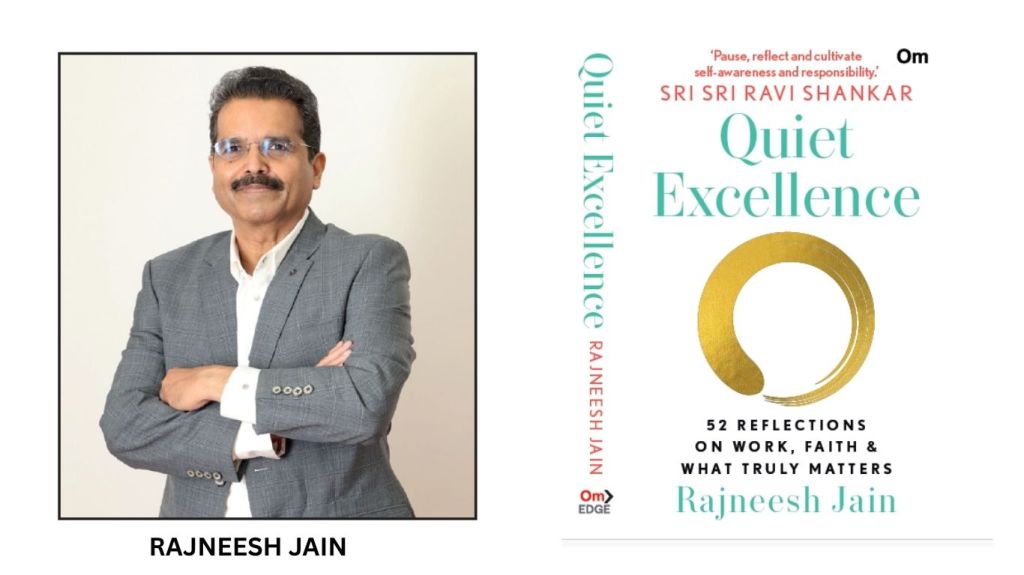
Shantanu: Quiet Excellence is built around small, everyday moments that open up into larger life lessons. When did you first realize that these seemingly ordinary experiences could form the foundation of a book?
Rajneesh: As mentioned in the Preface, all around us, ordinary people go about their everyday lives in ways that offer profound lessons in the art of living. There is beauty, and often inspiration, in observing and capturing their daily journeys.
My story is a tribute to this quiet, everyday courage: the resilience to face life’s challenges and heartbreaks, and the ability to search for meaning even when none is immediately visible. It is about the determination to rise each day and keep going, no matter what life places in one’s path ahead.
Shantanu: The book moves seamlessly between leadership lessons, spirituality, personal reflection, and professional anecdotes. Was there a conscious narrative structure you followed while putting these 52 reflections together, or did the themes emerge organically over time?
Rajneesh: The 52 reflections in this book have been carefully selected from nearly 180 stories and life lessons written over the past several years. To make the reading experience more engaging, relevant and accessible, they have been thoughtfully organized into nine thematic chapters. This allows readers the freedom to explore the book in any order they choose, beginning with the themes that resonate most deeply with them.
Each story stands on its own, offering a distinct perspective and a unique lesson drawn from everyday life. At the same time, the reflections have been grouped together to evoke broader human emotions and experiences such as gratitude, faith, inner peace, resilience, relationships, and work-life balance. Together, these stories form a tapestry of insights that encourage reflection, empathy, and a deeper understanding of life’s quiet truths.
Shantanu: As the CFO of Reliance Jio, your professional life is deeply rooted in numbers, strategy, and high-pressure decision-making. How different, or perhaps surprisingly similar, was the mindset required to become a writer?
Rajneesh: In today’s world, the role of a CFO extends far beyond that of a number cruncher. A modern CFO is also expected to be a business enabler, someone who understands people as deeply as processes and numbers. This demands not only financial acumen, but also an understanding of human behaviour and the ability to bring people together towards a shared purpose.
I have always believed in the power of discipline, dedication, and determination. In my view, these virtues exist within every individual; they simply need the right guidance, encouragement, and motivation to flourish. Having seen their positive impact in both my personal and professional life, I felt compelled to share these experiences and insights with a wider audience.
Over time, my weekly reflections and stories on LinkedIn were warmly received and deeply appreciated by diverse readers. That response inspired the idea of bringing them together in the form of a book – one that readers could preserve, revisit, and turn to whenever they seek perspective, encouragement, or clarity.
Shantanu: Many of the stories in the book feel deeply personal and emotionally observant, whether it’s a roadside vendor, a workplace memory, or a passing interaction. What was your actual writing process like? Did you maintain journals or notes over the years, or did you reconstruct these moments while writing?
Rajneesh: Many of the observations captured in this book arise from situations and experiences that all of us encounter in our everyday lives. The difference, perhaps, lies in the way I pause to reflect upon them, to look beyond the surface of an incident, a conversation, or an environment, and search for the deeper life lesson hidden within it.
Over the years, I have realized that some of life’s most meaningful insights do not emerge from extraordinary events, but from ordinary moments that quietly pass us by. A fleeting interaction, a simple act of kindness, a setback, or even a routine experience can often reveal profound truths about human nature, resilience, relationships, and purpose if we take the time to reflect upon them.
Whenever such a thought or insight takes shape in my mind, I try to give it a form through a story, sometimes to share immediately, and at other times to preserve for reflection at a later stage. Storytelling, to me, is not merely a way of narrating events; it is a means of connecting experiences with emotions and transforming observations into lessons that others may relate to in their own lives.
The stories included in this collection are drawn from real-life experiences, personal encounters, and moments of inspiration gathered through conversations, observations, and books I have read over the years. Each one, in its own way, seeks to capture a slice of life and the quiet wisdom it offers.
Shantanu: One of the striking aspects of Quiet Excellence is its emphasis on humility, restraint, and ‘quiet’ leadership in a world that rewards noise and visibility. Do you think corporate India is increasingly ready for this kind of conversation?
Rajneesh: You are absolutely right. In today’s fast-changing world, professional success is often measured by speed, visibility, and immediate results. In the process, many of the core human values that form the foundation of meaningful leadership tend to be overlooked. While such an approach may bring short-term success, it often rests on fragile foundations and rarely endures over time.
At the same time, the growing integration of Artificial Intelligence into both our professional and personal lives is reshaping the qualities that truly matter. Increasingly, success is no longer defined by intelligence alone, but by the balance of IQ and EQ. Technical expertise and analytical ability remain important, but qualities such as judgement, emotional restraint, humility, empathy, self-awareness, and the ability to inspire trust are becoming equally, if not more, essential. These are the attributes that will shape the next generation of leaders.
This book, therefore, places strong emphasis on a style of leadership rooted in quiet excellence; leadership guided by integrity, consistency, compassion, thoughtful action, and purpose-driven decision-making. It advocates a balanced and reflective approach rather than one driven by impulse, reaction, or negativity. True leadership, after all, is not about being the loudest voice in the room, but about creating lasting impact through character, wisdom, and the ability to develop and bring out the best in others.
Shantanu: The book repeatedly returns to the idea that leadership is ultimately about people, empathy, and emotional memory rather than just performance metrics. Looking back on your own journey, were there specific mentors or experiences that shaped this philosophy most strongly?
Rajneesh: Yes, I consider myself truly fortunate and deeply blessed to have been guided by remarkable individuals from different walks of life, each of whom has shaped my thinking, values, and journey in meaningful ways. Their influence continues to inspire and guide me even today.
In my reflection on the ‘Gurus of Life’, I have tried to acknowledge these guiding forces who illuminated different stages of my life. First came The Light Bringers, my parents, who gave me the foundation of values, character, and unconditional support. Then came The Torchbearers, my teachers, who expanded my horizons through knowledge, discipline, and curiosity.
As I entered the professional world, I encountered The Shapers, my bosses and mentors, who challenged me, refined my perspective, and helped me grow through experience and responsibility. Alongside them were The Illuminators, my spiritual gurus, who guided me towards introspection, balance, and a deeper understanding of purpose and inner peace.
Shantanu: Now that you’ve discovered this writerly voice alongside your corporate one, do you see yourself continuing to write? Perhaps another collection, a memoir, or even a book focused more specifically on leadership and finance?
Rajneesh: I have always believed that, over the course of life’s journey, we gather experiences, insights, and lessons that should be shared with the younger generation, especially the lessons drawn from what worked well and what helped us grow. Such experiences become a kind of playbook for life, a practical guide shaped not by theory, but by lived realities. In many ways, they serve as a ‘Google of life’, offering direction, perspective, and wisdom to those navigating their own journeys.
I have also learned to live fully in the present, for tomorrow is never guaranteed. Perhaps that is why I have never hesitated to share my experiences, both professional and personal, through platforms such as LinkedIn and Facebook. My intention has always been to connect, encourage reflection, and contribute in whatever small way I can to the lives of others. I hope to continue doing so in the years ahead.
Whether these reflections eventually evolve into another book will depend entirely on how this one is received by its readers. Ultimately, the decision rests with the readers. I leave that, with gratitude and humility, in their hands.


Leave a comment