Unlike the Father of the Nation, Mahatma Gandhi, who was dismissive of cinema, Rabindranath Tagore followed the medium closely and even engaged with its development in its early stages. From silent-era adaptations to Satyajit Ray and Rituparno Ghosh, Tagore engaged with cinema and inspired generations of film-makers to reimagine his words as image, music and movement. On his anniversary, a snapshot of how the poet and writer has been a muse for film-makers for over ninety-years.
***
‘As in politics, so in art the aim is independence … that cinema has so long been subservient to literature is due to the fact that no artiste has been able to redeem it from this slavery by dint of his genius. The principal element of the motion picture is the flux of image. The beauty and grandeur of this form in motion has to be developed in such a way that it becomes self-sufficient without the use of words. If some other language is needed to explain its own, it amounts to incompetence.’ – Rabindranath Tagore
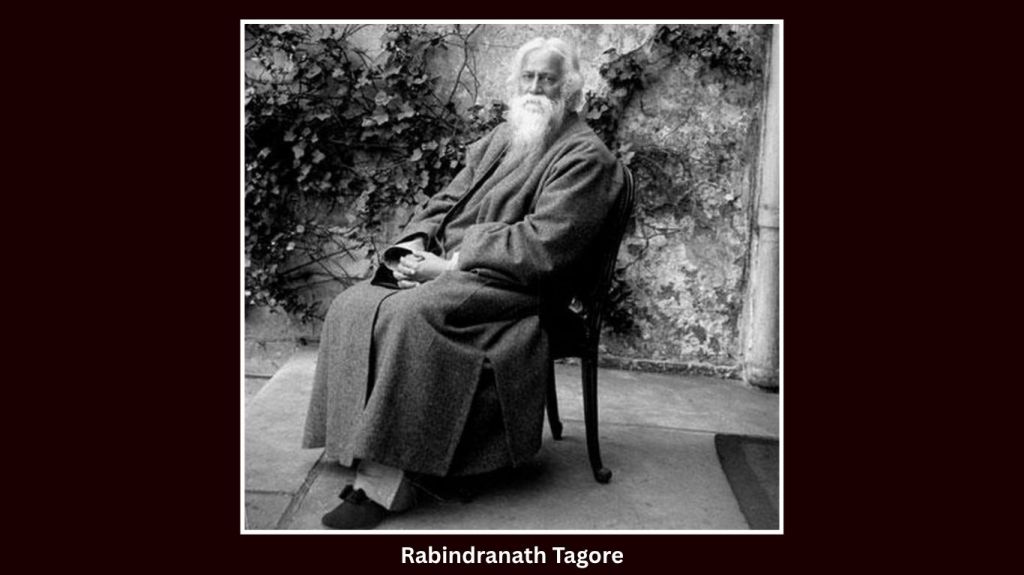
It is testimony to Rabindranath Tagore’s understanding of the medium of cinema that even close to a century after he made the observation, it remains the touchstone for anyone aspiring to make a film. Unlike the Father of the Nation, Mahatma Gandhi, who dismissed cinema as a corrupting influence, Tagore followed the medium closely and even engaged with its development in its early stages. On the eve of India’s first talkie in 1931, Tagore visited the Soviet Union in 1930, where he watched Eisenstein’s Battleship Potemkin and in interactions with film-makers discussed making a film on the history of mankind. According to Edward Thomson, his biographer, there were negotiations with Hollywood honcho Alexander Korda on a project to make films based on Tagore’s works which unfortunately never materialized. He also wrote a script called Child, based on a play on Christ that he had watched on a visit to Germany. The film was never made, though Ritwik Ghatak would use the first two lines from it for his film, Subarnarekha, albeit in an entirely different context.
Tagore also played an important role in the first family of Indian cinema, the Kapoors, venturing into films. In his early days in theatre in Calcutta, Prithviraj Kapoor had played Ram to Durga Khote’s Seeta, in the stage production of Seeta. Tagore had seen it and was impressed by his performance. So, when his friend, B.N. Sircar, producer and founder of New Theatres, decided to turn Seeta into a motion picture, Tagore suggested that he cast Prithviraj Kapoor and Durga Khote in it. Seeta, the film, was a blockbuster. Thus began the Kapoor khandaan’s tryst with the Hindi film industry.
Tagore’s stories, novels and poems have inspired film-makers right from the early days of cinema in India. His songs find their way into Bengali films with unfailing regularity even today.
The Early Films
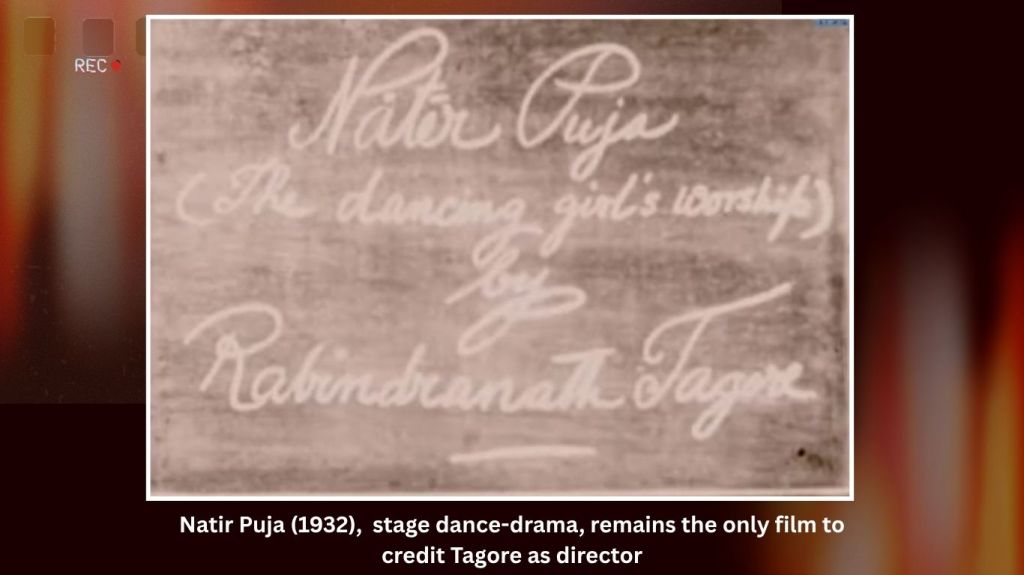
The first film based on a Tagore story was made in 1923. Manbhanjan was directed by Naresh Mitra, who was also the first to adapt Saratchandra Chatterjee’s Devdas. In 1929 came Grihabala, directed by Modhu Bose, who made two more silent films based on Tagore’s stories. Tagore himself worked on the film’s script adapted from his stories ‘Manbhanjan’ and ‘Dalia’. Naval Gandhi’s Balidan (1929) was based on a play that Tagore had written. According to The Encyclopaedia of Indian Cinema, the Indian Cinematograph Committee in 1927–28 cited Balidan as one of the films to ‘show how serious Indian cinema could match Western standards’. Natir Puja (1932), a recording of Tagore’s 1926 stage dance-drama, remains the only film to credit Tagore as director. In 1935, P.C. Barua’s Mukti – the title suggested by Tagore who had met Barua in Europe and been impressed with his passion for cinema – became the first film to use Rabindrasangeet in its narrative. Pankaj Mullick, who also set Tagore’s poem ‘Shesh Kheyai’ to tune in the film, got Tagore’s approval to use ‘Aami kaan pete roi’ and thus began a trend that continues even today.
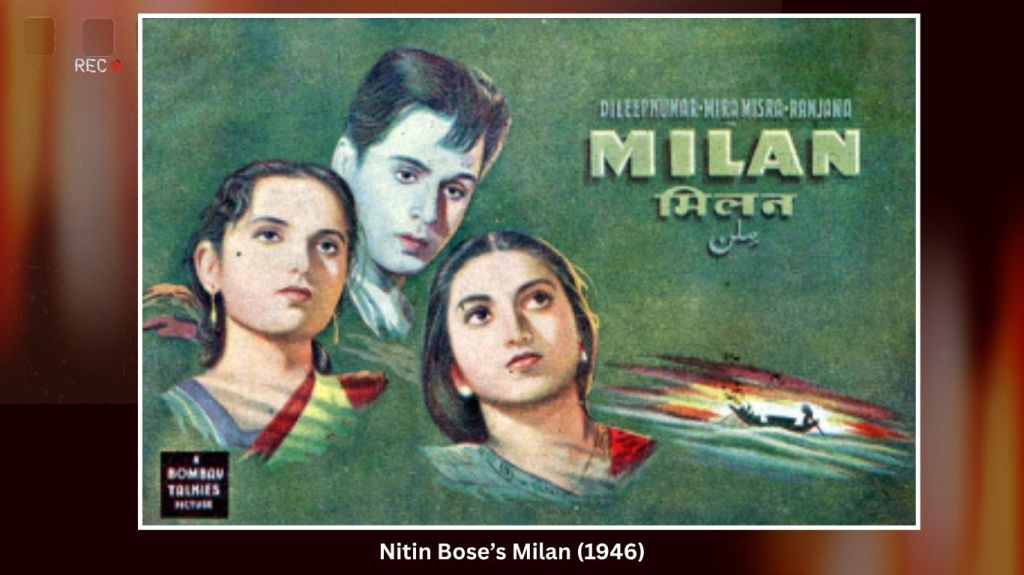
Nitin Bose’s Milan (1946)
Nitin Bose’s maiden directorial venture for Bombay Talkies after he shifted from New Theatres was Sajanikanta Das’s adaptation of Tagore’s 1907 novel Naukadubi. The film starred Dilip Kumar and marked his first film with Bombay Talkies. Dilip Kumar has acknowledged Nitin Bose as having groomed him and shaping his acting style with Milan. Radhu Karmakar’s cinematography came in for critical acclaim while Anil Biswas’s music, comprising four evergreen numbers rendered by his sister Parul Ghosh and a couple of others by Geeta Dutt, has stood the test of time.
Nitin Bose remade the film in Bengali in 1947 with Abhi Bhattacharya essaying the role played by Dilip Kumar. However, the more talked-about ‘remake’ happened in 2011. More about that later.
Tapan Sinha’s Kabuliwala (1957) and Kshudhita Pashan (1960)
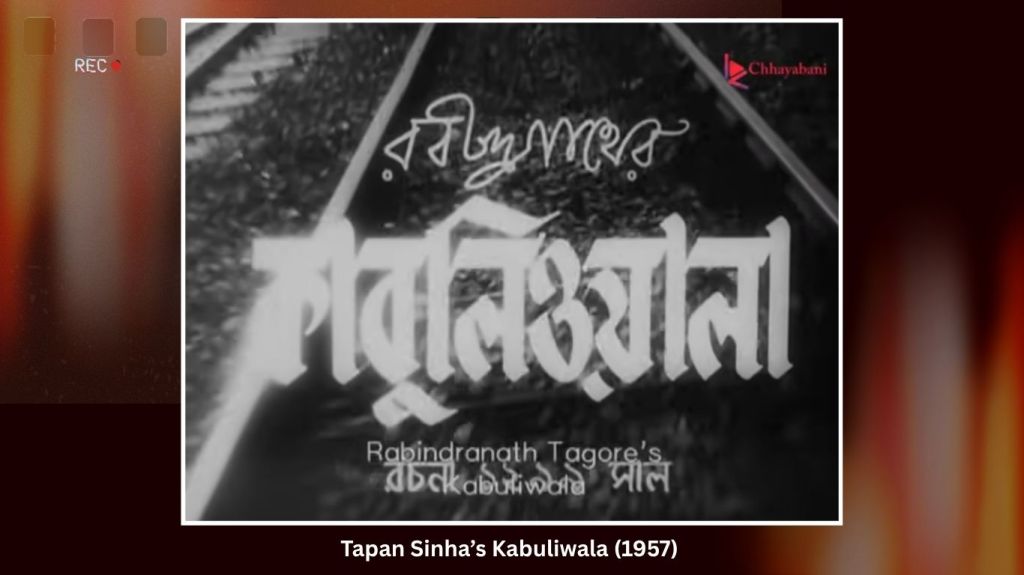
‘Kabuliwala’ is probably Tagore’s most celebrated short story and Tapan Sinha’s film does full justice to it in a straightforward adaptation – ‘I faithfully followed Rabindranath, keeping his spirit intact, and that perhaps is the simple reason behind its success,’ the director said in an interview. Chhabi Biswas is unparalleled in the titular role, reprised by Balraj Sahni in Bimal Roy’s 1961 Hindi production directed by Hemen Gupta. Tapan Sinha’s version won the President’s Gold Medal for the best film of the year and the best music award – scored by Ravi Shankar – at the Berlin Film Festival. The Hindi version was immortalized by Manna Dey’s rendition of ‘Aye meray pyare watan’.
According to Tapan Sinha, ‘Rabindranath wasn’t a name that garnered enthusiastic approval from people related to the film industry. It was believed that his stories simply could not earn money…and as such, he was relegated to the intellectual bastion … [yet] here was a producer who was offering me a chance to work on a story by Rabindranath. Before he could misinterpret my silence and change his mind, I gave him my consent. Ashit babu went on to add that the process of filming would be very difficult as his funds were rather limited. He promised to pay me three hundred rupees every month during the shooting of the film. … I would have worked in the film even if I didn’t get paid for it. I regarded [Rabindranath] to be central to my existence, whose faithful disciple I’ll ever remain, and who stands as glorious as the north star of my life…’
In an interview in 1991, Tapan Sinha had expressed a desire to remake Kabuliwala. ‘The main theme of this story, love, is an issue that has tremendous scope of being projected to the world. I’d like to begin the story from Afghanistan. I may even try and incorporate the current Gulf crisis.’ Interestingly enough, Deb Medhekar’s Bioscopewala (2018), which starred Danny Denzongpa in the lead, reworked Tagore’s classic against the backdrop of the fundamentalist Taliban, bringing in the bioscope in place of the dry fruits that Tagore’s Rehmat Khan traded in.
Tapan Sinha returned to Tagore with Kshudhita Pashan in 1960, a gothic romance that in the words of BethLovesBollywood brims over with an ‘abandoned Mughal palace, horses, ghosts, guns, whooshing wind, flickering lanterns’. Boasting a brilliant background score, courtesy Ustad Ali Akbar Khan, and starring Soumitra Chatterjee and Arundhati Devi, the film had sketches of Fatehpur Sikri by Satyajit Ray. Not as big a success as Kabuliwala, this ode to the supernatural was more visually stimulating with some striking cinematography by Bimal Mukherjee which adds to the film’s sense of impending doom.
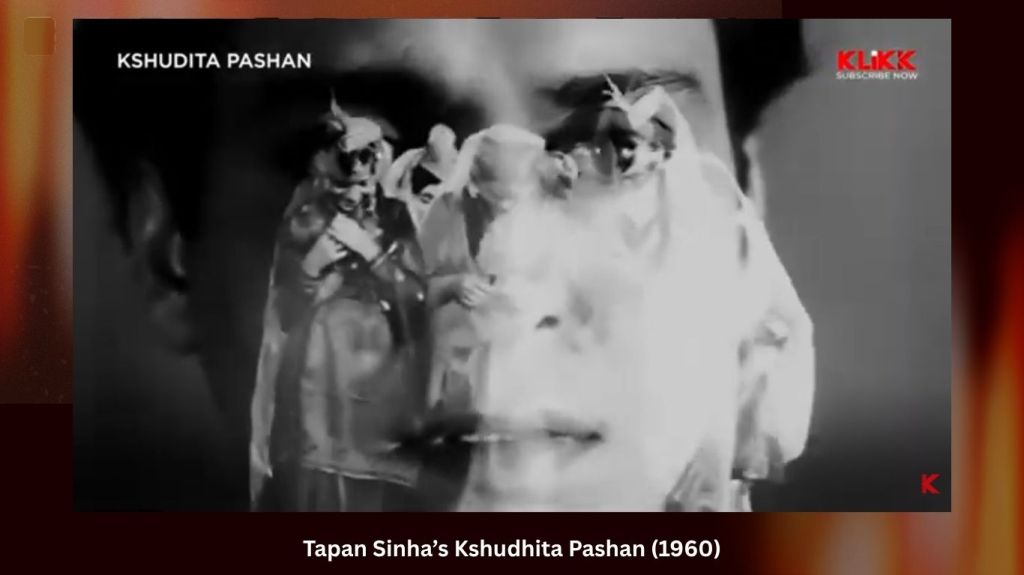
Almost thirty years later, Gulzar made Lekin, loosely inspired by ‘Kshudhita Pashan’. Though the film failed at the box office, its music played a crucial role in bringing melody back to Hindi films after it had plumbed new depths in the second half of the 1980s. Apart from its national award–winning score, the film garnered critical acclaim for Vinod Khanna’s sensitive performance and for Dimple Kapadia, arguably the most beautiful ‘ghost’ in Hindi films ever.
The Satyajit Ray Films
Tagore had a profound influence on Satyajit Ray who had studied at Santiniketan. When Ray was a mere boy of six, Tagore even composed a poem for him:
বহু দিন ধোরে, বহু ক্রোশ দুরে
বহু ব্য্য় কোরি, বহু দেশ ঘুরে
দেখিতে গিযাছি পর্বত্ মালা, দেখিতে গিযাছি সিন্ধু
দেখা হয় নাই দু চোখ মেলিযা
ঘর হোতে শুধু দুই পা ফেলিযা
এক্তি ধানের শিশের উপর এক্তি শিশির বিন্দু
(For years I have travelled miles, journeyed to lands far away
I have been to the mountains, I have been to the oceans.
But I failed to see,
Two steps from my home,
A drop of dew, glistening on a sheaf of grain.)
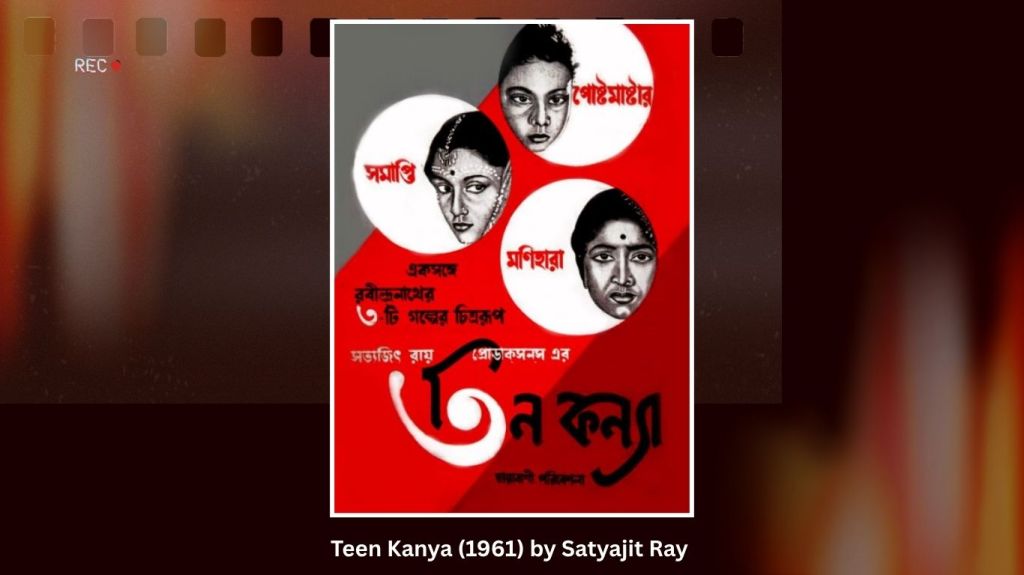
In Tagore’s centenary year (1961), Ray directed not only the feature Teen Kanya (comprising three stories by Tagore: Postmaster, Monihara and Samapti), but also a 54-minute documentary titled Rabindranath Tagore. Innovatively structured, the film’s first part comprises dramatized vignettes from Tagore’s childhood and adolescence, while the second, drawn from archival footage, is a more conventional documenting of his public life. In his biography titled Satyajit Ray: The Inner Eye, Andrew Robinson quotes Ray as saying that ‘ten or twelve minutes of [the film] are among the most moving and powerful things that I have produced’.
Ray himself has been on record that if there is one film he would make exactly as he did, the film in which he made the least number of mistakes, it is Charulata (1964). From its celebrated opening sequence – arguably one of the greatest in cinema – to the famed swing scene to its controversial freeze-frame ending, Charulata is a triumph at every level. If Madhabi Mukherjee had never acted in another film, Charulata would always remain her ticket to cinematic greatness. Soumitra Chatterjee, who portrayed her brother-in-law Amal, calls Tagore’s ‘Nastaneer’ one of Tagore’s finest stories. Recalling the perfectionist in Ray, he says that for the sequences where Amal plays the piano, the director rented one and sent it home for the actor to practise, teaching him how to play the instrument with both hands. Then, in keeping with the period the film is set in, Ray also got Soumitra Chatterjee to change his handwriting. The star’s handwriting was rounded, a style that had been ushered in by Tagore. The director reasoned that since the story was written by Tagore, the writing had to reflect an earlier period. The extraordinary calligrapher he was, Ray collected a number of texts of the pre-Tagore era and got the actor to develop a whole new handwriting for the sake of authenticity. The actor also had an important part to play in the way the film’s memorable final shot was conceived after he expressed his dissatisfaction with the way Ray had first visualized the sequence.
Ray returned to Tagore twenty years later with Ghare Baire, a 1916 novel that Ray had always dreamed of adapting. In fact, this was the screenplay he had ready even before Pather Panchali, and had even discussed casting Soumitra Chatterjee as Nikhilesh during the making of Apur Sansar. By the time he actually got to making it, Victor Banerjee came to be cast as Nikhilesh with Chatterjee giving life yet another memorable Ray character in Sandip. This was probably the first full-fledged antagonist that Ray had created and gave the actor an opportunity to play a scheming hypocrite who uses his oratory and his charm to seduce his friend’s trusting wife.
The Rituparno Ghosh Films
If there is one film-maker after Ray who reinvented Tagore to present it to a new generation, it is Rituparno Ghosh. Based on Tagore’s novel Binodini, Chokher Bali (2004) chronicles the journey of a widow who refuses to play the game by the rules that society lays down. In the hands of Ghosh, who changed Tagore’s ending to the novel to give the heroine a rare agency, it becomes a heady, full-bodied tale that explored the female gaze. It is interesting to note that Tagore himself had regretted the end he had devised for his novel. ‘Ever since it was published I have always regretted the ending,’ admitted before his death. ‘I need to be seriously criticized for it, I deserve this criticism.’
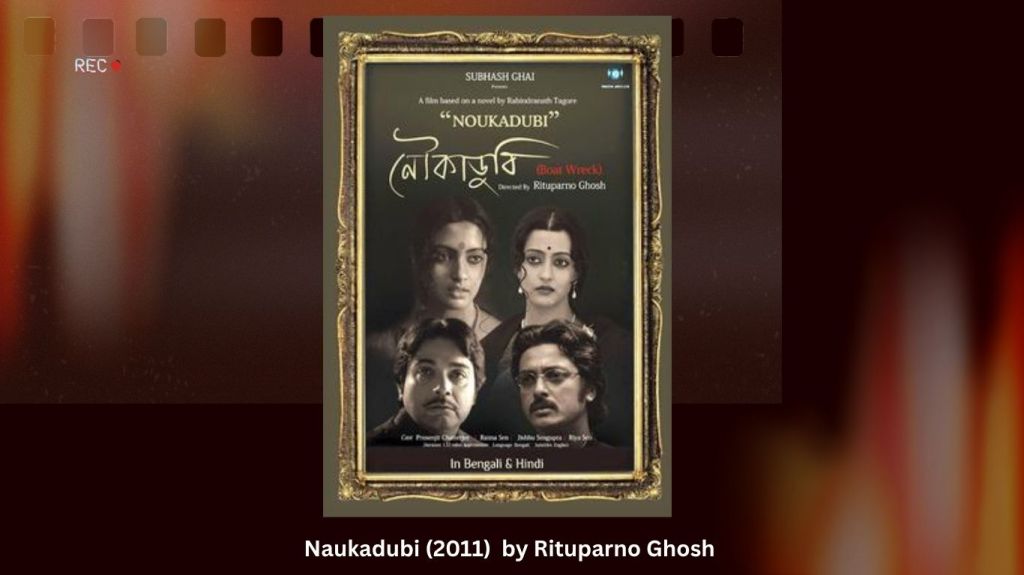
Though not as successful as Chokher Bali, Naukadubi (2011) is my favourite of the two Ghosh adaptations of Tagore. Ghosh takes the basics of Tagore’s story and weaves in his own understanding and admiration of Tagore to create a work as much Tagore’s as his. It goes without saying that the concept sounds ludicrous today: a groom and a bride from two weddings coming together thanks to a boat wreck. However, Ghosh understands Tagore’s larger vision in looking at relationships of choice vis-à-vis chance to create a visually stunning mix of a period and a chamber drama. In the words of film-maker Pratim D. Gupta, then a film critic for The Telegraph, ‘Ghosh turns the adaptation into a full-blown celebration of Tagore. Besides the yarn itself, the characters express their pain and pleasure by breaking into Rabindrasangeet (Khelaghar bandhte legechhi and Tori aamar being the two main themes). What’s more, they have his photo on the bedside table, and Hemnalini even wishes to marry the poet at one point.’
The Others
Another landmark adaptation of a Tagore novel came about in Kumar Shahani’s Char Adhyay. Shahani uses his trademark aesthetic to explore the journey of the novel’s heroine, Ela, who starts to question the blind patriotism of the group of revolutionaries she is part of. Shahani’s version is not only a masterclass on Tagore’s criticism of rabid nationalism and the perils of idealism (also seen in Ghare Baire) but also provides invaluable insights into Tagore’s progressive views on women’s role in politics. Brilliantly shot by K.K. Mahajan, Char Adhyay is one of the high points of the parallel cinema movement in India.
Other minor Hindi film adaptations include Zul Vellani’s 1965 film, Dak Ghar, based on Tagore’s play of the same name. Tarachand Barjatya’s Rajshri Productions made two films from the stories of Tagore. Uphaar (1971), adapted from Tagore’s story ‘Samapti’ (which Ray had filmed as part of Teen Kanya), was directed by Sudhendu Roy and starred Jaya Bhaduri in the role immortalized by Aparna Sen in Ray’s film. The 1975 musical hit, Geet Gaata Chal (directed by Hiren Nag), starring Sachin and Sarika, based on ‘Atithi’, is still remembered for its bouquet of songs composed by Ravindra Jain and sung by Jaspal Singh.
Bimal Roy’s neo-realist classic Do Bigha Zamin (1953) is another film that owes its origins to Tagore. Though the story is credited to Salil Chowdhury, its title harks back to Tagore’s poem ‘Dui Bigha Jomi’. The film not only heralded a new era in Hindi cinema with its unrelenting portrayal of greed and exploitation, it also featured Balraj Sahni, who had taught at Santiniketan, in his career-defining role, one of the greatest performances in Hindi cinema.
Coda
I would like to end this by mentioning a film that is not based on a Tagore story but which looks at his relationship with his sister-in-law. The reason I do so is that the film provides a unique glimpse into the world of the poet. Suman Ghosh’s Kadambari (2015) is that rare biopic that is intellectually stimulating while being emotionally satisfying without being flattering to its subject. Ghosh looks at the Bengal Renaissance from the point of view of Kadambari, who becomes a part of the Renaissance’s first family, who develops her personality to the extent of becoming the sounding board and critic of Tagore’s poems, only to end up trapped in a world of her own.
In what is probably the most eloquent last-quarter of an hour in Bengali cinema in recent times, Ghosh manages to do what Tagore called for in the quotation with which I began the essay. With no dialogues and just one character (brilliantly essayed by Konkana Sen) confined to one room, he conveys the shattering loneliness of the woman who became muse to the greatest of India’s poets. As Ghosh once said, ‘She is alone … and silence is the most powerful tool in what is essentially a visual medium.’
দুই বিঘা জমি
শুধু বিঘে দুই ছিল মোর ভুঁই আর সবই গেছে ঋণে।
বাবু বলিলেন, “বুঝেছ উপেন, এ জমি লইব কিনে।’
কহিলাম আমি, “তুমি ভূস্বামী, ভূমির অন্ত নাই।
চেয়ে দেখো মোর আছে বড়ো-জোর মরিবার মতো ঠাঁই।’
শুনি রাজা কহে, “বাপু, জানো তো হে, করেছি বাগানখান
পেলে দুই বিঘে প্রস্থে ও দিঘে সমান হইবে টানা–
ওটা দিতে হবে।’ কহিলাম তবে বক্ষে জুড়িয়া পাণি
সজল চক্ষে, “করুণ বক্ষে গরিবের ভিটেখানি।
সপ্ত পুরুষ যেথায় মানুষ সে মাটি সোনার বাড়া,
দৈন্যের দায়ে বেচিব সে মায়ে এমনি লক্ষ্মীছাড়া!’
আঁখি করি লাল রাজা ক্ষণকাল রহিল মৌনভাবে,
কহিলেন শেষে ক্রূর হাসি হেসে, “আচ্ছা, সে দেখা যাবে।’
পরে মাস দেড়ে ভিটে মাটি ছেড়ে বাহির হইনু পথে–
করিল ডিক্রি, সকলই বিক্রি মিথ্যা দেনার খতে।
এ জগতে, হায়, সেই বেশি চায় আছে যার ভূরি ভূরি–
রাজার হস্ত করে সমস্ত কাঙালের ধন চুরি।
মনে ভাবিলাম মোরে ভগবান রাখিবে না মোহগর্তে,
তাই লিখি দিল বিশ্বনিখিল দু বিঘার পরিবর্তে।
সন্ন্যাসীবেশে ফিরি দেশে দেশে হইয়া সাধুর শিষ্য
কত হেরিলাম মনোহর ধাম, কত মনোরম দৃশ্য!
ভূধরে সাগরে বিজনে নগরে যখন যেখানে ভ্রমি
তবু নিশিদিনে ভুলিতে পারি নে সেই দুই বিঘা জমি।
হাটে মাঠে বাটে এই মতো কাটে বছর পনেরো-ষোলো–
একদিন শেষে ফিরিবারে দেশে বড়ই বাসনা হল।
নমোনমো নম সুন্দরী মম জননী বঙ্গভূমি!
গঙ্গার তীর স্নিগ্ধ সমীর, জীবন জুড়ালে তুমি।
অবারিত মাঠ, গগনললাট চুমে তব পদধূলি,
ছায়াসুনিবিড় শান্তির নীড় ছোটো ছোটো গ্রামগুলি।
পল্লবঘন আম্রকানন রাখালের খেলাগেহ,
স্তব্ধ অতল দিঘি কালোজল– নিশীথশীতল স্নেহ।
বুকভরা মধু বঙ্গের বধূ জল লয়ে যায় ঘরে–
মা বলিতে প্রাণ করে আনচান, চোখে আসে জল ভরে।
দুই দিন পরে দ্বিতীয় প্রহরে প্রবেশিনু নিজগ্রামে–
কুমোরের বাড়ি দক্ষিণে ছাড়ি রথতলা করি বামে,
রাখি হাটখোলা, নন্দীর গোলা, মন্দির করি পাছে
তৃষাতুর শেষে পঁহুছিনু এসে আমার বাড়ির কাছে।
ধিক্ ধিক্ ওরে, শতধিক্ তোরে, নিলাজ কুলটা ভূমি!
যখনি যাহার তখনি তাহার, এই কি জননী তুমি!
সে কি মনে হবে একদিন যবে ছিলে দরিদ্রমাতা
আঁচল ভরিয়া রাখিতে ধরিয়া ফল ফুল শাক পাতা!
আজ কোন্ রীতে কারে ভুলাইতে ধরেছ বিলাসবেশ–
পাঁচরঙা পাতা অঞ্চলে গাঁথা, পুষ্পে খচিত কেশ!
আমি তোর লাগি ফিরেছি বিবাগি গৃহহারা সুখহীন–
তুই হেথা বসি ওরে রাক্ষসী, হাসিয়া কাটাস দিন!
ধনীর আদরে গরব না ধরে ! এতই হয়েছ ভিন্ন
কোনোখানে লেশ নাহি অবশেষ সেদিনের কোনো চিহ্ন!
কল্যাণময়ী ছিলে তুমি অয়ি, ক্ষুধাহরা সুধারাশি!
যত হাসো আজ যত করো সাজ ছিলে দেবী, হলে দাসী।
বিদীর্ণ হিয়া ফিরিয়া ফিরিয়া চারি দিকে চেয়ে দেখি–
প্রাচীরের কাছে এখনো যে আছে, সেই আমগাছ একি!
বসি তার তলে নয়নের জলে শান্ত হইল ব্যথা,
একে একে মনে উদিল স্মরণে বালক-কালের কথা।
সেই মনে পড়ে জ্যৈষ্ঠের ঝড়ে রাত্রে নাহিকো ঘুম,
অতি ভোরে উঠি তাড়াতাড়ি ছুটি আম কুড়াবার ধুম।
সেই সুমধুর স্তব্ধ দুপুর, পাঠশালা-পলায়ন–
ভাবিলাম হায় আর কি কোথায় ফিরে পাব সে জীবন!
সহসা বাতাস ফেলি গেল শ্বাস শাখা দুলাইয়া গাছে,
দুটি পাকা ফল লভিল ভূতল আমার কোলের কাছে।
ভাবিলাম মনে বুঝি এতখনে আমারে চিনিল মাতা,
স্নেহের সে দানে বহু সম্মানে বারেক ঠেকানু মাথা।
হেনকালে হায় যমদূত-প্রায় কোথা হতে এল মালী,
ঝুঁটি-বাঁধা উড়ে সপ্তম সুরে পাড়িতে লাগিল গালি।
কহিলাম তবে, “আমি তো নীরবে দিয়েছি আমার সব–
দুটি ফল তার করি অধিকার, এত তারি কলরব!’
চিনিল না মোরে, নিয়ে গেল ধরে কাঁধে তুলি লাঠিগাছ–
বাবু ছিপ হাতে পারিষদ-সাথে ধরিতেছিলেন মাছ।
শুনি বিবরণ ক্রোধে তিনি কন, “মারিয়া করিব খুন!’
বাবু যত বলে পারিষদ-দলে বলে তার শতগুণ।
আমি কহিলাম, “শুধু দুটি আম ভিখ মাগি মহাশয়!’
বাবু কহে হেসে, “বেটা সাধুবেশে পাকা চোর অতিশয়।’
আমি শুনে হাসি আঁখিজলে ভাসি, এই ছিল মোর ঘটে–
তুমি মহারাজ সাধু হলে আজ, আমি আজ চোর বটে!
Translation of the Tagore poem:
I owned almost nothing, just two bighas of land.
Everything else had already been swallowed by debt.
The landlord said, almost casually,
‘You understand, Upen, I’d like to buy that piece too.’
I told him, ‘You own more land than you can see the end of.
All I have is just enough ground left… to die upon.’
He smiled and replied,
‘I’m laying out a garden.
If I get your land, it will stretch evenly. perfectly aligned.
You’ll have to give it up.’
I folded my hands against my chest, my eyes wet:
“This poor man’s homestead, have mercy.
For seven generations we’ve lived on this soil;
it is gold to us.
Must I sell my mother herself
because I am poor?’
He flushed, fell silent for a moment,
then said with a hard smile,
‘We’ll see about that.’
Within a month and a half
I was turned out of my home.
A decree was passed, everything seized,
sold off against false debts.
Such is the world:
those who have plenty want more.
The hands of kings
steal even the beggar’s last possession.
I thought perhaps God would not abandon me entirely,
so I signed away my two bighas
to the vastness of the world.
Dressed as a renunciant,
I wandered from place to place,
a disciple of no fixed home.
I saw beautiful lands, countless wonders,
mountains, seas, cities, solitude,
Yet day and night
I could not forget
those two small plots of land.
Years passed this way, fifteen, sixteen,
through markets, roads, fields.
At last, one day,
a deep longing rose within me
to return home.
O my beautiful Bengal, my mother,
your gentle breeze by the Ganga
soothes the soul.
Your open fields, your sky kissing the dust,
your quiet, shaded villages,
groves thick with leaves,
still ponds dark and deep,
all of it filled the heart with sweetness.
Women carried water home,
their lives full and tender,
and at the word ‘mother’,
my chest trembled, my eyes filled.
Two days later, in the afternoon,
I entered my village again,
past the potter’s house,
the chariot ground, the market, the granary,
until at last I stood
before what had been my home.
Shame on you, shame a hundred times,
faithless, shameless land!
You belong to whoever claims you,
is this what a mother is?
Do you remember
when you were poor,
when you gathered fruits and greens
into your sari for us?
And now, what is this new adornment?
Whose favour have you sought,
draped in luxury, decked in flowers?
I wandered homeless for you,
bereft, rootless,
and you sit here like a courtesan,
laughing your days away!
In the pampering of the rich
you have lost all humility,
not a trace remains
of what you once were.
Once you were benevolent,
a giver of nourishment,
a goddess,
now, dressed and smiling,
you are a servant.
My heart torn open,
I looked around,
and there, by the wall,
stood the same mango tree.
I sat beneath it;
my tears slowly quieted my pain.
One by one, memories returned,
childhood days:
Stormy summer nights without sleep,
dawn rushing out
to gather fallen mangoes,
those silent golden afternoons
when I would slip away from school.
Ah, where could such a life return?
Just then a breeze passed,
shaking the branches,
two ripe mangoes fell
into my lap.
I thought, at last,
my mother has recognized me.
In that small gift of love
I bowed my head in gratitude.
But suddenly, like a messenger of death,
the gardener appeared,
shouting abuse,
dragging me away.
‘I have given up everything,’ I said.
‘Two fruits—and such outrage?’
He did not recognize me.
He hauled me off
to the landlord,
who sat fishing with his men.
Hearing the tale, he flared with anger:
‘I’ll have him beaten. killed if needed!’
His followers echoed him louder still.
I said quietly,
‘I begged only two mangoes, sir.’
He laughed.
‘A holy man, are you?
More like a seasoned thief.’
I smiled through tears.
So this is how it is:
You are the saint now, O great lord,
and I, it seems,
have become the thief.
Shudhu bighe dui chhilo mor bhui, aar shob-i gechhe rine.
Babu bolilen, ‘Bujhechho Upen, e jomi loib kine.’
Kohilam ami, ‘Tumi bhuswami, bhumir onto nai,
Cheye dekho mor achhe boro-jor moribar moto thai.’
Shuni raja kohe, ‘Bapu, jano to he, korechhi bagankhan,
Pele dui bighe prosthe o dighhe shoman hoibe tana
Ota dite hobe.’ Kohilam tobe bokkhe juriya pani,
Sojal chokhe, ‘Karun bokkhe goriber bhitekhaani.
Shoptopurush jethay manush, she mati sonar bara,
Doinyer daye bechhibo se maye emni lokkhi-chhara!’
Ankhi kori lal raja khonokal rohilo mounobhabe,
Kohilen sheshe krur hashi hese, ‘Achha, se dekha jabe.’
Pore mash derhe bhite mati chhere bahir hoinu pothe,
Korilo decree, shokoli bikri mithya denar khote.
E jogote, hay, shei beshi chay achhe jar bhuri bhuri,
Rajar hosto kore shomosto kangaler dhon churi.
Mone bhabilam more bhagoban rakhbe na mohogorte,
Tai likhi dil bishwanikhil du bigar poriborte.
Sannyasibeshe phiri deshe deshe hoyiya sadhur shishyo,
Koto herilam monohor dham, koto monorom drishyo!
Bhudhore sagore bijone nogore jokhon jekhane bhromi,
Tabu nishidine bhulite pari ne shei dui bigha jomi.
Hate mathe bate ei moto kate bochor ponero-sholo,
Ekdin sheshe phiribar-e deshe boro-i bashona holo.
Nomo nomo nom shundori momo jononi Bongobhumi!
Gangar tir snigdho shomir, jibon jurale tumi.
Obarit math, gogon-lolaat chume tobo pododhuli,
Chhaya-sunibir shantir nir chhoto chhoto gramguli.
Polloboghon amrokannon rakhhaler khelagriho,
Stobdho atol dighi kalo-jol—nishith-shitol sneho.
Bukbhora modhu Bonger bodhu jol loye jay ghore,
Ma bolite pran kore anchhan, chokhe ashe jol bhore.
Dui din pore ditiyo prohore probeshinu nijograme,
Kumorer bari dokkhine chhari rothtola kori bame,
Rakhi hatkhola, Nandir gola, mondir kori pachhe,
Trishatur sheshe pohuchhinu eshe amar barir kachhe.
Dhik dhik ore, shotodhik tore, nilaj kulota bhumi!
Jokhoni jahar tokhoni tahar, ei ki jononi tumi!
Se ki mone hobe ekdin jabe chhile doridromata,
Anchol bhoriya rakhite dhoriya phol phul shak pata!
Aaj kon rite kare bhulaite dhorechho bilashbesh,
Panchronga pata onchole gantha, pushpe khachito kesh!
Ami tor lagi phirechhi bibagi grihohara sukhohin,
Tui hetha bosi ore rakshoshi, hashiya katas din!
Dhonir adore gorob na dhore! Eto-i hoyechho bhinno
Konokhane lesh nahi oboshesh sediner kono chihno!
Kolyanmoyi chhile tumi oi, khudhahara sudharashi!
Joto hasho aaj joto koro shaj, chhile devi, hole dashi.
Bidirno hiya phiriya phiriya chari dike cheye dekhi,
Prachirer kachhe ekhono je achhe, shei amgachh eki!
Bosi tar tole noyone jol-e shanto hoilo byatha,
Eke eke mone udilo smorone balok-kaler kotha.
Shei mone pore jyoishther jhore ratre nahiko ghum,
Oti bhore uthi taratari chhuti aam kurabar dhum.
Shei sumodhur stobdho dupur, pathshala-polayon,
Bhabhilam hay aar ki kothay phire pabo se jibon!
Shohosa batas feli gelo shwas shakha dulaiya gachhe,
Duti paka phol lobhilo bhutol amar koler kachhe.
Bhabhilam mone bujhi etokhone amare chinilo mata,
Sneher se dane bohu shommane barek thekanu matha.
Henkale hay jamdut-pray kotha hote elo mali,
Jhuti-bandha ure soptom sure parite lagilo gali.
Kohilam tobe, “Ami to nirobe diyechhi amar shob,
Duti phol tar kori odhikar, eto tari kolorob!’
Chinilo na more, niye gelo dhore kandhe tuli lathigachh,
Babu chhip hate parishad-sathe dhoritechhilen machh.
Shuni biboron krodhe tini kon, ‘Mariya koribo khun!’
Babu joto bole parishad-dole bole tar shotogun.
Ami kohilam, ‘Shudhu duti aam bhikh magi mohashoy!’
Babu kohe hese, ‘Beta sadhubeshe paka chor otishoy.’
Ami shune hashi ankhijole bhashi, ei chhilo mor ghote,
Tumi maharaj sadhu hole aaj, ami aaj chor bote!
 Shantanu Ray Chaudhuri
Leave a comment