A hundred years after its publication in 1926, Sarat Chandra Chattopadhyay’s Pather Dabi remains one of the most incendiary works ever produced in modern Indian literature, so much so that its afterlife has been shaped as much by suppression as by celebration. Few novels in Bengali, or indeed in any Indian language, have so viscerally unsettled the colonial state, been proscribed so swiftly, and yet survived so resiliently in public imagination. Its centenary is not merely a literary milestone; it is an opportunity to revisit the charged relationship between fiction, political dissent and the moving image, particularly as Srijit Mukherji prepares to bring this controversial text back into cinematic conversation with his forthcoming film, The Emperor vs Sarat Chandra.
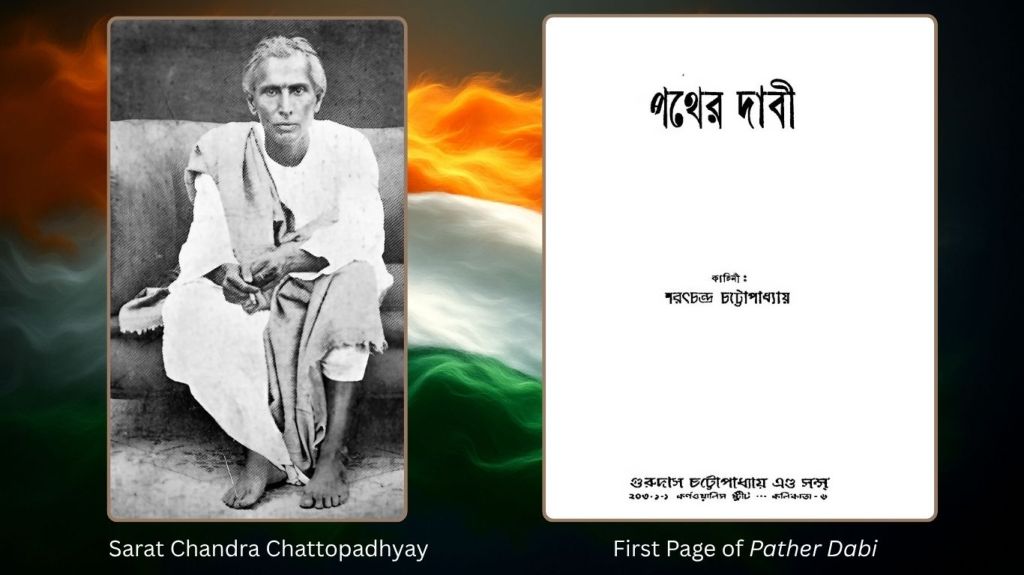
Among Sarat Chandra Chatterjee’s novels, Pather Dabi stands apart for the clarity and intensity of its political engagement. Where his other works often situate conflict within the private sphere of family and society, this narrative turns outward, addressing colonial domination directly. Unlike the more reformist or sentimental strains often associated with Sarat Chandra, this novel is unapologetically political, even conspiratorial in tone. It imagines a networked, disciplined anti-colonial resistance that cuts across regions and classes, presenting a blueprint, however fictionalized, for organized rebellion.
Unfolding against the turbulent backdrop of the independence movement, it traces the operations of a secret revolutionary organization. Its central figure, Sabyasachi, is a man of formidable intellect and linguistic skill, adept at assuming multiple identities while orchestrating resistance. Rather than being depicted as impulsive, he is measured, self-aware, and unwavering in his dedication to freedom. Sabyasachi embodies a kind of intellectual militancy that was both seductive and alarming. Around him gathers a diverse cast, both Indian and British, each representing a distinct stance towards imperial authority, from acquiescence to rebellion.
It was not merely the depiction of conspiracy that unsettled the colonial regime, but the novel’s uncompromising line of thought. The text repeatedly questions the moral legitimacy of empire, stripping away claims of benevolence to reveal structures rooted in exploitation and humiliation. Through its exchanges and events, it probes the psychological and social damage wrought by colonialism, how it diminishes confidence, entrenches obedience and fractures communities. Such an unambiguous and affective critique was rare in the mainstream Bengali literature of its period.
The government’s response came quickly. Not long after publication, the book was banned under sedition provisions; copies were confiscated and its distribution restricted. Yet suppression only heightened its appeal. Circulating covertly, it reached an even broader audience and earned a fervent following. For many young nationalists, it became more than a novel, almost a touchstone of resistance, with Sabyasachi elevated to the status of a symbolic, unyielding rebel.
It also revealed something fundamental about colonial governance: the perceived danger of ideas. A narrative capable of altering perceptions of authority and justice could threaten the state as profoundly as overt insurrection. In writing Pather Dabi, Sarat Chandra, celebrated for his nuanced depictions of personal relationships, demonstrated that fiction could operate as a potent political act.
At the same time, the novel’s reach extends beyond its immediate historical context. It engages with questions that remain persistently relevant: the meaning of freedom, the preservation of dignity, and the claim of individuals and communities to shape their own destinies. It also prompts reflection on identity and moral responsibility in situations of subjugation, concerns that continue to echo in contemporary debates on power and inequality.
Importantly, the book does not present resistance in simplistic terms. Although Sabyasachi is cast with heroic overtones, the narrative attends to the costs of such a role: the solitude it entails, the ethical dilemmas it poses and the strain it places on human relationships. By foregrounding these complexities, Sarat Chandra resists reducing the work to mere propaganda, instead imbuing it with a layered moral and emotional texture that sustains its enduring literary importance.
Serialization, Publication and Immediate Impact (1922–1927)
The serialization of Pather Dabi in Bangabani ran from February–March 1922 to April–May 1926. As the instalments appeared, officials became increasingly wary of the novel’s sharp critique of colonial rule, its incendiary tone and its advocacy of rebellion. To mislead the authorities, the final instalment in Bangabani ended with the note ‘To be continued’, suggesting that the narrative would carry on in subsequent issues. Meanwhile, plans were set in motion to bring out the complete novel as a book. Sudhir Chandra Sarkar of M.C. Sarkar & Sons had initially agreed to publish it and even advanced one thousand rupees to the author. However, after legal consultation, he requested the removal of contentious passages, an alteration Sarat Chandra refused. The advance was returned, and approaches to Gurudas Chatterjee & Sons, long-time publishers of the author, also came to nothing.
Eventually, Ramaprasad Mukherjee undertook the responsibility of publication. Printing, however, proved difficult, as presses were reluctant to handle such a controversial work. The task was finally taken up by the Cotton Press, owned by S.C. Lahiri & Sons. When the book appeared on 31 August 1926, Umaprasad Mukherjee (Ramaprasad’s younger brother) was listed as publisher, and Satya Kinkar Banerjee, manager of the Cotton Press, as printer. Anticipating possible arrests or legal proceedings, Ramaprasad pledged to cover expenses should a sedition case arise.
The novel’s popularity was immediate and overwhelming: the entire first edition of 5,000 copies sold out within a week. When the police arrived at the Bangabani office to confiscate copies, none were available. In November 1926, Sir Charles Tegart, Commissioner of Police, Calcutta, wrote to the Chief Secretary to the Government of Bengal, Political Department: ‘I have the honour to forward herewith, for consideration and orders of Government, the translation of objectionable passages from the book entitled Pather Dabee written by Saratchandra Chatterjee, a well-known novelist in Bengal, printed by Satya Kinkar Banerjee from the Cotton Press, 57, Harrison Road, and published by Umaprasad Mukherjee, 77, Ashutosh Mukherjee Road, Bhawanipore, Calcutta. A printed copy of the book was sent to the Public Prosecutor, Calcutta, for his opinion, and he advises that the book is liable to be proscribed under Section 99A of the Criminal Procedure Code and the author and the printer to be prosecuted under Section 124A of the Indian Penal Code.’
On 4 January 1927, the British government formally banned the book under Section 124A of the Indian Penal Code for allegedly promoting sedition. The decision to proscribe the work upon its appearance in book form, and to initiate legal action against both author and publisher, was communicated to Bangabani’s publisher, Ramaprasad Mukherjee, by Rai Bahadur Tarakhan Sadhu, Public Prosecutor, writer, and an admirer of Sarat Chandra.
This prohibition remained in force until 1 March 1939, when it was lifted by the Fazlul Huq government. Sarat Chandra had passed away on 16 January 1938. A year later, on his first death anniversary, a public gathering was held at Albert Hall in Calcutta, where attendees adopted a resolution urging the authorities to remove the prohibition on Pather Dabi. Within a couple of months, the Fazlul Huq government in Bengal acceded to this demand and withdrew the ban. Soon after, in April–May 1939, the novel appeared in its second edition. Subsequently, the Muslim League administration, invoking the Dramatic Performances Act, prohibited its staging; it was only after Independence in 1947 that the work reached the stage at Kolkata’s Rangmahal Theatre.
Debate and Dissent: Rabindranath Tagore and Sarat Chandra
Sarat Chandra believed that, irrespective of its practical outcome, the government’s action called for a public protest. With this in mind, he turned to Rabindranath Tagore, asking him to consider whether such a response would be appropriate.
Tagore, after reading Pather Dabi, acknowledged that the novel was bound to stir readers and foster a sense of disaffection towards British rule. He did not consider such writing inherently improper if it arose from the author’s conviction that injustice needed to be exposed. However, he argued that anyone who chose this path had to be ready to accept the consequences. In his view, it was undignified to criticize a ruling power while simultaneously expecting leniency from it. Tagore remarked that few governments tolerated criticism from their own subjects with as much patience as the British did. To take advantage of that tolerance, he suggested, risked diminishing one’s own moral standing. True resistance, he maintained, required inner strength rather than reliance on the restraint of the authorities.
He further observed that a writer of Sarat Chandra’s stature wielded immense influence, and that a work like Pather Dabi would leave a lasting impression across generations. Given this, the government’s decision to ban the book was not surprising; indeed, he implied that failing to act might have signalled either ignorance or disregard of the author’s impact. For Tagore, any meaningful challenge to authority had to anticipate retaliation; otherwise, lamenting the response would weaken the original act of defiance.
Tagore’s letter left Sarat Chandra deeply hurt, as he felt it subtly suggested that his desire to protest stemmed from self-preservation. He drafted a reply, though he ultimately chose not to send it, in which he clarified his position. He accepted Tagore’s right to his views but sought to address what he saw as a misunderstanding. The intention behind the novel, he explained, had indeed been to awaken critical sentiment against colonial rule, but not through distortion or falsehood. To his mind, the work remained a piece of literature rather than mere political propaganda, and he had written it fully aware of the risks involved.
He pointed out that, at a time when people across India were being punished by the state, often arbitrarily, he had never assumed he would be spared. Any action against him, he regarded as a personal matter that he was prepared to face. The question of protest, however, was separate. Silence, he feared, might be read as acceptance of unjust authority. Even if protest brought further penalties, he believed it was necessary to register dissent against what he saw as an inequitable act.
To illustrate his point, he drew a distinction between accepting lawful punishment and resisting clear injustice: while one might endure a legitimate sentence without complaint, it would be wrong to remain silent in the face of overtly oppressive treatment. In his case, he insisted, he had written out of a sense of duty towards the country, without relying on the government’s mercy. If the state could justify banning the book, he argued, the people had an equal right to challenge that decision.
Sarat Chandra also rejected the implication that he sought to avoid punishment. If others chose not to protest, he was prepared to continue his resistance through his writing. At the same time, he expressed deep respect for Tagore, acknowledging his experience and service to the nation. Had Tagore advised him that the book was harmful to the country, he said, he would have taken that criticism seriously.
The Novel’s Power and the Figure of Sabyasachi
When Pather Dabi first appeared in serialized form and was later published as a novel, it struck a nerve that went far beyond the literary sphere. The British colonial government responded with predictable alarm. The anxiety was not merely about what the book said, but what it might inspire. In an era already fraught with revolutionary activity, from the Anushilan Samiti to Jugantar, the novel’s portrayal of a shadowy, efficient resistance movement seemed dangerously proximate to reality. Literature here was not a passive mirror; it was perceived as an active agent capable of inciting political unrest. The ban only amplified its aura. Copies circulated clandestinely, read in whispers, passed from hand to hand, acquiring a near-mythic status among readers.
Sabyasachi himself is less a conventional character than an idea, an embodiment of resistance that resists easy moral categorization. This complexity has made the novel both compelling and difficult to adapt. A useful way to deepen this understanding of Pather Dabi, especially of why it so unsettled the colonial state, is to turn to the historian Tanika Sarkar’s reading of Sabyasachi, which complicates the tendency to see him merely as a heroic nationalist archetype. While analysing the character of Sabyasachi, she observed: ‘Capable, literally of everything, [Sabyasachi] is the first superman in serious Bengali fiction, always a million times larger than life.’
Srijit Mukherji agrees: ‘O absolutely. He is nothing short of superhuman. He speaks nine to ten languages, he is a master of disguise, possesses herculean strength, is larger than life, mythical. As I discuss in the film, and as historians have pointed out, Sarat Chandra conceived him as a composite of several revolutionaries, endowing him with their varied attributes, much like Goddess Durga, who was formed from the combined energies of many gods.’
There’s something unsettling about Sabyasachi’s authority. He is not simply a charismatic revolutionary leader but a figure who operates through a rigorous, almost ascetic discipline that demands absolute submission from his followers. His intellectual brilliance and moral conviction are matched by an emotional detachment that makes him, at times, eerily inhuman. ‘I am a stone,’ he says in one instance. This combination produces a form of leadership that is as coercive as it is inspirational. Sabyasachi does not merely persuade; he commands, shaping the will of others in ways that blur the line between liberation and control.
This is crucial to understanding why Pather Dabi felt dangerous. The novel does not just imagine resistance; it imagines a highly centralized, tightly controlled revolutionary structure embodied in a single, near-messianic figure. Sabyasachi’s appeal lies in this very absolutism: he represents the fantasy of a leader who can cut through hesitation, compromise and moral ambiguity. Yet that same absolutism also carries authoritarian implications. Seen in this light, Sabyasachi becomes less a straightforward nationalist hero and more a deeply ambivalent figure. His personal renunciation – of comfort, of relationships, even of a stable identity – feeds into his aura of selflessness, but it also isolates him from the very society he seeks to liberate. This distance enables his authority: he stands above ordinary human entanglements, and therefore claims a higher moral ground. But it also renders him opaque, difficult to fully know or challenge.
This reading adds a layer of complexity to Sarat Chandra’s political imagination. If Pather Dabi offers a vision of anti-colonial resistance, it also inadvertently stages the tensions within that vision: between freedom and discipline, between collective struggle and individual authority. The novel’s power, then, lies not only in its incendiary call to rebellion but in its portrayal of the kinds of leadership such rebellion might produce.
Cinema, Adaptation and the Present Moment
Cinema, with its own history of negotiation with censorship and political power, has approached Pather Dabi cautiously. Perhaps the most notable attempt remains the adaptation featuring Uttam Kumar, titled Sabyasachi (1977). The mahanayak’s association with the project is telling: Uttam Kumar’s screen persona, often rooted in romantic heroism, had to stretch to accommodate the ideological intensity of Sabyasachi. The adaptation inevitably softened some of the novel’s sharper edges, navigating the constraints of its time while trying to retain the core of Sarat Chandra’s vision. Even then, the very act of adapting Pather Dabi was a statement, a reclaiming of a once-banned narrative for a postcolonial audience.
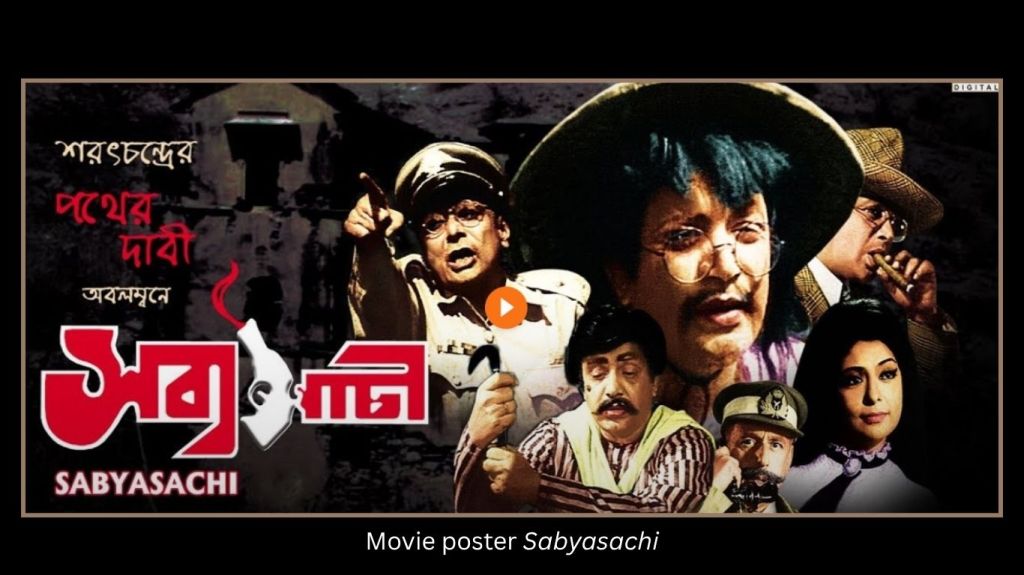
Yet no cinematic version has fully captured the novel’s volatile mix of political radicalism and psychological depth. Part of the challenge lies in translating its discursive, almost argumentative prose into a visual medium that demands immediacy. Another lies in the shifting political contexts: what was once seditious under colonial rule may now be read through different lenses: nationalist, critical, even sceptical. Each adaptation must therefore negotiate not just the text, but its layered reception over time.
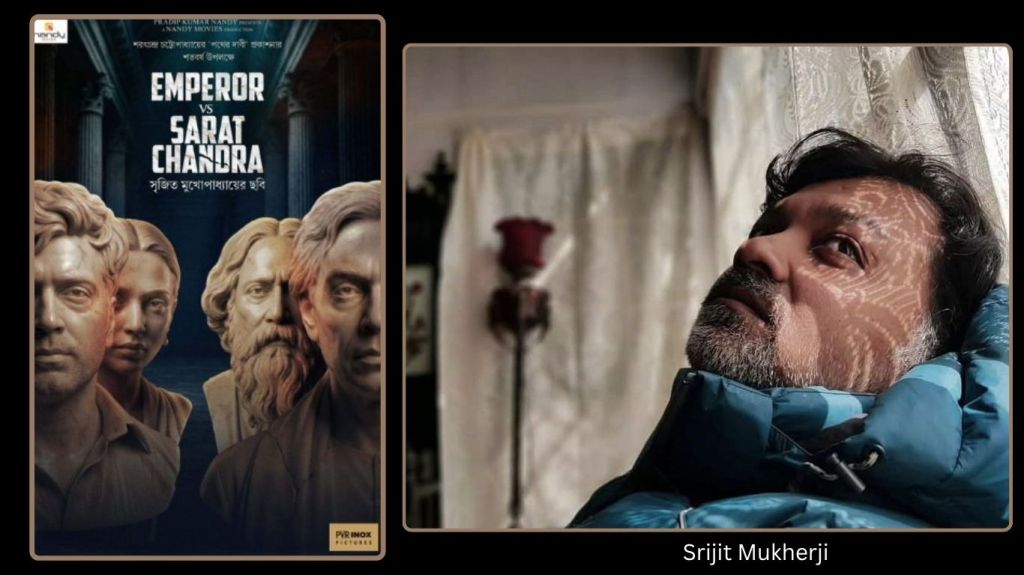
This is where Srijit Mukherji’s forthcoming The Emperor vs Sarat Chandra becomes particularly intriguing. Rather than a straightforward adaptation, the film appears poised to explore the confrontation between author and empire, the creative imagination versus colonial authority. The title itself suggests a meta-narrative, foregrounding the act of writing Pather Dabi and the subsequent ban as a dramatic conflict. In doing so, Srijit seems less concerned with retelling the novel than with exploring the connections between the author, the protagonist, and the historical moment in which they are situated. What does it mean to write a dangerous book? How does power respond to narrative? And how does a text outlive its suppression?
As the film-maker says, ‘In Emperor vs Sarat Chandra, I am foregrounding the myth of Sabyasachi, yes, but I am juxtaposing it with the more non-violent form of protest, the more intangible, the more philosophical form of protest through literature. And the path that Sarat Chandra took after years of writing fiction while being insulated from the political happenings around him. So, it sort of maps the awakening of Sarat Chandra’s political consciousness after works like Srikanta and Devdas. Placing that in the context of awakening of Sabyasachi’s India through violent methods. Interestingly, it also examines the various points of concurrence and intersection between the real-life story of Sarat Chandra and his protest when the book got banned vis-à-vis the story of the protagonist, Sabyasachi, the way he led his operations, and of course climaxing with an interesting betrayal in both stories.’
Srijit’s track record indicates a fascination with history, identity and the politics of storytelling. His films such as Jaatishwar, Ek Je Chhilo Raja and Gumnaami often operate at the intersection of personal narrative and larger historical currents. With The Emperor vs Sarat Chandra, he has the opportunity to delve into a moment when literature was not merely reflective but interventionist. The film could potentially reframe Pather Dabi for contemporary audiences, not as a relic of nationalist fervour, but as a living document that raises enduring questions about dissent, surveillance and the ethics of resistance.
For cinema, this poses a particularly rich challenge. Uttam Kumar’s interpretation, shaped by the demands of stardom and audience expectation, inevitably leaned towards humanizing and softening Sabyasachi, emphasizing his romantic and heroic dimensions. A more unsettling portrayal – one that foregrounds his severity, his manipulative intelligence, and his quasi-authoritarian presence – might be closer to the novel’s core tensions.
It is precisely here that Srijit Mukherji’s The Emperor vs Sarat Chandra could find new resonance. By situating Pather Dabi within the conflict between author and empire, the film has the opportunity not only to revisit the politics of censorship but also to interrogate the politics within the text itself. Srijit insists, ‘One can’t really avoid some overlaps with existing works because they also come from the same mother text. The literary source is the same. But my approach in The Emperor vs Sarat Chandra is different. The film intercuts between reel and real, between the author and the protagonist, and their parallel struggle against the same opposition, the British empire.’ A contemporary engagement with Sabyasachi could move beyond hagiography to explore the ambiguities of revolutionary desire.
Conclusion: A Living Text
The centenary of Pather Dabi also invites us to reconsider the nature of bans themselves. Colonial censorship was overt, backed by legal and administrative machinery. Today, the mechanisms may be more diffuse, but the impulse to control narratives persists. Srijit Mukherji says, ‘Yes, those were more oppressive times with the colonial administration clamping down on freedom of expression, trying to muzzle the pen of the most popular novelist in the country. However, the more things change, the more they remain the same. Today, censorship is immense. Most forms of expressions are subject to severe controls by central authorities, by the establishment, even by social media. Banning, cancel culture, criticism – the film gives me the opportunity to discuss all these allegorically, in the guise of a real-life incident involving Sarat Chandra and Pather Dabi.’
In this context, revisiting a text that was once deemed too dangerous to circulate acquires renewed urgency. It reminds us that literature’s power lies not only in its aesthetic qualities but in its capacity to unsettle, provoke and imagine alternatives.
At the same time, it is worth resisting the temptation to romanticise Pather Dabi solely as a banned book. Its literary merits – its pacing, its characterization, its blending of genres – deserve attention in their own right. The danger it posed to the colonial state was inseparable from its effectiveness as storytelling. Sarat Chandra understood how to engage readers emotionally and intellectually, how to create a world that felt both immediate and aspirational. That this world threatened an empire is as much a testament to his craft as to his politics.
The novel endures not simply because it was banned or because it championed resistance, but because it refuses easy moral resolution. Through Sabyasachi, it confronts readers with an uncomfortable possibility: that the figure who embodies liberation may also carry within him the seeds of domination. That tension – unresolved, provocative and deeply modern – remains one of the novel’s most compelling legacies a hundred years on.
As we mark a hundred years of Pather Dabi, its journey from proscription to canonization, from page to screen and back again, underscores the dynamic interplay between art and authority. The novel’s legacy is not fixed; it continues to evolve with each reading, each adaptation, each critical engagement. Srijit Mukherji’s film will be the latest chapter in this ongoing dialogue, one that began in the charged atmosphere of 1920s colonial India and shows no sign of losing its relevance.
In the end, Pather Dabi endures because it refuses to be contained, by genre, by ideology, or by the circumstances of its suppression. A century on, it still asks uncomfortable questions, still invites contested interpretations, and still challenges us to think about the role of narrative in shaping political consciousness. That alone would make it worth revisiting. That it once shook an empire only makes the exercise more compelling.


Leave a Reply