Fifty years later, Chitchor still feels like a soft revolution. In an era of bombast, Basu Chatterjee crafted a tender tale of mistaken identity, music, and middle-class life that quietly affirmed a young woman’s right to choose. Unadorned yet radical, it remains one of Hindi cinema’s most luminous love stories.
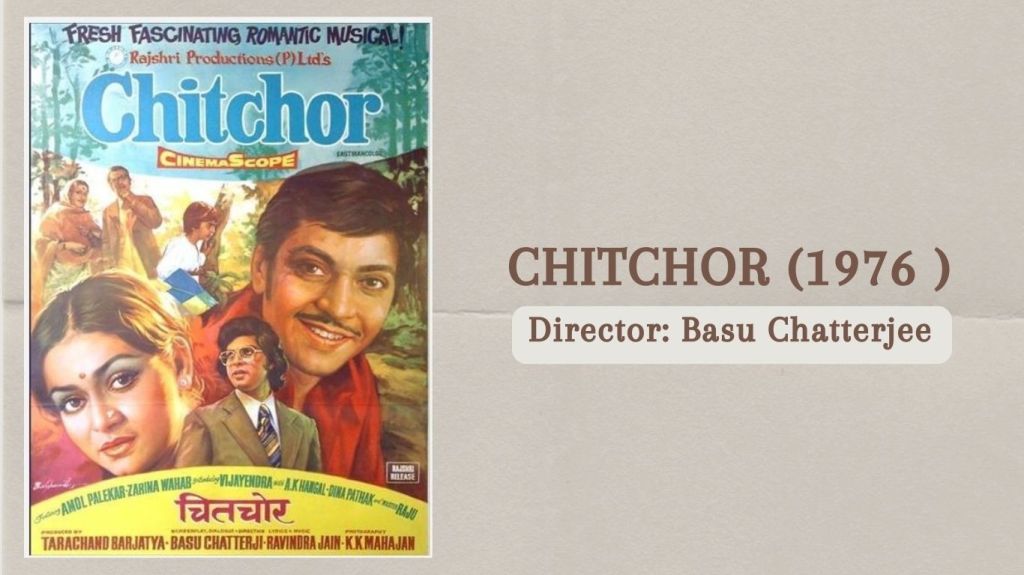
There are grand films that announce themselves with thunderclaps – spectacle, stars, scale, swagger. And then there are films like Chitchor that arrive like a soft evening breeze, almost shyly, and stay with you for a lifetime. Fifty years on, Basu Chatterjee’s 1976 classic remains one of Hindi cinema’s most disarming love stories – simple, unhurried, unadorned – and yet quietly radical.
Produced by Rajshri Productions at a time when mainstream Hindi cinema was increasingly leaning towards the ‘angry young man’ and high-voltage drama, Chitchor chose a different path. No villains, no larger-than-life heroics, no glamour. Just a middle-class household in a fictional village called Madhupur, a case of mistaken identity, and a young woman discovering her right to say no, and her right to love.
That, in itself, was revolutionary.
Basu Chatterjee had already carved a space for himself with Rajnigandha and Chhoti Si Baat, films that delivered big at the box office in the preceding two years despite being devoid of any of the tropes and trappings of the films of the era. His cinema inhabited the everyday. Offices, bus stops, modest homes, quiet lanes – the geography of the middle class. His characters did not declaim; they hesitated, stumbled, doubted. They felt real.
Chitchor, based on Subodh Ghosh’s Bengali story Chittachakor, fits seamlessly into this world. And yet it is perhaps among his warmest, most luminous films. It carries a streak of innocence that never curdles into naïveté. The romance unfolds not through dramatic declarations but through glances, awkward conversations, shared silences, and music.
At the centre is Geeta (Zarina Wahab), a young girl who has just completed her matriculation exams. She lives with her father, a timid schoolmaster (A.K. Hangal), and her mother (Dina Pathak), whose life’s mission is to secure a ‘good match’ for her daughter. The socio-cultural context is clear: marriage first, aspirations later, if at all. When a suitable boy from Bombay, an engineer, is identified, the mother exclaims that Geeta’s fortunes will open up. Geeta’s response is gentle but pointed: ‘Toh abhi kya mere bhaag bandh hain? Main abhi padhungi, BA, MA, LLB karungi.’
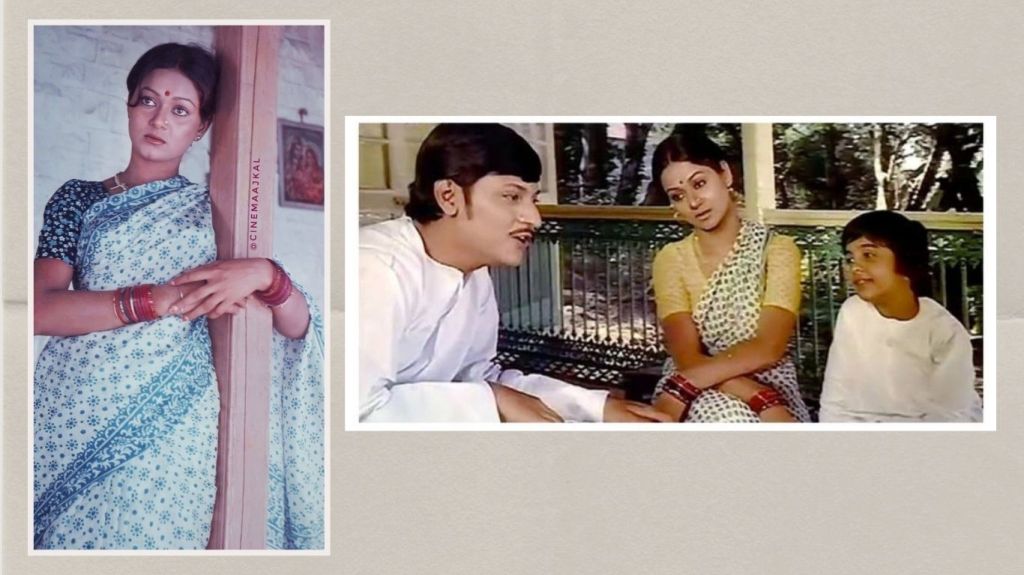
In that one line lies the essence of the film. Geeta is not rebellious in a dramatic, slogan-shouting way. She is playful, curious, sometimes distracted, often childish. But she questions. She refuses to see marriage as destiny. Education, selfhood, choice; these matter to her. And Basu Chatterjee allows her that space.
Enter Vinod (Amol Palekar), an overseer who arrives in Madhupur for work. Through a mix-up, he is mistaken for the engineer suitor, Sunil. The family welcomes him warmly. The mother sees in him the perfect son-in-law. The father is relieved. Geeta, initially indifferent, watches him with a mix of curiosity and mild boredom.
Amol Palekar by then had already become the face of the ‘common man’s hero’. He was not the swaggering alpha male; he was shy, hesitant, awkward. His theatre background lent him an ease and naturalness rare in Hindi cinema of that era. He slipped into ‘ordinariness’ with consummate ease. And yet, even in his ordinariness he gave the superstar of the era, Amitabh Bachchan, a run for his money at the box office.
In Chitchor, he is at his most luminous. His Vinod is passionate about music, slightly awkward, deeply decent. He does not woo Geeta with bravado. Circumstances bring them together. Music keeps them there. One of the film’s most charming early moments is when Geeta and her constant companion, the delightful Deepu (Master Raju), encounter Vinod immersed in classical music. Geeta and Deepu are visibly bored. Vinod, however, is transported.
He explains with ardour: ‘Main Raag Malkauns ga raha tha. Ab Yaman kalyan ko lo. Shaam ke waqt jab suraj dhalne lagta hai, asmaan neele se narangi rang ka ho jata hai, charo taraf shant watawaran chha jata hai, panchiyon ke jhund apne apne ghar wapas laut-te hain. Insaan bhi din bhar ke kaam ke baad halke mann se wapas laut-ta hai, us waqt mann ki jo sthithi hoti hai, usey ye rag jis bakhoobi se padakta hai … daba hua aaroh, teevra shudh madhyam.’ (I was singing Raag Malkauns. Now take Yaman Kalyan. In the evening, when the sun begins to set, the sky turns from blue to orange, a deep calm spreads all around, flocks of birds return to their nests. After a long day’s work, people too head home with lighter hearts. The state of mind one experiences at that moment … the way this raga captures it so perfectly … the restrained ascent, the sharp and pure madhyam.)
It is a beautiful monologue, half lecture, half love letter to music. Geeta does not understand a word. But we sense that something has shifted. Passion, when genuine, is infectious.
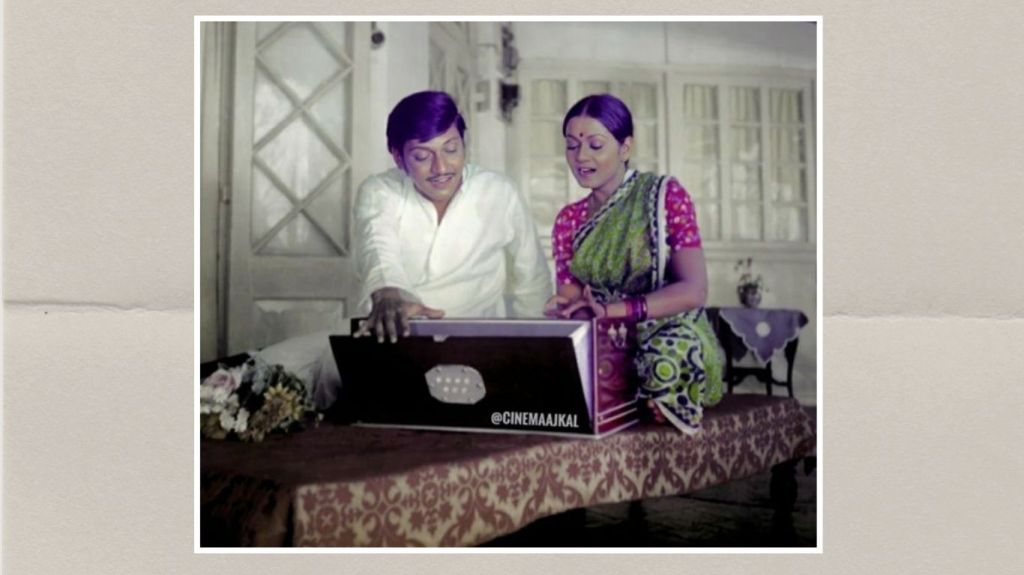
If Chitchor has a soul, it is its music. Ravindra Jain’s compositions – tender, rooted, melodically rich – are inseparable from the narrative. Each song furthers the emotional arc. ‘Gori tera gaon bada pyara’, sung by K.J. Yesudas, is more than a compliment to rustic beauty. It is the moment when Geeta sees herself, and her world, through Vinod’s eyes. The village becomes luminous, not because it is picturesque in an obvious way, but because it is loved. ‘Tu jo mere sur mein sur milale’ is not merely a duet; it is a confession disguised as a raga. Love here is not proclaimed; it is harmonized. When two sur meet, two lives align. ‘Aaj se pehle aaj se zyada’ and ‘Jab deep jale aana’ deepen this intimacy. Yesudas and Hemlata’s voices carry a purity that matches the film’s emotional tenor. It was perhaps the first time many Hindi film audiences encountered Yesudas in this register. He had sung gems like ‘Aa aa re mitwa’ in Anand Mahal and the super-hit ‘Jaaneman jaaneman’ in Chhoti Si Baat. It is Chitchor that made him a star singer in Hindi cinema. He went on to win the National Award for Best Male Playback Singer that year. Hemlata’s crystalline voice too left an indelible mark. Ravindra Jain’s genius lay in simplicity without diluting the intricacies of a song. The songs are classically anchored yet accessible. They do not interrupt the story; they are the story.
The film was shot in the hill stations of Mahabaleshwar and Panchgani. But what makes the countryside memorable is not postcard grandeur. It is K.K. Mahajan’s cinematography – attentive, unhurried, intimate. There are frames where the setting sun seems almost like a silent witness to Geeta and Vinod’s growing affection. The play of light at dusk, the quiet roads, the greenery, the modest homes – everything feels lived-in rather than curated. Mahajan captures sunlight not as spectacle but as mood. The evenings are particularly evocative; that hour between day and night when emotions soften. In many frames, one finds oneself watching not the actors but the way the light rests on them. The countryside here is not escapist fantasy. It is environment as emotional texture.
The idyll cannot last. The real Sunil (Vijayendra Ghatge), a foreign-returned engineer and Vinod’s senior, arrives. The misunderstanding is exposed. The warmth that Vinod once enjoyed in Geeta’s home cools instantly. The shift is subtle but devastating. The same parents who praised him now avoid him. Social aspiration reasserts itself. An engineer from Germany-returned circles seems a more secure bet than an overseer with a harmonium. Vinod does not create a scene. He withdraws, dignified, wounded.
What matters now is Geeta.
Encouraged to meet Sunil and behave in a way that pleases him, she complies outwardly but not inwardly. The earlier question returns, sharper: ‘Maan lo main unhe pasand na karun to?’ (What if I do not like him?) Her transformation is gradual. She is still playful, still affectionate with Deepu. But something has solidified within her. On the day of her engagement to Sunil, dressed and prepared, she makes her choice. Taking Deepu along, she walks out to stop Vinod from leaving. And she declares: ‘Main koi khilona nahin, jo jaise chahe mujhse khele … Jo hona tha ho chuka.’ It is not melodramatic. It is matter-of-fact. She is not property to be exchanged based on status calculations. What has happened – her love, her awakening – cannot be undone.
That moment remains the beating heart of Chitchor. It is not love conquering all in a fairy-tale sense. It is a young woman recognizing her agency.
One of the film’s greatest strengths is its refusal to demonise. Geeta’s parents are not tyrants. They are products of their time. A.K. Hangal’s schoolmaster is timid, anxious, wanting security for his daughter. Dina Pathak’s mother is talkative, slightly domineering, convinced she knows best. There is humour in the way she enumerates Geeta’s talents – cooking, embroidery, academics – as though presenting a résumé. It is affectionate satire, not cruelty.
Deepu, played with remarkable spontaneity by Master Raju (who won the National Award for Best Child Artist), adds mischief and moral clarity. His loyalty to Vinod is partly about music, partly about the jeep, but wholly heartfelt.
These are ordinary people. That ordinariness is the film’s triumph.
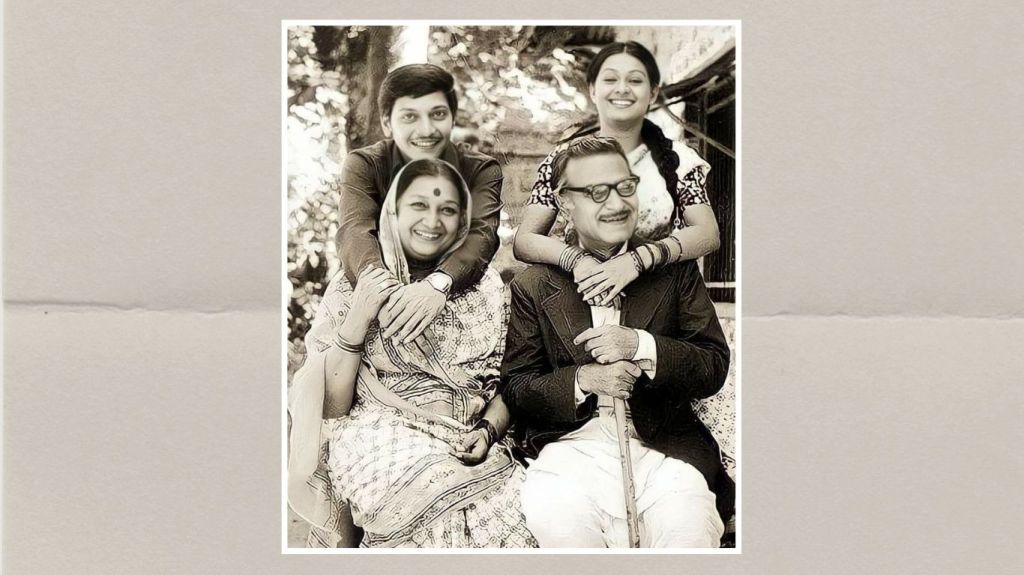
Chitchor was a silver jubilee hit and completed a remarkable hat-trick for Amol Palekar alongside Rajnigandha and Chhoti Si Baat. It reaffirmed that audiences would embrace stories without bombast if the emotions rang true. Decades later, a glossy remake attempted to recreate its magic. Main Prem Ki Deewini Hoon (2003), directed by Sooraj Barjatya, whose grandfather produced Chitchor, is everything that the 1976 film was not – loud, over the top and insufferable. Sooraj Barjatya had earlier done a remake of another Tarachand Barjatya Rajshri Production film, the underrated and understated Nadiya Ke Paar (1981), which became the gaudy and overdone Hum Aapke Hain Kaun! But scale cannot substitute for sincerity. The original’s charm lay precisely in its restraint – its faith in quiet moments.
Fifty years on, what endures is not nostalgia alone. It is relevance.
In an era when discussions about women’s autonomy, consent, and choice dominate public discourse, Geeta’s soft-spoken defiance feels prescient. She does not storm barricades. She asks questions. She refuses to be traded. She chooses. And Vinod – sensitive, articulate about art, unthreatened by a strong woman – feels surprisingly contemporary. Long before sensitivity became fashionable, he embodied it.
At its core, Chitchor is about alignment: of sur, of hearts, of values. It reminds us that love need not be loud to be transformative. That a village can be cinematic without being exoticized. That music can be courtship. That middle-class aspiration can coexist with moral courage.
There are films you admire. There are films you analyse. And then there are films you return to, like a favourite raga at dusk. At fifty, Chitchor remains that raga, perhaps Yaman Kalyan at sunset, capturing, as Vinod says, that state of mind when the day’s noise settles and something within us grows still. In that stillness, Geeta walks out of her house, Deepu in tow, sunlight fading, resolve clear. And Hindi cinema, quietly, changes.
 Shantanu Ray Chaudhuri
Leave a comment