A quiet street, a passing rhythm, two strangers who stop. The Life of Chuck’s dance sequence distils the film’s philosophy into a moment of fragile grace, fleeting yet vast enough to outlast memory, suffering, and self. Just that.
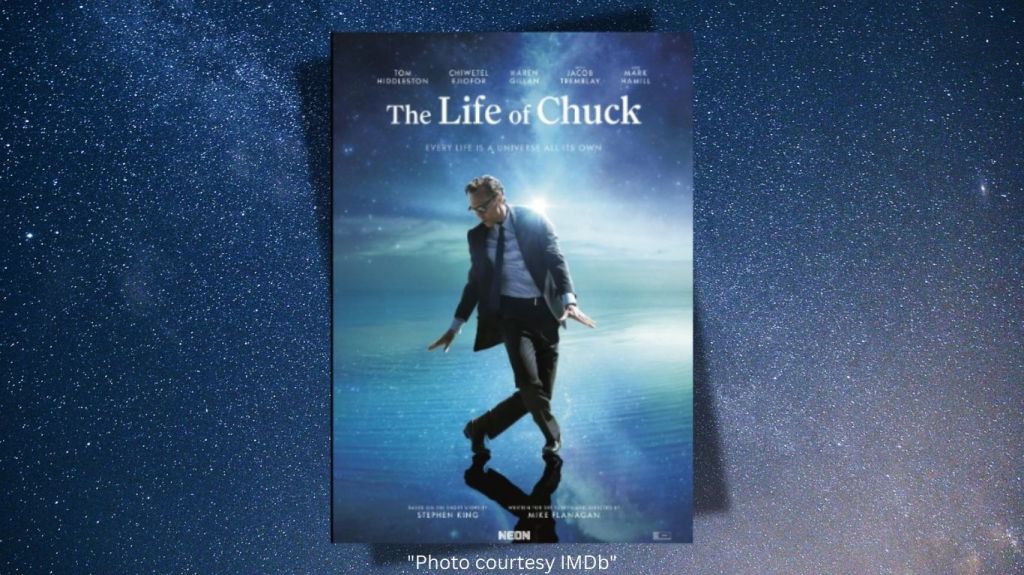
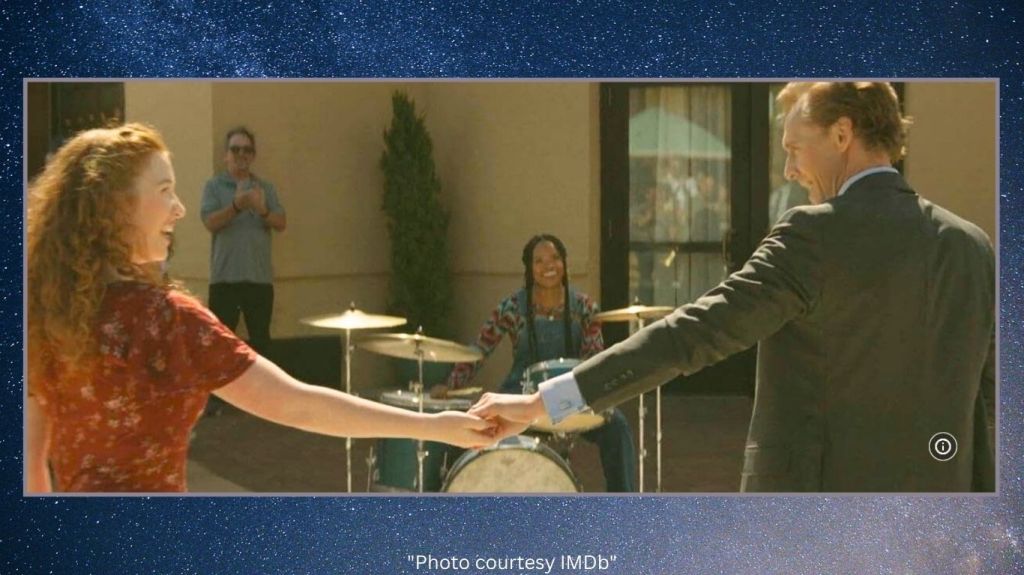
The dance sequence in The Life of Chuck is one of those rare cinematic moments that feels both fragile and cosmic. It unfolds without spectacle, without flourish, and without the usual dramatic engineering that films deploy to signal transcendence. Instead, it blossoms in the middle of an ordinary street, under ordinary light, as a young drummer, Taylor Franck (played by Taylor Gordon) begins to busk and two strangers – one freshly abandoned (Janice Halliday, played by Annalise Basso), one unknowingly living out his last coherent months (Chuck, Tom Hiddleston) – step into a moment of inexplicable grace.
It is a scene rooted in Stephen King’s quietly devastating observation about the meaning of life. As the film quotes from the story: ‘Later he [Chuck] will lose his grip on the difference between waking and sleeping and enter a land of pain so great that he will wonder why God made the world. Later he will forget his wife’s name. What he will remember, occasionally, is how he stopped, and dropped his briefcase, and began to move his hips to the beat of the drums, and he will think that is why God made the world. Just that.’
Everything the scene does – its framing, its rhythm, its refusals – is in service of this line.
The Drummer Creating a Space That Wasn’t There Before
The scene begins with the street drummer setting up. In many films, the busker is decorative, an atmospheric touch meant to colour the environment. Here, she is the catalyst. She opens the moment simply by performing a ritual she has likely done a hundred times before: placing her case down, assembling her modest kit, adjusting the snare, testing a tap or two.
The film lingers on her not out of character importance but philosophical purpose. This is a story about how immense meaning can hide inside the smallest gestures. The drummer has no idea she is initiating the memory that will outlast a man’s mind, but the film invites us to consider the unknowable ways in which we sometimes hold open a doorway for another person’s grace.
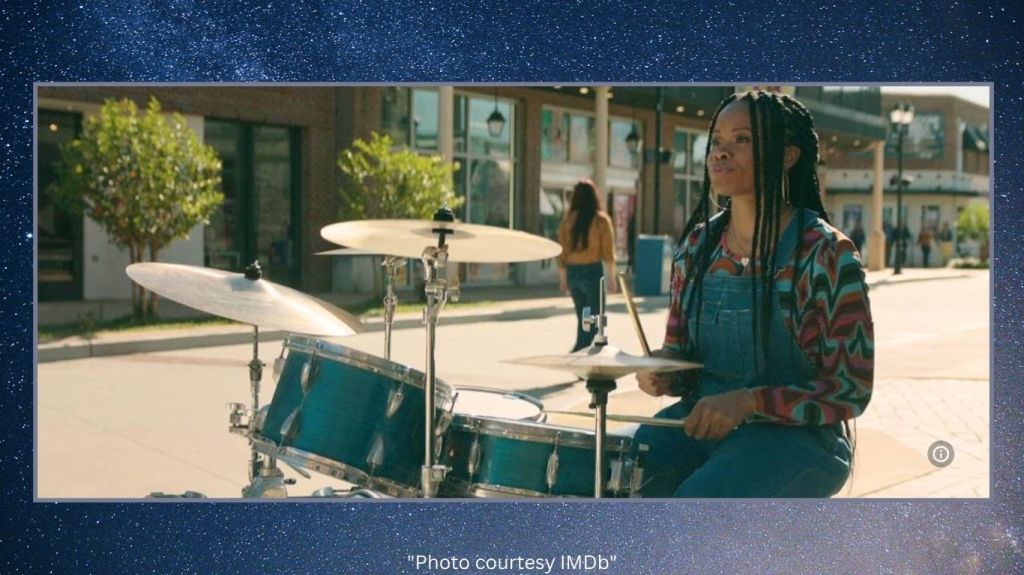
Her beat begins, a steady, heartbeat-like rhythm, neither exuberant nor sombre. It is just alive. And in the context of the story, that is enough.
Nick Offerman’s voiceover sets the tone: ‘Taylor has been on the job for ten minutes now and has nothing to show for it. She sees a Mr Businessman Type coming toward her, and something about it, god knows what, makes Taylor want to announce his approach. She slips first into a reggae beat, then something slinkier. And for the first time today, Taylor feels a spark and begins to whack the cowbell of a downbeat. It’s pretty cool. The groove has arrived. And the groove is like a road you wanna follow. She could speed the beat up … but she is watching Mr Businessman and that seems wrong for this dude. She believes Mr Businessman will just go on past her on his way to the business hotel and when he is gone, Taylor will switch to something else. But instead of floating on by…’
A voiceover setting up a scene could well have been lazy film-making but Mike Flaganan knows what’s just right, and the narration is a work of a master in the way it sets up what is to come. The narrator, rendered in Nick Offerman’s gently aching tone, lets us know, as narrators often do, that Chuck’s days are numbered. This moment, like every cherished one, is destined to fade. Yet there’s no harshness in the telling. The voice carries gratitude, almost devotion, an awareness of how quickly the light will slip away.
As Mr Businessman Type, Chuck, begins to move to the beat, his hands keeping pace with the drummer’s beat, there are a couple of second-long cutaways to what we will see in the film’s next and final section, Chuck’s grandmother’s hands making the same motion while she is preparing dinner. It is from her that Chuck has inherited his love of dance.
The Banker Passing through His Life without Knowing What’s Coming
Tom Hiddleston’s character has entered the frame, stepping out from a bank conference, looking composed in the way that people do when they have built a life on routines and responsibilities. He carries his briefcase as if it is an extension of his identity. And then the voiceover cuts through this picture of stability with devastating bluntness: ‘He will be dead in nine months.’
This simple sentence shifts the ground beneath the film. The audience suddenly confronts him not as a banker but as a mortal on the edge of vanishing. It is not that he will die – that is universal – but that he will lose himself before he dies. Memory will degrade. The boundary between waking and dreaming will dissolve. Pain will hollow him out.
What makes the dance sequence so piercing is that he dances not with awareness of this future but out of a momentary instinct, a split-second willingness to pause his forward motion. He hears the beat. He slows. He turns. And then, in a gesture so small it almost disappears, he lets the briefcase slip from his hand. No declaration, no dramatic exhalation. Just a man who stops walking.
This is what the film hinges on.
Hiddleston plays it not as revelation but as baffled surrender. A slight hesitation, an unselfconscious softening of posture, and then the first awkward, unsure sway of someone learning his own body again. This vulnerability, almost childlike, is the emotional architecture of the scene. The dance is not triumph. It is acceptance.
The Woman Who Has Just Been Left Behind
Before the man fully settles into the music, the camera finds the woman he will invite to join him. She has just been dumped. The film does not dramatize this; it shows the aftermath: the slump of her shoulders, the way she walks as if slightly hollowed out, the stunned, automatic quality of her movements. She approaches the scene not searching for solace but trying to survive the next few minutes of her own life.
When he gestures towards her, gently, uncertainly, it is not romance. It is recognition. Two private heartbreaks brush against each other. ‘Come on, Little Sister, let’s dance,’ he tells her. The invitation is simply this: Come, stand in this small pause with me.
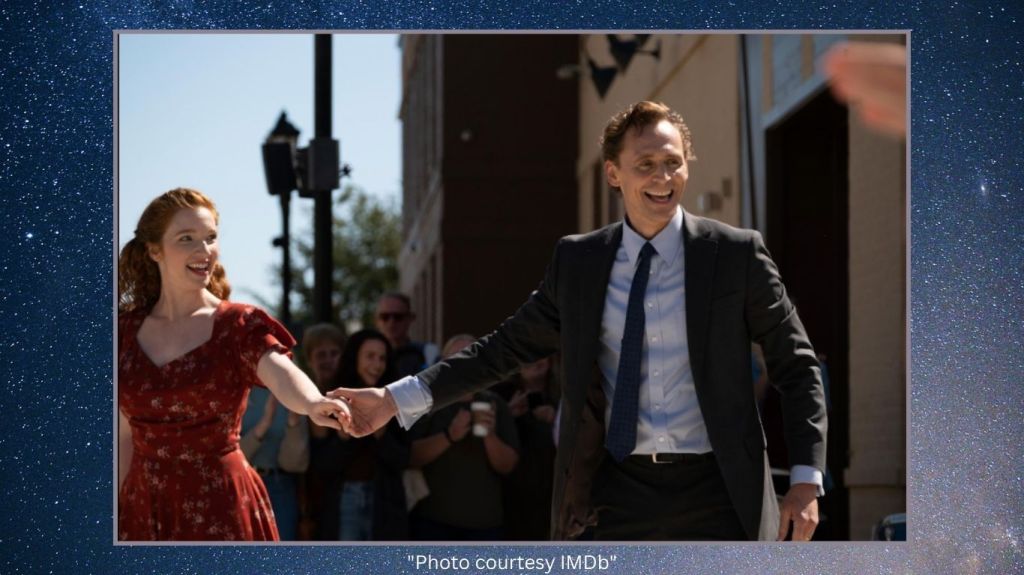
The woman hesitates, not out of fear but out of weariness. Yet something about the sincerity of his invitation, the simplicity of the rhythm, the exhaustion of being alone in pain, something nudges her forward.
She steps towards him. She takes his hand. She enters the moment.
And this is where the scene makes its boldest choice.
The World Does Not Notice: And That Is the Point
No one joins them. A few bystanders gather around, cheering the moment. No child imitates their steps. No city street transforms into a communal chorus. Life continues around them with absolute indifference. People walk by. Cars pass. The world does not offer a moment of shared catharsis, nor does it reward them with any special attention.
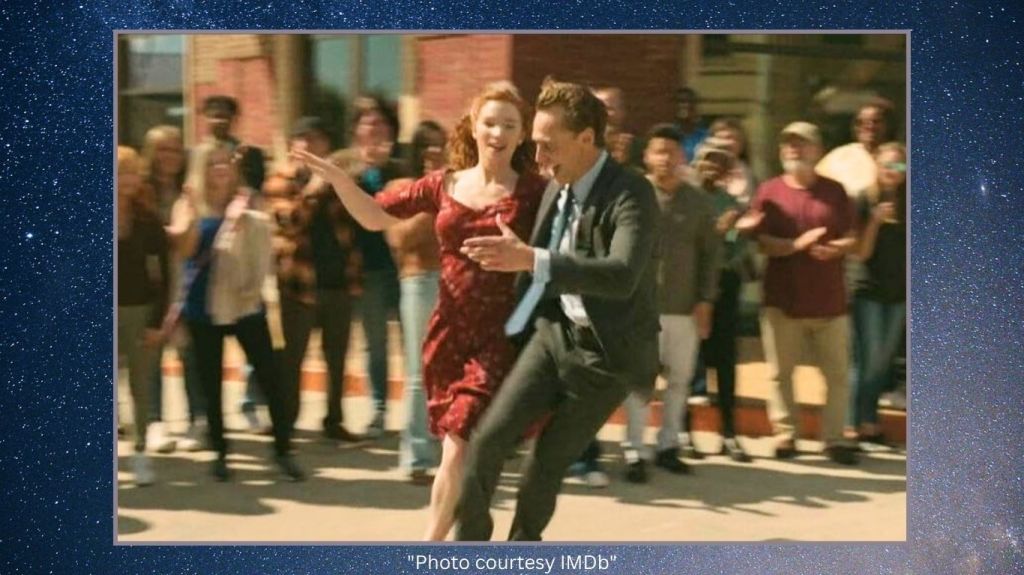
This refusal is philosophical. The scene insists that transcendence is not dependent on recognition. Meaning does not enlarge itself to justify its value. The world does not have to pause for something to matter. The dance is small, private, resolutely unremarkable to everyone except the two people inside it. And that is why it becomes unforgettable.
The film rejects the easy Hollywood logic: that joy must expand, that beauty must ripple outward, that a moment is meaningful only if others join. Instead, Flanagan preserves the fragility of the moment by keeping it unnoticed.
This is joy surviving in the open air of indifference.
The Dance as Philosophy
The dance itself is not choreographed. It grows out of hesitations, half-steps, shy sways. The man sometimes seems surprised by his own body. The woman seems relieved to have something, anything, to hold onto.
They are not great dancers. The point is not skill but presence. This presence is what the quoted passage underscores. King’s line lands with the weight of prophecy: ‘What he will remember, occasionally, is how he stopped … and began to move his hips to the beat of the drums, and he will think that is why God made the world.’
The film takes this line literally and builds the sequence around it: The moment is small. The moment is irrational. The moment is fleeting. The moment is unshared. The moment becomes the anchor of a life.
In the face of the suffering that is coming – agony so intense he will question the purpose of creation, memory loss so total he will forget the name of his own wife – the dance becomes the thing that remains. It is the memory that survives the collapse of self.
And why? Because the moment requires nothing of him. Because it is free of duty, performance, identity. Because it is pure being. Because it is pure connection. Because it is small enough to carry.
Why the Scene Endures
What lingers about the dance is its refusal to scale itself into metaphor. It does not claim to fix the world, or to redeem suffering, or to reveal some cosmic answer to mortality.
Instead, it suggests something humbler, and perhaps truer: that life’s deepest meaning may arrive in moments that do not change anything except the way one remembers being alive. The dance does not prevent pain. It does not prevent death. It does not even last long. But it becomes the fragment of joy that outlives all the incoherence that follows. A small flame kept alive inside the dark.
And that, the film suggests, is enough.
Just that.
 Shantanu Ray Chaudhuri
Leave a comment