At a moment when Bengali cinema boasts record box-office hits yet struggles for visibility beyond its borders, questions of perception, nostalgia and reinvention loom large. Is the industry truly in crisis, or merely misunderstood? In conversations with film-makers Srijit Mukherji, Suman Ghosh and Samik Roy Choudhury, and Ahana Kanjilal Dutta, Spokesperson, and Group Head, PR & Communications at SVF & Hoichoi, I examine the paradoxes, anxieties and possibilities shaping Bengali cinema today.
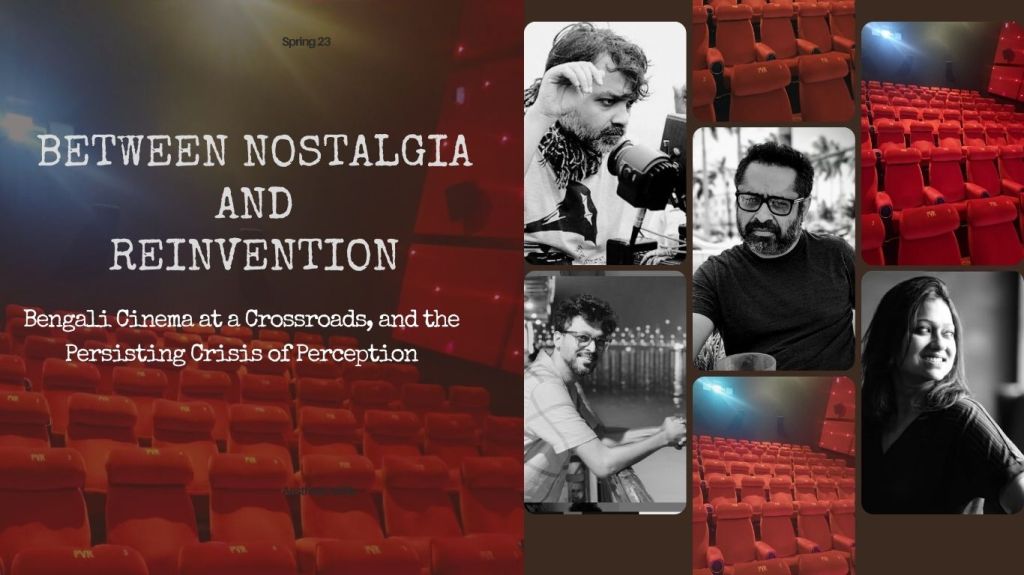
A few days ago, I wrote about the best Bengali films of 2025, noting that, by box-office standards, it has been a strikingly successful year. But there is a larger world beyond the numbers that Bengali cinema has struggled to reach in recent times: limited national media visibility and theatrical presence, questions of quality when set against other regional cinemas, an overdependence on worn-out tropes and nostalgia, and the lack of rigorous critical engagement.
Earlier this year, I encountered an experience that brought into sharp focus all these issues and encapsulated a strange paradox. At PVR Logix Noida, I attended three consecutive Bengali film screenings: Pratim Gupta’s Chaalchitro: The Frame Fatale (among the good films of 2024), the Dev-starrer Khadan, and Mithun Chakraborty’s hit Shontaan. As parochially satisfying as it was to watch one Bengali film after another in a Delhi-NCR theatre, the pleasure was tempered by the turnout. Except for Pratim’s film, which drew around thirty viewers, the other two, both blockbusters in Bengal, one even registering a full house at a 2 a.m. show back home, barely attracted five to seven people. Quite obviously, Khadan was a pale imitation of films like KGF and Pushpa (the Bengali industry simply lacks the resources to realize the scale the film reaches for, leaving its ambitions exposed and, at times, faintly absurd). Nor is there much dispute that Shontaan amounted to a clumsily executed throwback to the family-melodrama weepies of the 1980s and ’90s. Little wonder, then, that despite their success within Bengal, these films failed to generate any real interest elsewhere in the country.
What made this even more perplexing was the contrast with two Malayalam films I watched around the same time, Bramayugam and Manjummel Boys, both of which played to nearly full houses. This cannot be explained away merely by demographic differences, though Delhi’s sizeable Malayali community (estimated at around five lakh) may partially account for the disparity. By comparison, the 2011 Census records 215,960 Bengali speakers. Yet the gap in audience turnout feels too large to attribute solely to population patterns.
It raises deeper questions: Why do even mainstream Bengali films struggle to secure proper theatrical releases in Delhi, while arthouse Malayalam cinema attracts robust patronage? Why do mainstream newspapers and magazines devote so little space to Bengali films?
For years now, conversations around Bengali cinema have circled a single refrain: something is broken. Whether it is box-office ambivalence, a crisis of imagination, collapsing critical standards, or the oppressive weight of a golden past, the narrative of decline clings to the industry like a stubborn shadow. And yet, speak to film-makers, distributors, marketers and observers closely embedded in the ecosystem, and a far more complicated picture emerges, one that resists easy binaries of ‘revival’ versus ‘collapse’.
In conversations with an array of film-makers and industry insiders, what becomes clear is not merely divergence of opinion, but an uneasy coexistence of defensiveness, optimism and deep frustration, particularly over how Bengali cinema is perceived outside Bengal. Together, their responses sketch an industry at a crossroads: stubborn constraints, an enduring but increasingly unproductive nostalgia, producing measurable successes, yet unable to convert them into sustained cultural momentum beyond its home turf.
The Distribution Paradox: When Audiences Don’t Show Up
Watching Malayalam, Tamil and Marathi films draw enthusiastic crowds in Delhi–NCR, even non-star-driven titles, it is impossible to ignore the contrast with Bengali films, which often play to sparse audiences or never make it to theatres at all.
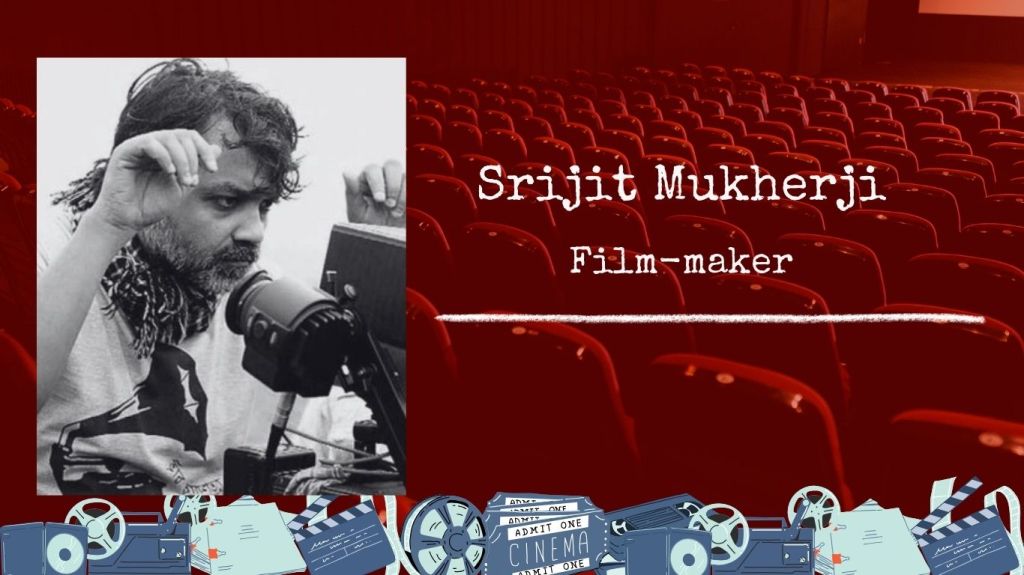
Srijit Mukherji urges caution against reading this as uniform failure. His films, he notes, receive national releases and often survive beyond two weeks in multiple cities. ‘Weekdays go empty, yes,’ he admits, ‘but weekends still hold.’ Exceptions like Ei Raat Tomar Amaar, he argues, are driven by platform strategies, with Hoichoi opting for a digital-first route. Samik Roy Choudhury broadens the frame. The issue, he argues, is not only distribution but diaspora behaviour itself. Unlike Malayali or Tamil communities, who actively sustain their cinema outside home states, the Bengali diaspora has grown culturally disengaged. Older viewers remain anchored to Satyajit Ray, Ritwik Ghatak and Mrinal Sen, while second-generation Bengalis often lack linguistic fluency or emotional investment. ‘There is no built-in community support,’ he says, ‘and no serious attempt to rebuild it.’
But the contrast with the South raises a harder truth: audience behaviour has fundamentally changed. Outside Bengal, the emigrant Bengali audience attends fewer films in theatres, relying increasingly on OTT platforms, nostalgia-driven choices, and occasional word-of-mouth hits. The cultural commitment that sustains Malayalam and Tamil cinema outside their home states simply does not exist in the same way for Bengalis, an uncomfortable yet unavoidable fact.
Ahana reinforces the structural constraints. National releases are expensive, screens are limited, and Bengali films are routinely crowded out by Hindi and larger regional titles. ‘We usually release nationally only when a film sustains a strong two-week run in Bengal,’ she explains, a pragmatic but limiting strategy. The South cannot be the benchmark, she argues. Their industries command far larger markets, diaspora bases, and theatrical leverage. ‘That said, there are notable exceptions that highlight Bengali cinema’s growing potential nationally. For instance, Eken recently had one of the best runs at national multiplexes and recorded some of the highest box-office figures ever achieved by a Bengali film from a national release. You also mentioned Ei Raat Tomar Amaar – that was a Hoichoi Studios production which we did release theatrically in Bengal. For audiences outside the state, the film was made available directly on the Hoichoi app. That was a conscious choice based on the platform’s reach and strategy, a reminder that “national release” today can also mean digital-first, especially when it helps the content travel faster and wider.’
Samik adds that even when Bengali films do travel, they are sabotaged by poor timing: awkward weekday slots, minimal publicity, and negligible promotional budgets. Malayalam mid-budget films, by contrast, are aggressively marketed across metros. ‘Accessibility,’ he argues, ‘is destiny.’
Responding to concerns about the poor turnout for Bengali films outside Bengal, Suman Ghosh identifies two primary reasons. First, the rapid arrival of Bengali films on OTT platforms, often within two months, discourages theatrical viewing. ‘Audiences tell me openly: I’ll watch it on Hoichoi when it comes.’ To counter this, he publicly announced that Puratawn would not release on OTT for six months, which he believes helped attract viewers to theatres.
Second, he points to the lack of national-level marketing and awareness. Bengali films with potential often fail to reach audiences simply because people do not know they have released. This feeds into a broader perception – partly justified, he admits – that not enough good Bengali films are being made, causing even noteworthy ones to get lost.
The Media Blind Spot: Why National Coverage Refuses to Look East
The near-absence of Bengali cinema in national media remains baffling. Even strong films frequently pass without notice. Srijit identifies a cultural hesitation: ‘Aggressive marketing is looked down upon in Bengal.’ This reluctance, he believes, has fostered an inferiority complex in the ecosystem. While he sees change – Filmfare interviews, greater visibility of Bengali talent – the inertia persists.
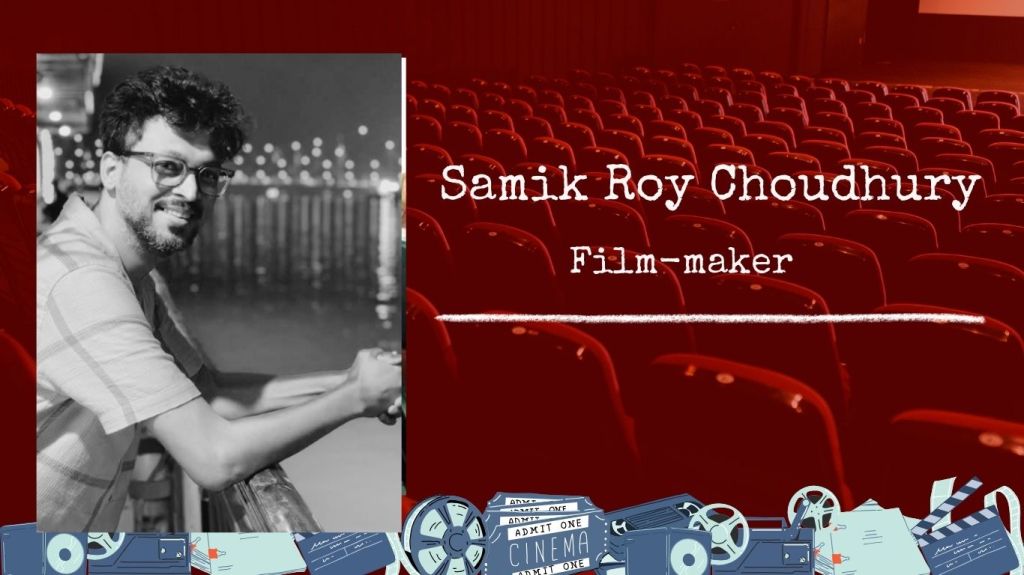
Samik is blunter. The perception that Bengali cinema peaked decades ago, he says, has become institutionalized largely because of PR failure. While Marathi, Tamil and Malayalam films routinely hire festival publicists, circulate press kits and cultivate English-language media, Bengali cinema still relies on local press and word of mouth. ‘Visibility doesn’t happen by accident,’ he notes. ‘It is engineered.’
Ahana pushes back against media complacency. ‘If Thugs of Hindostan can get wall-to-wall coverage,’ she says pointedly, ‘why not Raghu Dakat? Why does national media wait for a film to be a proven hit before acknowledging it exists?’ Khadan, she points out, entered the national conversation only after it became a hit. Samik concurs: the industry often expects attention as historical entitlement, without doing the hard labour of demand creation. Ahana, however, flips the argument back to the journalists. Why, she asks, does the national media repeatedly co-opt the narrative of ‘Bengali cinema in decline’ while ignoring its successes? Budgets of Rs 5–8 crore may look modest, but does that justify radio silence? Compared to the scale of films in other industries, this might seem small, but that doesn’t diminish the creative or cultural value of what’s being made.
‘Unfortunately, we often see a repetitive narrative around Bengali films “not working,” which I believe is both unfair and short-sighted. Every industry goes through phases. And yes, Bengali cinema still holds a deep connection to nostalgia – take our enduring love for the suave Bengali detective solving mysteries, for instance. If there’s strong audience demand for that kind of content, why wouldn’t a producer lean into it and make films that are commercially viable and culturally resonant?’
The problem, she hints, may not be the quality of Bengali cinema but the shrinking curiosity of the national media, which increasingly chases tentpoles, algorithms, and influencer-driven coverage rather than the slow burn of regional film cultures. Yet, the question lingers: has Bengali cinema done enough to demand attention, or does it merely expects it as historical entitlement?
On the question of national media neglect, Ghosh is pragmatic. Publications like Hollywood Reporter India or major critics often ignore Bengali cinema because the films, in their view, do not match the standards set by strong regional industries. ‘Even at MAMI, arguably India’s best film festival, Bengali representation is minimal,’ he says. Puratawn was the only Bengali film screened last year. Curators tell him candidly that Bengali submissions simply do not compete with the quality emerging from Malayalam, Marathi, Hindi or Kannada cinema. ‘If you look at last year’s MAMI slate, it included films like Village Rockstars 2, titles that premiered at Berlin, Ram Reddy’s The Fable, and Anurag Kashyap’s Kennedy, which went to Cannes. That’s the benchmark. The quality of Bengali films has to be raised to that level first. Only then will national platforms begin to take notice and cover them seriously. We must own up to the fact that we fail to market our films beyond the region. Even when a film has clear potential or wider relevance, it doesn’t travel far enough in terms of outreach. As a result, many audiences simply remain unaware that these Bengali films are being released at all.’
The Ray Hangover and the Crisis of Creativity: Myth or Malaise?
Another recurring criticism is that Bengali cinema remains stuck in the shadow of Satyajit Ray, with new films repeatedly revisiting his worlds. For many observers, Bengali cinema today feels like a pale echo of its past. The nostalgia economy – detective franchises, Ray-adjacent thrillers, recycled characters – dominates the release calendar. Srijit acknowledges the Ray-shadow but frames it as economic logic. Nostalgia sells. It is difficult to argue against the data. Srijit sees this less as creative stagnation and more as a pragmatic choice. ‘Ray’s legacy casts a huge shadow, and nostalgia is a powerful economic rationale. These stories guarantee an initial audience, especially families and children. Nostalgia plus family appeal equals box office.’
Samik, however, calls it a structural crutch. Ray, he argues, has become a shortcut to legitimacy, a ready-made universe that reduces risk for producers and distributors. Even popular franchises repeatedly invoke Ray-adjacent aesthetics. ‘Ironically,’ he says, ‘this constant referencing is what’s holding the industry back from evolving.’ Suman Ghosh agrees that over-reliance on the past is creatively stifling, though he acknowledges positive signs, franchises like Shabor proving new intellectual properties are possible. But ambition, he insists, is constrained by weak development pipelines and poor distribution support. He, however, laments the lack of structural support for more ambitious work, whether in writing, development, or distribution. The gulf between ‘good films’ and ‘films that release’ remains wide, and many films die unseen, both locally and globally. Festivals, in particular, remain a sore point. Bengali cinema, once a fixture at global festivals, now appears sporadically. Srijit counters that this is changing: three Bengali films made it to Rotterdam last year, but the overall presence remains thin.

Ahana strongly rejects the idea of decline. ‘To be honest,’ she tells me, ‘while going through your questions, I felt the same way I often do when speaking to national journalists about our industry. The entire framing of the story seemed to suggest that Bengali cinema is in crisis or that films aren’t working; but why isn’t anyone talking about the multiple Bollywood films that bombed at the box office last year? Or over the last few years, for that matter?’ She points to a string of recent successes: Shotyi Bole Shotyi, Amar Boss, Killbill Society, Onko Ki Kothin, Pokkirajer Dim, and the blockbuster Eken. ‘How many more successes does the industry need,’ she asks, “before it is no longer seen as “bleeding”?’ She hopes this reactive attitude shifts towards a more engaged, inclusive approach to covering regional film industries, one that recognizes Bengal as a dynamic, evolving space, not a nostalgic footnote.
Samik introduces a stark comparison: what qualifies as a ‘big-budget’ Bengali film, Rs 6 crore, would barely register as mid-range in Malayalam cinema. Younger audiences raised on Korean dramas, Marvel spectacles and polished regional films see the disparity instantly. Ambition without resources, he warns, rarely travels.
Addressing the widespread belief that Bengali cinema is at its creative and commercial nadir, Ghosh broadens the frame: the crisis affects film industries everywhere, including Malayalam cinema and Bollywood. Still, Bengali films face a unique dilemma: a disconnect between artistic quality and box-office returns. ‘In the last five years, I cannot name a single film that was both a major commercial success and of high artistic quality,’ he says. ‘I’m not sure I can definitively say whether it is the lowest, either creatively or in terms of box office. That said, even the biggest Bengali hits today do not come close to the commercial success enjoyed by films in other parts of the country. But this isn’t unique to Bengal. I’ve heard that even the Malayalam film industry, despite producing several acclaimed and successful films, is struggling financially. As for Bollywood, the difficulties it is currently facing are well known. So the real question may not be whether Bengali cinema is at its lowest point, creatively or commercially, but whether cinema itself is entering a more uncertain future. At the same time, one thing I’ve observed over the years in Bengali cinema is that perceived artistic quality, at least as judged by cinephiles, or by me personally, often seems to be inversely related to box-office performance.’
He argues that experimental or festival-worthy films face a hostile environment. Works like Mayanagar (screened at Venice) or his own earlier films failed to draw even minimal collections. ‘There is no core audience for experimentation,’ he asserts, placing part of the responsibility on viewers themselves. ‘There is certainly a lack of vision, no question about that. But as I have mentioned to you earlier, consider what happens to films like Shyamal Kaku or Peace Haven. When Peace Haven was released, it didn’t even manage to run for a week in Kolkata. For young or new film-makers looking to take creative risks or experiment with form, what assurance do they have? There is no dependable core audience to back such attempts. Take Mayanagar as another example. It premiered at Venice and, in my view, is a remarkable film, truly international in its quality. Yet at the box office, it failed to even cross ten lakh rupees. That, too, reflects the current state of the Bengali film audience. So while the industry must introspect, I believe audiences also need to shoulder a share of the responsibility.
‘I remember discussing this with Srijit before Shotyi Bole was released, with Puratawn slated to arrive a couple of months later. We both knew, at least on paper, that neither film was particularly audience-friendly. And while they were nowhere near the kind of success enjoyed by films like Eken, Bahurupi or Khadan, they still managed to do reasonably well at the box office. In fact, with Puratawn, I made a very conscious choice to simply be honest and truthful, and let the box office take care of itself. Even before the release, I told Sharmila Tagore quite candidly that I wasn’t expecting much commercially, since the film was far removed from what audiences generally gravitate towards today. What followed genuinely surprised all of us. Puratawn performed far better than expected, and that gave me a great deal of encouragement. It suggested that if a film is made with sincerity, there is still a core audience willing to show up, perhaps even an audience that had drifted away from Bengali cinema because of declining quality. In that sense, it opens up the possibility of engaging with a different kind of viewer.
‘It may sound unpopular, but one recalls Satyajit Ray’s remark about working with a largely backward audience, an audience that, I feel, has grown even more so over the decades. Still, there is little point in complaining. One has to make films within this reality and negotiate with it. That, in fact, explains my career choices. I make something like Kabuliwala, which is far more box-office friendly, and then follow it up with Puratawn. I’ve consciously tried to balance my work this way. Some films are made purely for creative fulfilment; they travel to major international festivals, even though I know they are unlikely to find viewers in Kolkata. That is how I have learned to navigate the current landscape.’
Ghosh also addresses the persistent Satyajit Ray hangover. ‘Among the recent films I watched, Eken and Sonar Kellay Jawkher Dhan come in mind. In some ways, this ties back to the earlier question, though I’d like to nuance that view. If you look at the last decade, for instance, a franchise like Shabor became a major success despite having little to do with Ray or that older thematic mould. It wasn’t even based on one of the most popular characters in Bengali literature, despite being written by Shirshendu Mukhopadhyay. That said, it is somewhat encouraging that the long phase dominated by Byomkesh and Feluda has begun to taper off. However, I am still disappointed to see film-makers reverting to Ray again and again, and not always doing justice to it either.’
The Silence of Critics
On one issue, all voices converge: the collapse of serious criticism. One of the most corrosive issues is the state of film criticism in Kolkata. The perception is that a large portion of criticism is indistinguishable from PR. Reviews lack rigour, independence, and accountability. The trend of film-makers themselves publicly reviewing each other further blurs the line between artistic discourse and the symptom of ‘you scratch my back, I scratch yours’.
Srijit explicitly distances himself from reviewing because, as he puts it, the ‘conflict of interest is too great’. If he likes a film, he posts about it on social media, but he refuses to write formal critiques. His stance indirectly acknowledges a deeper problem: the absence of neutral, intellectually credible criticism that can push the industry forward.
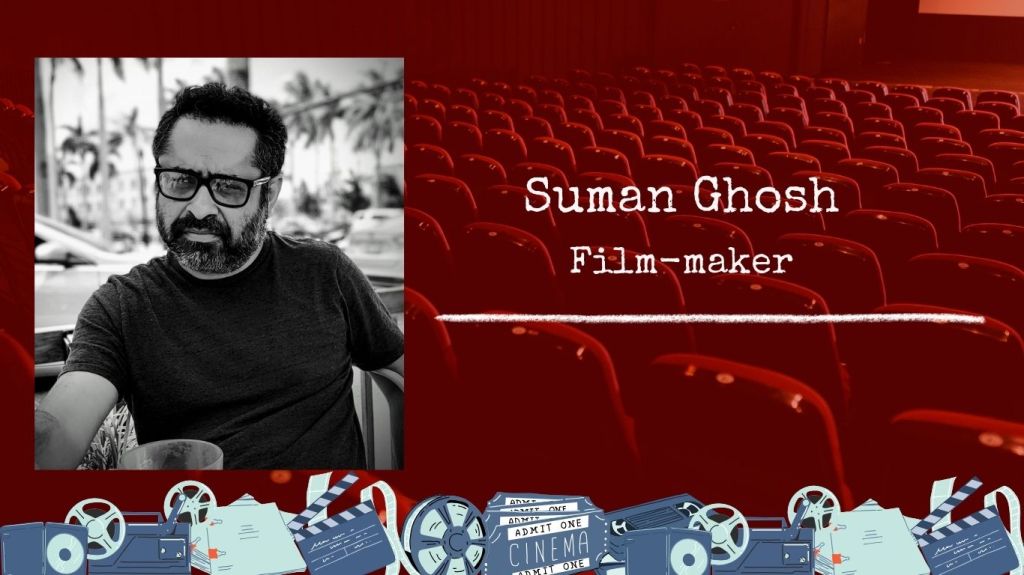
Without critical pressure, an industry becomes comfortable, circular, and complacent. Bengali cinema may not be declining, but it has certainly lost the sharpness of the critical ecosystem that once fuelled its innovation. On film criticism, Suman Ghosh is unequivocal: ‘It is in a very poor state.’ Kolkata reviews, he feels, offer no meaningful critique or analysis, lack grounding in craft, and often involve conflicts of interest, with directors reviewing peers. He stresses the need for trained critics, recalling Bengal’s tradition of scholars like Chidananda Dasgupta and Dharani Ghosh.
‘In recent times, film reviewing has reached a point where reviews are often written by friends, leaving little in the way of meaningful feedback, either for film-makers or for audiences trying to understand a film. Criticism is not merely about declaring a film good or bad; it is about engaging with film craft, and it carries a responsibility to educate the audience. We are quick to blame audiences, recalling even Satyajit Ray’s remarks about their declining sensibilities, but serious film scholars and credible critics also have a duty to address this through honest, rigorous criticism. To be frank, I attach very little value to reviews coming out of Bengal today. A number of YouTubers have taken up reviewing; I’ve heard some of these reviews, then watched the films myself and wondered how such praise was even possible. Even when a film is appreciated, the critic must be able to articulate why it works. There are film criticism courses at places like Jadavpur University, so editors too have a responsibility to commission critics who are properly trained in cinema. People who can meaningfully contribute to Bengal’s film culture. Sadly, that rarely happens. What’s more disheartening is the practice of leading newspapers asking film-makers to review the work of other film-makers, a clear conflict of interest. It’s unfortunate that criticism has come to this point.’
Samik describes an ecosystem where critics are entwined with film-makers, resulting in diplomatic, PR-like reviews. Without dissent, Samik argues, stagnation becomes inevitable. ‘Criticism educates audiences,’ he says. ‘Without it, taste regresses.’ Suman laments the disappearance of rigorous, craft-based criticism that once defined Bengal’s intellectual film culture.
What Does Revival Even Mean?
If Bengali cinema is not in crisis, as Srijit and Ahana insist, why do so many within and outside the industry feel uneasy? Perhaps because revival is not only about box-office numbers. It is also about the ambition of stories being told, the stylistic and formal risks taken, the national conversations a film can create, the ability to travel beyond the home market and the creation of new cultural memory rather than recycling the old.
As for the larger roadmap for Bengali cinema, Srijit believes regeneration will come from experimentation and breaking free of the ‘glorious past’. He cites his own recent and projects – Oti Uttam, Sottyi Bole, and others – as deliberate departures into non-linear and unconventional storytelling. This is, in his view, the way forward: calculated risk, not reckless reinvention. ‘That’s the only way forward: reinvent, take risks, and expand our palate. The pessimism is overstated. We just need to keep evolving.’
Ahana believes the media must first shed its cynicism and meet Bengali cinema halfway. Better coverage can create better perception, which can in turn generate better box-office momentum.
But the larger question remains unanswered: what stories does Bengali cinema want to tell in the next decade, and who are those stories for? Until that is resolved, the conversation will continue to seesaw between optimism and unease.
Suman Ghosh makes a very pertinent point here. ‘To begin with, I would like to flag an important development for producers and distributors, one that I believe deserves credit, particularly to SVF Cinemas. Single-screen theatres in Bengal have largely ceased to function. I once asked Dev, in a casual conversation, why he no longer makes films like Paglu or Challenge, which were instrumental in establishing him. His response was simple: where are the single screens? Those films thrived because of the distribution ecosystem of that time, and that infrastructure no longer exists. As a result, he, and many others, have shifted towards films aimed at multiplex audiences, a space in which he has done quite well. What SVF Cinemas is doing, however, is especially significant: opening theatres in suburban areas and smaller towns. The number is now reportedly around fifty-five, which is crucial. After all, films, especially commercial entertainers like Khadan and similar potboilers, need proper exhibition outlets across the state to truly reach audiences.’
How can Bengali cinema rediscover its vitality? ‘I don’t have easy answers,’ says Suman. ‘Film-makers themselves need to engage more deeply with contemporary literature, read widely, stay aware of the world, and avoid confining themselves solely within the ecosystem of Bengali cinema. Creative vision needs greater positivity, and that comes from being alert to broader cultural and global currents, not just films. Aparna Sen once told me that for a film-maker, vision is paramount; everything else follows. And vision doesn’t appear overnight. It has to be cultivated through sustained creative engagement and an awareness of the world around us. Today, there appear to be two distinct strands: commercial films like Khadan or Bahurupi, which may not seek artistic value as I define it but succeed on their own terms; and another stream that produces films such as Nagarkirtan or Jaatishwar. Not every film needs to chase crore-level box-office numbers. I was discussing this recently with Sandip Ray during my last visit to Kolkata. Many of Satyajit Ray’s films – Aparajito, Jalsaghar, Kanchenjungha – were box-office failures in their time, yet they are considered classics today. We therefore need to adopt a long-term perspective rather than obsessing over opening-weekend collections. That conversation is beginning to take shape within Bengali cinema, and it needs to evolve towards a deeper engagement with the industry’s legacy and cultural inheritance. As technology evolves, OTT platforms expand, and alternative revenue models emerge, costs can be recovered in new ways. That shift in thinking is essential.’
A Cinema at a Fork in the Road
Bengali cinema is neither dying nor flourishing. It occupies an uneasy middle space, commercially viable, culturally inward-looking, haunted by its past and uncertain of its future. Its challenges are not merely economic but psychological: the weight of legacy, the defensiveness of present success, the indifference of national media, the erosion of diaspora commitment, and a critical culture too compromised to demand better.
The industry’s stakeholders disagree sharply on symptoms but agree on a single truth: the path forward requires risk, reinvention, and a willingness to break out of comfort zones artistically, commercially, and culturally. Until then, Bengali cinema will remain where it is today: surviving, occasionally soaring, often misunderstood, and always haunted by the ghost of what it once was and what it has not yet dared to become.
 Shantanu Ray Chaudhuri
Leave a comment