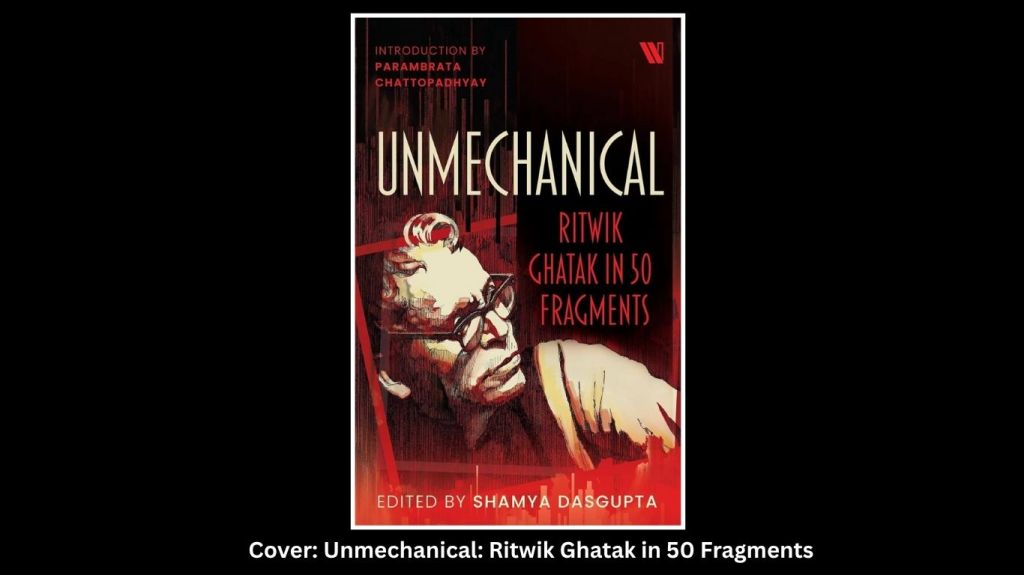
To mark the centenary of Ritwik Ghatak, Unmechanical: Ritwik Ghatak in 50 Fragments, edited by Shamya Dasgupta, gathers fifty essays, reflections and conversations that re-examine one of Indian cinema’s most enigmatic and uncompromising auteurs. Bringing together film-makers, scholars, writers and family members, the anthology looks beyond the myth and the melancholy to rediscover Ghatak’s fierce humanity, his fractured art, and his unrelenting search for meaning. In this conversation, Shamya Dasgupta speaks about the making of the book, Ghatak’s continuing relevance, and whether the title Unmechanical captures the essence of a man who defied both convention and categorization.
There is this striking essay I want to begin with: ‘I don’t see any reason to put cinema on a pedestal’. Do you think it is ironical that it finds place here, in a book that celebrates, primarily, the film-maker Ritwik Ghatak?
I think we start to understand the person and the film-maker in a different light in that essay/interview, while, of course, having to admit that that was who he was primarily: a communicator in search of the perfect device to say what he wanted to. Of course, we also have the benefit of hindsight, and knowledge about Ritwik, and know that he moved to the cinema, without any formal training, while on that search. From short stories and poems to the theatre and then to the cinema, and once there, he played with the grammar endlessly to suit his needs, breaking norms, breaking rules, to say things exactly—as far as possible—the way he wanted to. Therefore, that statement. Cinema was just a means to an end, the best vehicle available at the time to get his work done.
Perhaps he would have been attracted to television, which came up in a big way after his death, and the internet much later. He didn’t care much for the medium, and once you read him saying it, you begin to see it in his films. We can go on and on, of course, but simple things like the innovative use of music and sounds and noise and even loud voices, almost like a second storyline, or the use of odd—and therefore spectacular—camera angles, which, if you think about it, didn’t necessarily belong in the cinema. So, yes … there are film-makers who stay within the framework of cinema and do magical things within it, innovate, experiment, find newer and newer ways of telling stories, and there are film-makers who primarily use cinema for story-telling. Of course, there are many more categories, but Ghatak didn’t belong in either of those two groups. And if you believe him, he didn’t belong in the cinema at all, perhaps.
The title Unmechanical is striking. Could you tell us what it signifies in the context of Ghatak’s life and work, and why you felt it captured the spirit of the book?
Well, a book needs a title…
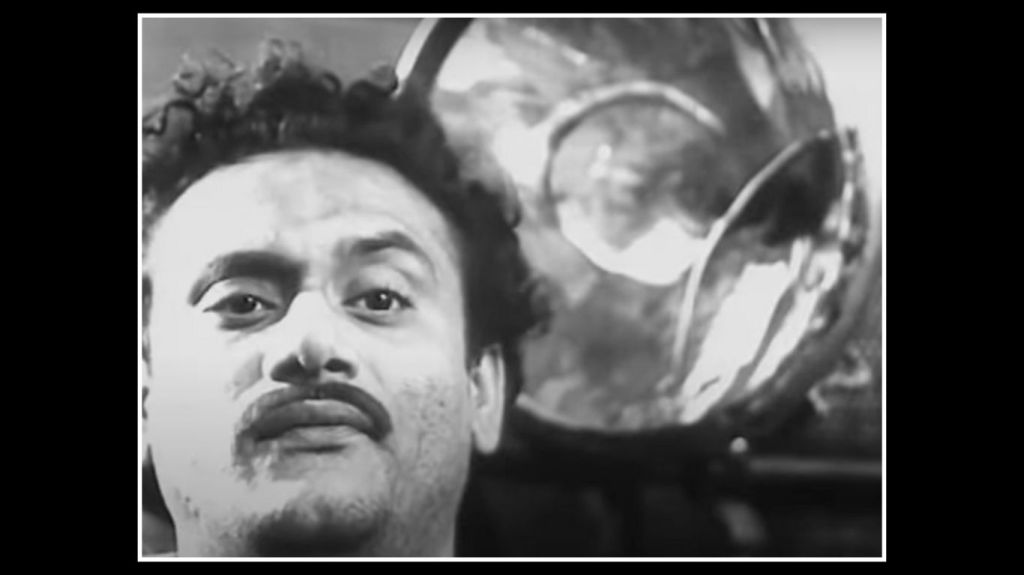
I don’t think I can explain this too well, but sometimes a word sort of jumps at you and attaches itself. It’s not the only title I had thought of, but the others had to be thought of and thought through, kind of like, ‘does this fit’ or ‘does this encapsulate what the book is doing’ or ‘is it respectful enough’ or ‘is it too punny’ …,‘how much can you play around with the word/s’ and so on. I don’t think Unmechanical encapsulates what the book does, or tries to do, but it says what I think about Ritwik Ghatak, so it’s like ‘Ritwik Ghatak was unmechanical’. I mean, obviously it is one of the English names of Ajantrik, and I couldn’t use a word that was completely unconnected with Ritwik. So unmechanical sort of said what I felt Ritwik was: a non-conformist, not to be bound by shackles, not doing what society and people and even his family expected or wanted him to do. And to answer your question, no, I don’t think it captures the spirit of the book, but I do think it captures the essence of Ritwik. I also think, completely objectively, that it’s a smart title and the word, in that font, looks very nice in what is a fantastic cover, which I am quite proud of.
The anthology brings together fifty writers, film-makers, scholars, and critics. How did you ensure a balance between academic rigour and emotional resonance across these contributions? What guided the selection of contributors?
Well, fifty essays, including a few interviews, and five of them are Ritwik’s, and two of them are by Moinak Biswas. So, I guess, fifty writers isn’t quite accurate, forty-four, I think, which is still a massive number. But yes, the question is a great one, and I am wondering how best to answer it truthfully.
Let me start by telling you how it actually worked before we get to balancing academic rigour and emotional resonance.
I am not a film writer most of the time, or an academic, or a Ritwik Ghatak expert. Therefore, I am not part of those worlds. But I am a full-time film aficionado and an occasional film writer, have lots of friends who are academics and, while not a Ritwik expert, have watched almost all his work and read a fair bit on and by him over the years. Plus there is the family connection—he was my mother’s chhotokaka. So you bring all that together and, once I had made up my mind that the anthology would not be a family tribute or a collection of academic essays—there is a lot of academic work on Ritwik—or something like ‘25 film-makers share their thoughts on Ritwik Ghatak’, all of which would have been possible, it was clear that this would be a ‘discovering Ritwik’ kind of book with something for everyone.
Once this was established, and I knew what I wanted to do, I chatted with various members of the family, many of whom ended up writing for the anthology, including Manishita Dass, lecturer in world cinema at Royal Holloway, University of London, who is conveniently married to my cousin. Through friends, and friends of friends, and friends of friends of friends, enough academics and scholars and film writers and film-makers came on board—all writing for free, remember—and my initial plan of getting thirty essays, including some by Ritwik, plus translated essays by Mahasweta Devi and Pratiti Devi, both also from the family, was on track. Obviously I had conversations with the contributors on what they would be talking about. Enough to distinguish each essay from the other but with the knowledge that there would be some overlap, especially when it came to film-makers talking about Ritwik.
Of course, I reached out to more than 25-30 people, not always certain if everyone would end up saying yes. But more and more people did say yes, so the number went up from thirty to thirty-five, to forty, and then I wanted to make it fifty essays. Some people I really wanted in the book, like Saeed Mirza and Payal Kapadia and Mira Nair and Ira Bhaskar couldn’t do it for one reason or another, but I think, at the end of it, we reached some sort of satisfactory balance of the sort you meant in your question. I sensed a lot of love for Ritwik in those conversations, so there was that emotional resonance. From the scholars and writers, rigour, academic or otherwise, was assured anyway. So, yes, that’s how it came together.
Ghatak’s cinema resists easy categorization. His art is deeply political, personal, and poetic. What was the biggest challenge in curating a volume that does justice to this complexity?
Surprisingly, none. But that immodest claim rings right only if readers agree that justice has been done. I know I should have reached out to more people, people from politics, for example, but there’s only so much an outsider without money to pay honorariums can do, and there would have been the risk of making it ‘Ritwik Ghatak in 60 or 70 Fragments’. It’s already quite a fat book. But I think Ritwik being Ritwik, all discussions ended up bringing together his art and his politics and the person to whatever extent relevant. He was a complex man, I suppose, but he was also, in my reading, extremely simple. The essays reflect that.
For cinephiles and arthouse aficionados, Ghatak still feels urgent and relevant. Do you think that his cinema appeals in the same way to contemporary film-makers and viewers? The reason I have to ask this is: I have had people telling me he is impossible to understand or that it is difficult to sit through his films. Is his film-making still relevant, and if yes, what, in your view, makes his work speak so powerfully to our contemporary world?
There is a section in the anthology called ‘Discovering Ritwik’, which has essays from Maitreesh Ghatak, a cousin who is professor at the London School of Economics; Jonathan Rosenbaum, the American film critic and writer; Jai Arjun Singh, the film writer whose discovery of Ritwik was quite literal; Sumana Roy, the writer and poet; Ratik Asokan, a film writer based in America; Amborish Roychoudhury, the film writer who has been researching the IPTA; and Tarit Chowdhury, the theatre man (a translated essay). They, as well as the essays by Arin Paul and C.S. Venkiteswaran and a couple of others, will say more about Ritwik’s relevance to the world outside 1950s and 1960s Bengal than anything I say will.
To use words from your question, yes, Ritwik still feels urgent and relevant. Perhaps even more so today, because the world hasn’t changed enormously from when he was making the films he did. In fact, maybe it’s changed for the worse. The reasons for people’s suffering, at its core, are exactly what they were. Human greed. The need to control and to dominate. The desire to be superior. Irony—that’s why Ritwik is still relevant. Look at the world today. We see so much human and animal displacement, homelessness, the search for homes and the search for identity. What’s changed?
I suspect those who say he is difficult to understand, today, are unfortunately stuck without good prints of Ritwik’s films, and when you do find one, get subtitles that make no sense. It’s so terrible. Especially if you are not Bengali, it’s so difficult to make sense of what’s happening. Fortunately, the British Film Institute and Criterion have now restored some films and they have good subtitles. But come on, if Martin Scorsese can sit and watch Ritwik and not find it difficult to watch, surely it can’t be that tough. But these are films about depressing topics and are gritty and often technically deficient. That cannot be denied. But it’s great art. All it needs is a little effort.
Since the book has come out, many—in tens—young film-makers and film actors and others have connected with me on social media. Some of them I knew of, some of them I didn’t. Like the film-maker Devashish Makhija. I don’t know how old he is, but I think he qualifies as young. Same with the actor Sagnik Mukherjee. Or the film-maker Suman Adhikary. Payal Kapadia has spoken about Ritwik. These are all young people. And there are so many others. Ritwik must be so contemporary then, no?
What does Ritwik Ghatak mean to you personally—as a cinephile, as an editor, and as someone interpreting his legacy in the 21st century?
A difficult question again, and I don’t know if my answer will make sense. And my opinion would have changed, or been enhanced perhaps, during the course of doing the book, since I have had so many discussions with the contributors, and others too, and have read their pieces, edited them, spent a lot of time with them, and, simultaneously, watched and rewatched all the films. So, an interest that was more at the surface level earlier is now much deeper, if that makes sense.
It doesn’t need to be said that Ritwik’s work was largely ignored when he was making his films, and because of all sorts of problems to do with his family, his legacy-keepers, a lot of it has not been made available to the wider world even now. And this is not restricted to his cinema … his other work is also largely unknown. So an effort needs to be made to engage with him, which, I can imagine, not too many people have the time for. So, what the book tries to do is provide a platform for the uninitiated to know about Ritwik and his work from those who have engaged with him and his work. Does that make sense?
What you will find at the end of it is what I found. I found an uncompromising, innovative, experimenting, thoughtful, concerned and socially- and politically- and culturally-conscious film-maker telling beautiful stories about difficult subjects. And what I take away from all of it is a sense of … regret. If he had lived longer, there would have been so much more fantastic work. If he had still been around, we would have had a no-nonsense, unflinching critic of our times, who spoke truth to power without hesitation. A strong voice. We didn’t get enough of him.
The book’s subtitle speaks of ‘fragments’. Does this structure mirror Ghatak’s own fractured universe, the dislocations, exiles and memories that shaped his cinema?
I think so, and it also reflects that the pieces, the essays, are fragments that add up to giving a complete, composite picture of the man. Kind of like the pieces of the puzzle. I hope we have achieved that to a large extent and all the pieces are in place.
Linked to the previous question, there’s a lot of romanticisation of his maverick ways, his alcoholism, his disdain for money, which you mention in your essay on his Hindi film days … do you think that this romanticisation is misplaced, that he would have been a better film-maker if he was more disciplined or would that have robbed him of his ‘being Ritwik’? (There’s an essay around this too.)
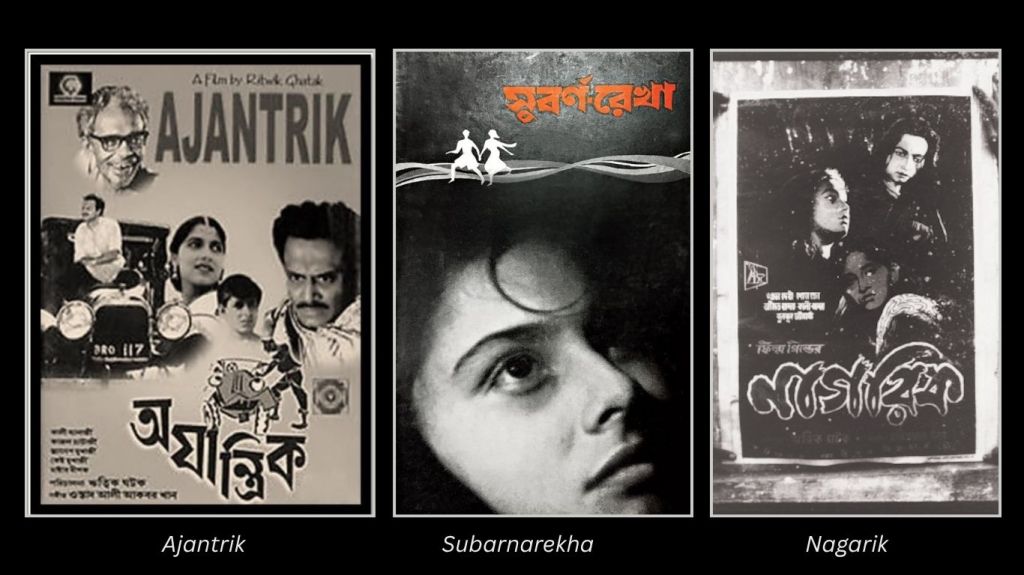
Exactly what you say. I don’t think it would have been Ritwik then. See, you can argue that if Nagarik had released as it should have, and if Ajantrik had done well as it should have, and if he didn’t have his problems with the Communist Party, and he had started the 1960s with two successful films out of three, accepted by the masses and society, he might have been much more mainstream. Fair. But I also turn to his letters from the Filmistan days that make it clear that he wasn’t cut out for that sort of life and career. And the word that connects so many of the essays in the anthology is ‘uncompromising’. I don’t think the romanticisation is misplaced at all. That really is who he was. I don’t think he was capable of what we might call a ‘normal’ life.
In the process of putting together these essays, did any perspective or piece of writing change the way you yourself understand Ghatak’s work?
Oh, absolutely.
Can I quote from my editor’s note?
‘One of the contributors once wrote, “I’m so grateful for the things I am noticing now that I hadn’t before.” It worked both ways. A writer, whose essay made me rewatch one of the films I had seen countless times already, wrote, “This is most gratifying. I consider it a great success when research and scholarship, like good art, make us look at our familiar world differently. I am glad that my piece makes you look at that film again. I love it terribly myself.”’
I watched and rewatched the films. Often picking up lines and thoughts from the writers and checking them against the film itself. A lot of mentions of sounds and noises and music, which I might not have noticed earlier. The exact trajectory of Meghe Dhaka Tara, and what certain things meant. Paulomi Chakraborty’s essay made me think of and discuss with my wife and editor Ritwik’s ‘mother cult’, and how far the metaphor really worked in terms of the creation of Nita. Even learning to watch Jukti, Tokko aar Goppo, which I was perhaps never, and still am not, mature enough to appreciate fully. Safdar Hashmi’s essay gave me cues to that.
This has been a hugely rewarding experience in that aspect. And in many other ways, of course.
Ghatak is often discussed alongside Satyajit Ray and Mrinal Sen. How does Unmechanical position him? Does it aim to reframe or liberate him from that familiar trinity?
I don’t think the idea was, or is, to position him, but just to talk about him. I also don’t think there really ever was any trinity. The three of them made completely different kinds of cinema and used cinema for completely different purposes. Ray, in many ways, is in a field of one in Indian cinema. Sen was perhaps closer to Ritwik in terms of being political, but their genres were entirely different. And Ritwik was barely watched in his time, so how was he ever part of the trinity? I don’t know when it became Ray-Sen-Ghatak … perhaps just three great film-makers, more or less contemporary, being hyphenated without any real reason. But, to answer you, no. Nothing of the sort. Just introduce, or reintroduce, the world to a most remarkable and fascinating man.
One of the more interesting observations on Ghatak comes in Jai Arjun Singh’s essay … about the humour in his films. I had never quite thought of Ghatak in the same sentence as humour. Jai quotes Ray’s sarcastic comment on the lack of humour in Ghatak films. Do you agree with Jai’s assessment and was this something you were aware of?
I had certainly not thought of humour as an essential ingredient in Ritwik’s films. No, never. And I still don’t, to be honest. Though I loved the way Jai brought it in, as well as his references to Catcher in the Rye, etc. I can see patches of humour, especially in the roles played by Bijon Bhattacharya in both Meghe Dhaka Tara and Subarnarekha, and in Johor Ray’s role in Subarnarekha. Of course, Keshto Mukherjee was in a couple of his films. Now, as you will find in one of the essays, Ritwik used a lot of theatre actors but counter-balanced them on screen with others, and in the acting of some of these theatre actors, like Bijonbabu, there are, well, theatrical elements, which, today, might appear somewhat humorous, or even comical. But no, to be honest. Unless something was incidentally funny, not much that I saw.
Not that he was an unhumorous person, as you will find in some of the more personal essays.
What do you hope younger readers, students of cinema, or first-time viewers of Ghatak will take away from this anthology? How can this book help them encounter Ghatak anew?
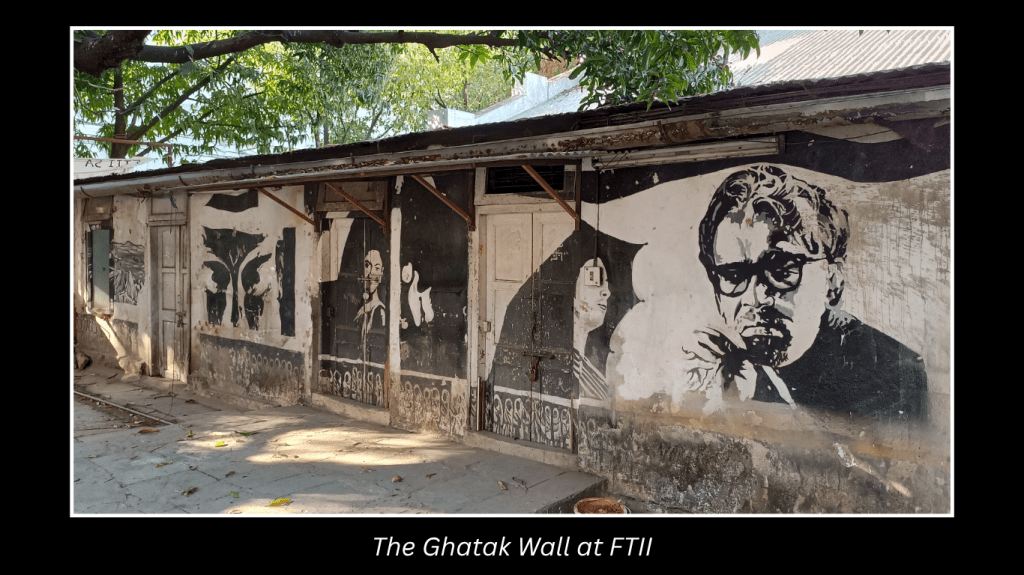
As I have said in an earlier answer, I think the book will introduce or reintroduce people to Ritwik, who, well before I thought of doing this book, had been an object of great fascination for me. Not just the film-maker, but the person too. I think readers will find a lot about both in the book and, when it comes to his films, find layers and layers to his work that they might not have thought of. I have no hesitation in calling him one of the great film-makers ever, anywhere, and, in my book, Subarnarekha and Ajantrik, as well as Meghe Dhaka Tara, are among the greatest films ever made. And, I say this again and again as if it’s the cleverest line ever conceived, I suspect few film-makers anywhere in the world are so discussed despite being so unwatched. What are those discussions about? And why was, and is, he so unwatched? While being so relevant? I think the book answers all this and much more.
 Shantanu Ray Chaudhuri
Leave a comment